Alumni Spotlight
Fall 2026 Alumni Spotlight
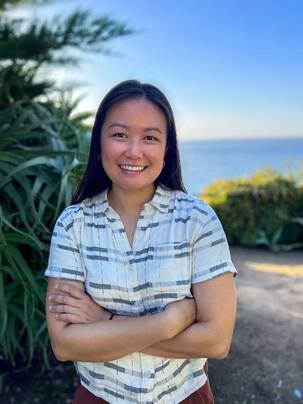
Valerie Soon (UH MA 2015) - Assistant Professor of Political Science at the University of California, San Diego
It was a pleasure speaking to Valerie about her time at UH!
Tell us something about the focus or direction of your research so far (small picture, big picture, etc.).
I work on issues broadly located in the ethics of public policy, social science, and social and political philosophy. My main project has to do with social sorting – the clustering of similar people in networks and in space – and the role of sorting in perpetuating inequalities. When we cluster with people who are like us, this sometimes results in the concentration of opportunities within certain groups. Yet insofar as such clustering is the aggregate result of many exercises of freedom of association, there seems little we can do about it. That is the central dilemma. Social network segregation, assortative mating, and residential segregation are some examples of this phenomenon.
Since we are embodied beings who associate with others in space, this project got
me thinking about the ethics of domestic migration: what the state owes to people
who want to move but can’t, or who must move to opportunity but have good reasons
to stay in place, or whose places are being transformed by forces beyond their control.
The housing crisis and climate migration raise such questions.
In short, I’m super interested in the ethical dimensions of inclusion and exclusion,
and the relations between people and place
Tell us something about your time at UH Phil: an impressionistic memory; a particular story; a general assessment of that time; etc.
It was very exciting to be part of a small, tight-knit intellectual community where everyone was just starting out on their philosophical journey. I felt that I learned something radically new every week, both from my professors and from my classmates.
How do you think your time at UH Phil was instrumental either to becoming the philosopher
you are now or to achieving what you have achieved professionally so far?
I took an Animal Cognition seminar with Professor Cameron Buckner. It was such an eye-opening course that perfectly blended philosophy of science, cognitive psychology, and ethology. The central theme of that course, if I remember correctly, was: what can we know about animal minds, and how should that information inform how we treat animals? I left that class thinking I’d work in the ethics of animal cognition. While I no longer work in that area – I focus more on human social science now – it was a great methodological introduction to integrating science and philosophy.
Another particularly memorable class was Professor Tamler Sommers’ seminar on Honor.
What is this value that people call honor, how does it relate to dignity, and what
role should it have in a liberal society where we are all intrinsically equals? It
was a fascinating blend of anthropology, comparative philosophy, and political philosophy.
It serves as a constant reminder to try to make sense of people’s actions “from the
inside”, as it were – if people seem to act irrationally, they may just have a radically
different value scheme.
Do you have any kind of “hindsight is 20/20” advice for an incoming graduate student starting their journey at UH Phil?
Be open to new paths and new interests. There’s no need to have a hot take on every age-old debate just yet – resist that pressure. There’s value to spending time just observing, weighing, and considering.
Spring 2025 Alumni Spotlight
 Alistair Isaac (UH MA 2004) - Senior Lecturer University of Edinburgh
It was a pleasure speaking to Alistair Isaac about his time at UH!
Tell us something about the focus or direction of your research so far (small picture, big picture, etc.).
I work primarily in the philosophy of science of the sciences of the mind. Shortly after finishing my PhD, my focus was on representation, and in particular drawing analogies between debates about realism and representation in philosophy of science and in philosophy of perception in order to motivate structural realism about perceptual qualities. More recently, measurement has become a central theme for me, and I have been developing a realist view of measurement aimed at undermining (what I see as) a dominant trend toward coherentism in the philosophy of measurement. I am presently working on a monograph that applies this measurement realism to psychophysical measurement, the principle set of methods for measuring perceptual experience, motivating a non-reductive, naturalistic understanding of phenomenal qualities.
Tell us something about your time at UH Phil: an impressionistic memory; a particular story; a general assessment of that time; etc.
When I was at UH, 2002–2004, the MA students who worked as TAs were very close, spending
all our time together arguing about philosophy, playing Go, and drinking beer. I have
stayed close, or in reasonable contact with, many of my peers from those days, including
both those who went on to be professional philosophers and those who didn't.
Particularly important were the grad seminars—because there was only one class per
semester that was MA-student only, and that course was invariably taught seminar-style
and was attended by all the MA students, it provided a great forum for bonding and
group learning. Memorably, Cynthia Freeland taught one on the topic of negative aesthetics,
in which one day we all ate Durian together on the landing in front of the department.
(For those who don't know, Durian is the giant, spiky southeast Asian fruit of which
it is said: “smells like hell, tastes like heaven.”)
Possibly the most fulfilling philosophy seminar I ever took was Bredo Johnsen's course
on Robert Nozick's Invariances. Nozick had been Bredo's supervisor (I think?) and
Bredo hadn't yet read the book - the seminar consisted in us just reading it chapter
by chapter and discussing it, with no plan or agenda. The book was so philosophically
rich, however, and we knew each other so well from our ongoing debates outside of
class, that every seminar meeting generated a rich and fulfilling discussion.
How do you think your time at UH Phil was instrumental either to becoming the philosopher you are now or to achieving what you have achieved professionally so far?
My undergraduate degree was in East Asian Studies; I only took one course in philosophy
as an undergrad, and that was in philosophy of physics. I returned to school after
reading linguistics, cognitive science, and philosophy informally during my day jobs
as first a legal secretary, then a projectionist at the Angelika in downtown Houston. UHhelped
me to transition into philosophy as a career and gave me the skills and background
to move on to a high-quality PhD program. Without my time at UH, I would not be in
the career I am today.
My advisors, Justin Leiber and Jim Garson, in particular, helpfully staked out a space
of possibilities in cognitive science that would serve as an important counterpoint
to my further studies. They also helped me to develop professionally in a number of
ways, from which I continue to benefit to this day.
Do you have any kind of “hindsight is 20/20” advice for an incoming graduate student starting their journey at UH Phil?
Learning from your peers is just as important as learning from your professors.
I benefitted very much from full funding. Whether one is funded or not, I think it
is very important to pursue graduate training in philosophy for its own sake, not
because of some fantasy about what one's future career will be like. The statistics
at each stage of a career in academia are quite poor, and no program can guarantee
you success at the next stage, whether that be PhD, postdoc, or tenure track. If you
enjoy the degree you are pursuing for its own sake, because you find studying philosophy
intrinsically fulfilling, you will have no regrets and be happier for it, however
your future career turns out.
A correlate: Know thyself — time spent in an MA is a stepping stone to a PhD, but
it is also a way to discover whether you really enjoy the day-to-day grind of the
academic life. Focus on pursuing the path that will maximize overall quality of life.
Finally, full disclosure: in my day, we did occasionally drink before seminar. I would
not recommend this.