 Sometimes the impact of training extends far beyond where it was taught.
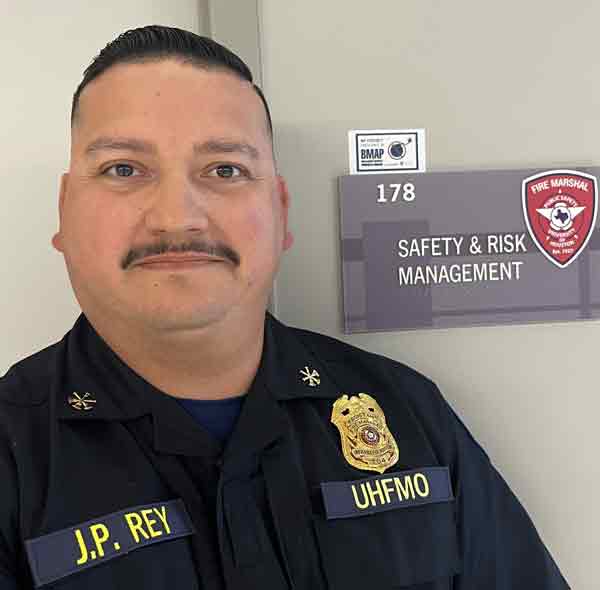
While waiting for his daughter at an off-campus cheerleading gym in the greater Houston area, Assistant Fire Marshal and CPR Instructor Philip Rey was made aware of a medical emergency inside the facility. A 17-year-old male athlete had collapsed immediately following a practice performance and was exhibiting seizure-like activity. Gym staff quickly recognized the emergency and activated 911 before Philip’s arrival inside the gym.
Upon entering the gym, Rey recognized several critical warning signs. The athlete was unresponsive to verbal and physical stimuli and showed no normal breathing, progressing from shallow respirations to agonal breathing. Due to the athlete’s sudden collapse and symptoms, cardiac arrest was suspected.
Luckily, the gym staff had received general CPR training through their employer. With their general knowledge and Philip's assistance in guiding the response and reinforcing high-quality CPR, care began immediately while awaiting emergency responders. Although there was no AED available on site, Rey maintained continuous CPR until Fire and EMS arrived approximately 8 to 10 minutes after activation.
EMS took over care of the patient and connected them to an AED. CPR continued during rhythm analysis, a shock was advised and delivered, and CPR was resumed. Shortly thereafter, a pulse was detected and return of spontaneous circulation (ROSC) was achieved. The patient was transported for advanced medical care.
“In that moment, it wasn’t about how it felt. It was about a young person who needed help and making sure everything that could be done was being done,” said Rey. “As a parent, it hit close to home afterward. Knowing that training and teamwork helped give someone’s child another chance is something that stays with you.”
Both EMS personnel and hospital physicians later confirmed that early recognition, rapid 911 activation, immediate CPR, and timely defibrillation played a major role in the patient’s survival. After receiving further treatment, the athlete was released from the hospital and has since celebrated his 18th birthday.
This incident highlights how CPR training, regardless of where it is received, saves lives. Knowing how to recognize cardiac arrest and act decisively in public and off-campus settings can make a critical difference. Any CPR knowledge is better than no CPR knowledge.
“This incident happened in a place where families gather and kids train, not in a hospital or emergency setting. Most cardiac emergencies happen exactly like this, in everyday spaces,” said Rey. “When people on scene know what to look for and aren’t afraid to act, they become the bridge between collapse and survival.”
At the University of Houston, CPR training is offered free of charge to staff, faculty, and student workers, and participants receive ShastaBUCKS as an incentive for attending.
While CPR training often takes place in structured environments like workplaces and schools, most cardiac arrests occur at home or in public settings. Expanding CPR education across our campus community ensures more people are prepared to act when it matters most.
For those staff, faculty, and student workers interested in CPR training, please visit CPR/AED | Fire & Life Safety | University of Houston or contact Asst. Fire Marshal Philip Rey @ jprey@central.uh.edu to learn more about available classes, scheduling, and incentives.