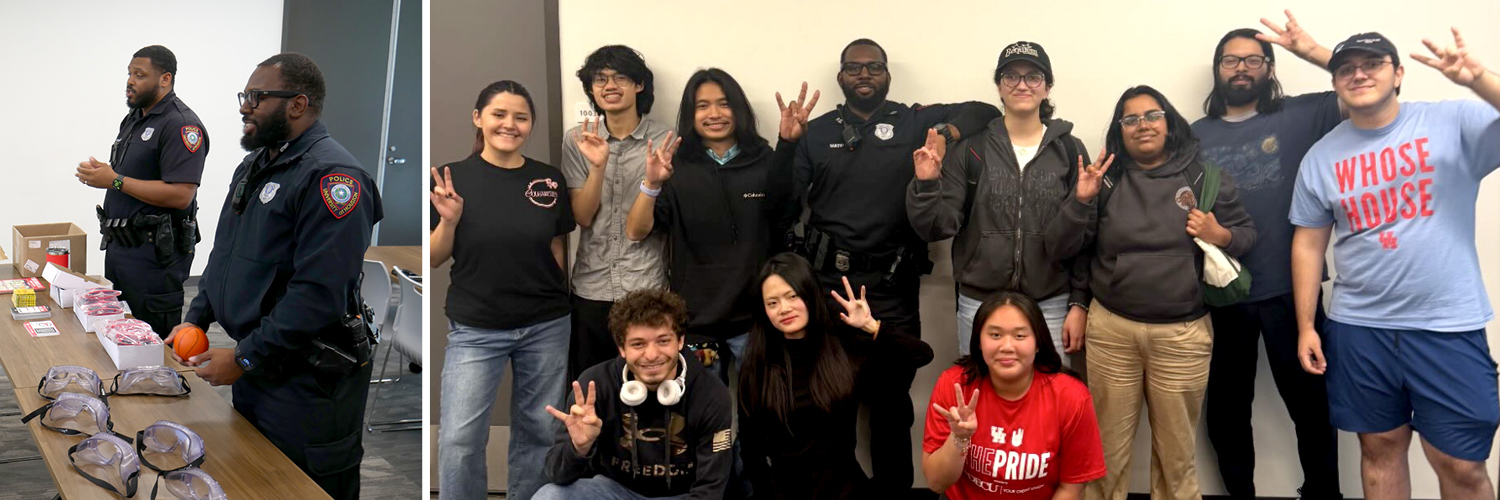
“Name, major, and where are you from?”
That’s the opening question that University of Houston Police Department Crime Prevention Officer Amir Watkins asks students at every safety event.
Watkins posed the same question during a recent residence life and campus safety session at The Quad, explaining that the simple introduction helps students feel more comfortable engaging with UHPD officers and asking questions.
“If I know them at a personal level, they kind of open up more, and it tends to lead to more questions,” Watkins said.
The session was held at the request of Sina Jafair, a Community Mentor at The Quad. Jafair previously worked at Moody Towers, where similar UHPD safety sessions were conducted, and wanted to offer a comparable experience for residents at The Quad.
“With changes in regulations and ongoing concerns about campus safety, it’s more important than ever for students to be connected with UHPD,” Jafair said. “Community-building events like this, where students can interact directly with officers, are imperative to building that relationship and helping students feel supported in their living environment.”
Students filled the room to hear from Watkins and Officer Herbert Johnson about campus and residence life safety and to ask questions. Some of the questions included:
- During which semester does the most crime occur?
- What are the most common crimes on campus?
- How do police escorts work?
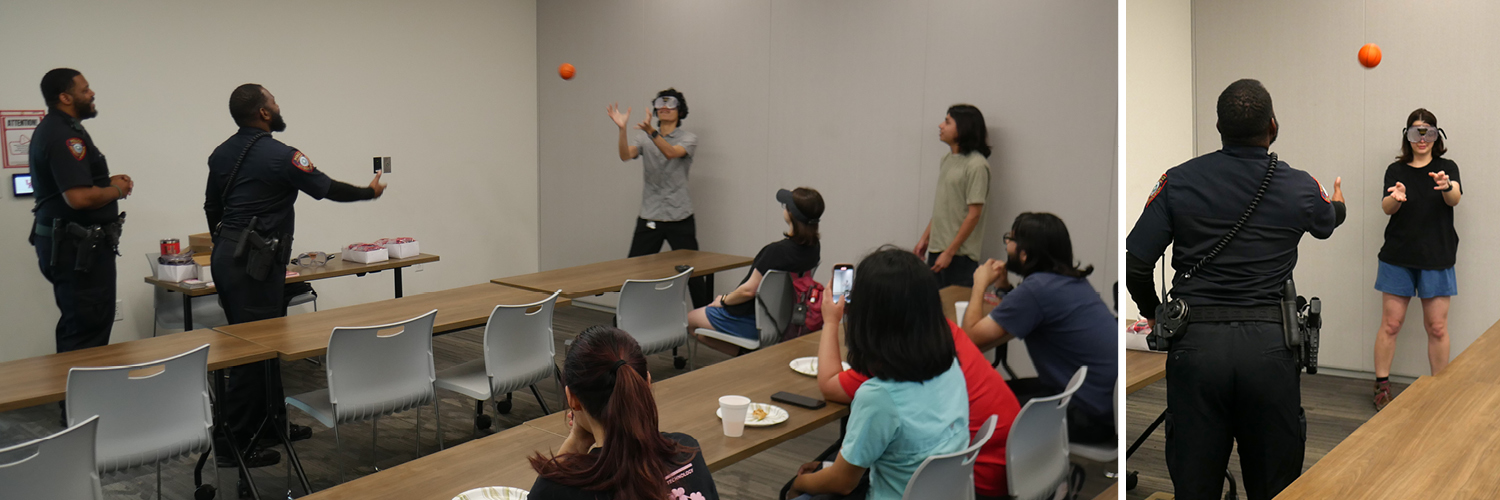
The session also featured a hands-on demonstration using “drunk goggles,” which simulates the visual impairment caused by alcohol intoxication.
Watkins first had students attempt to catch a ball without the goggles and then try again while wearing them. Most students struggled to make the catch while impaired, though some requested multiple attempts and succeeded after several tries.
Biochemistry sophomore Samantha Kozuch said the demonstration helped show how alcohol impairment affects judgment and coordination. She also appreciated the opportunity to interact directly with officers.
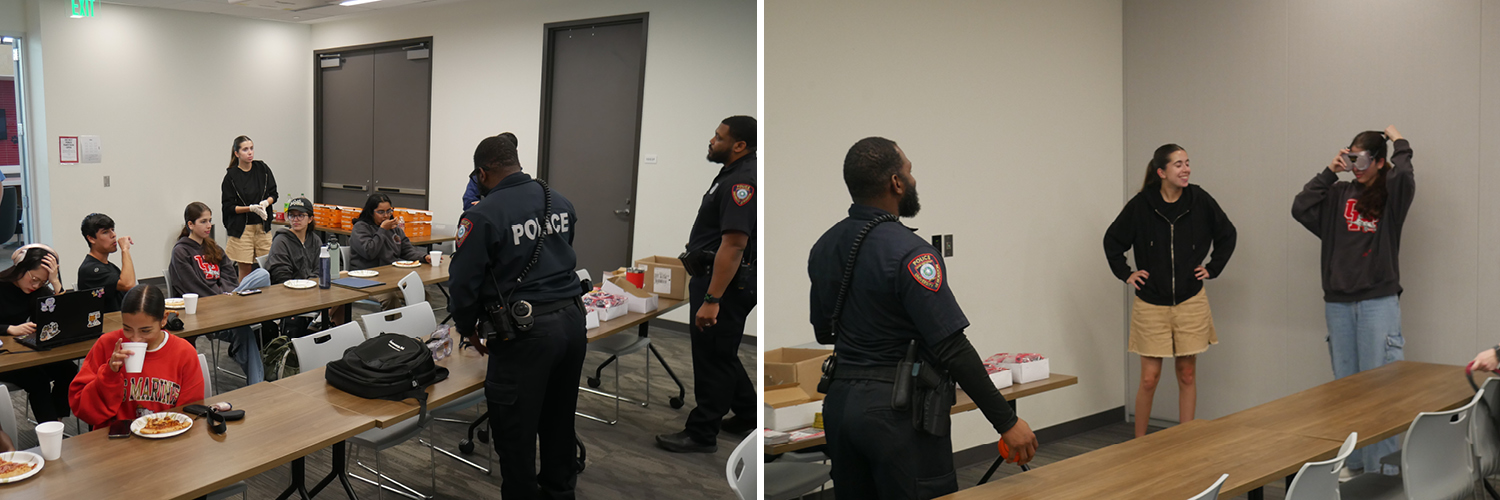
“It’s really nice to see them as people in the community and actually engaging with us instead of it feeling super one sided,” Kozuch said.
By creating an open space for conversation and hands-on learning, UHPD reinforced that the department is a resource students can turn to—not only in emergencies, but as a regular part of their campus and residence life experience.