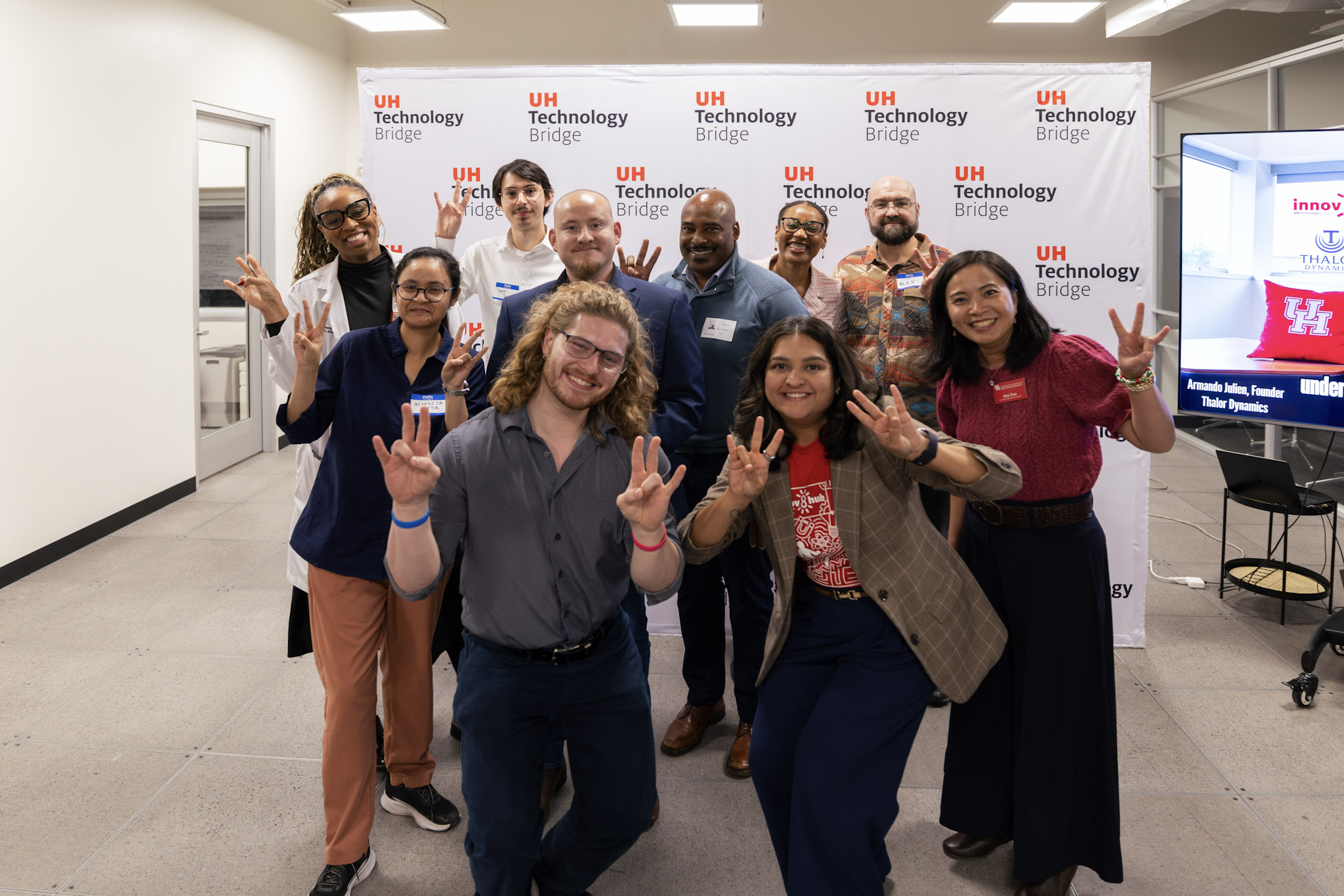
The Innov8 Hub team celebrates with founders from Startup Pitch Day in 2025.
The University of Houston set a new benchmark for startup creation in 2025, launching 10 companies and marking its second consecutive record-breaking year for venture creation — a sign of accelerating momentum in translating research, ideas and innovation into market-ready businesses.
The milestone reflects more than startup activity alone. It signals the continued growth of UH’s research-to-market pipeline and the University’s role as a driver of economic opportunity, workforce development and innovation in Houston and across the region.
The back-to-back record years reflect the growing impact of Innov8 Hub, the new startup accelerator program launched in fall 2023 at UH, said Tanu Chatterji, director of startup development and UH Tech Bridge Incubator.
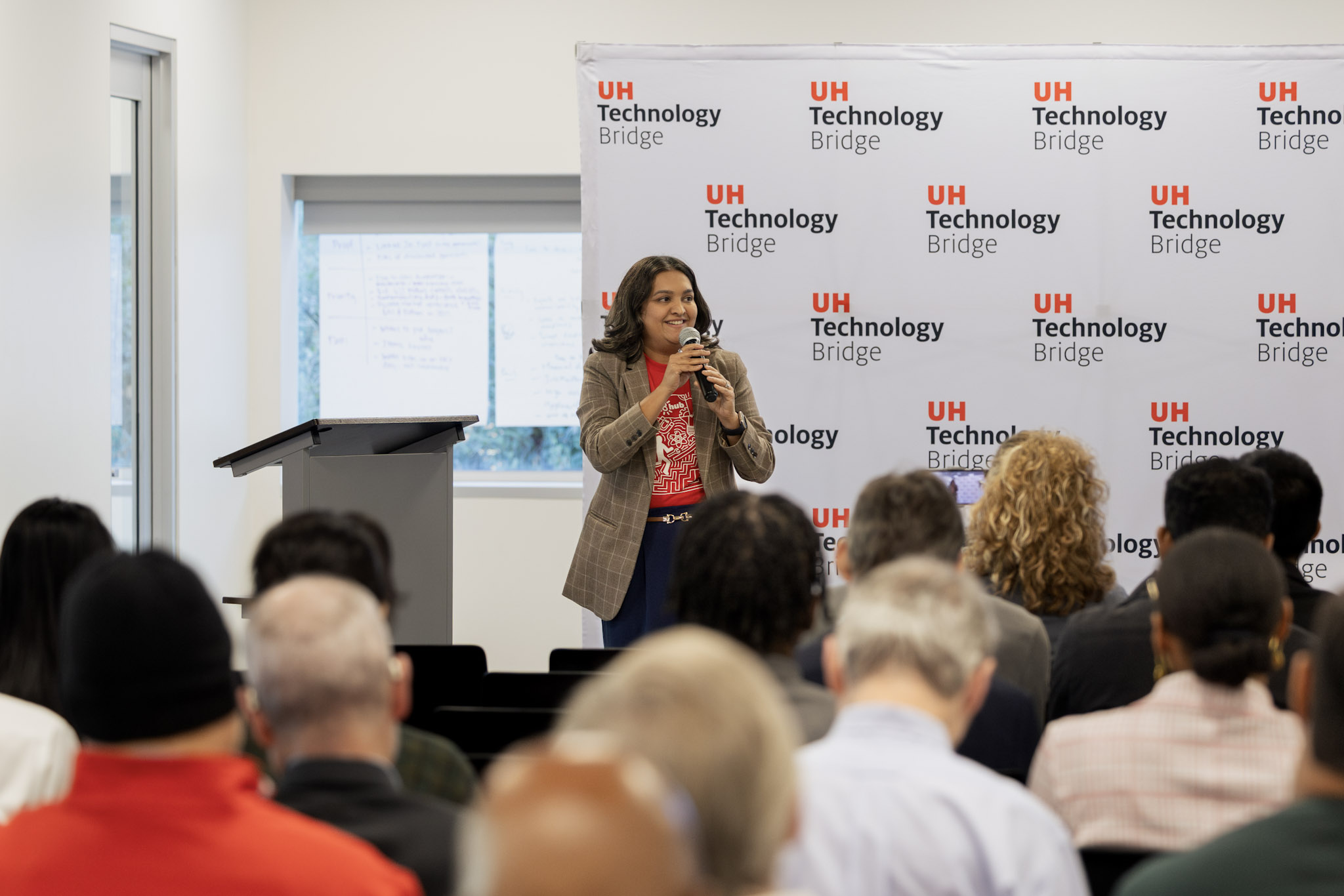
“Having two breakout years shows the program has moved beyond isolated successes to building a repeatable engine for venture creation,” Chatterji said. “The model works — founders are consistently moving from idea to company, and the support structures around them are strong enough to sustain that momentum year after year.”
Part of the UH Tech Bridge Incubator, Innov8 Hub is a series of founder-focused programs designed to help early-stage startups hone and refine their ideas into viable business ventures. It was co-developed as a partnership with the UH Small Business Development Center in 2021. The program uses methodology developed by the Wendy Kennedy Institute that helps founders identify and communicate a clear value proposition.
Each cohort includes six to eight aspiring entrepreneurs exploring how to bring their ideas to market, and since its inception, the program has supported 68 founders. At the end of the three-month program, participants present their ventures at Startup Pitch Day to potential partners, investors and members of the innovation community.
Chatterji said the recent gains reflect a commitment to continuous growth and improvement at the UH Tech Bridge Incubator and a more structured approach to helping innovators translate ideas into ventures. From 2013 to 2023, only three years saw more than five startups launch: eight in 2014, seven in 2019 and six in 2021.
“It’s rewarding to see how the work of our dedicated team has built a more intentional and effective pathway for helping innovators turn promising ideas into companies,” she said. “In just the past year, we’ve seen more scientists and interdisciplinary teams applying to Innov8 Hub, recognizing the value of the program and actively championing its growth.”
Startups launched at Innov8 Hub run the gamut, but 2025 saw predominantly health care-focused endeavors.
High Performance Innovations developed a VR-integrated paddleboard ergometer that delivers interactive rehab and fitness training that targets injury recovery and strength building for senior citizens. Meanwhile, Glycomatic was launched to improve glucose and blood level identification for those with diabetes.
Others ventured into the energy sector, like Seismonics LLC, which developed a subsurface imaging tool using low-frequency seismic inversion to detect underground oil and mineral deposits with greater accuracy than conventional methods.
“What excites me most is seeing innovation and entrepreneurship become a natural extension of research.”
—Tanu Chatterji, director of startup development and UH Tech Bridge Incubator, University of Houston
Chatterji said the program’s growth is driving a broader cultural shift across campus.
“What excites me most is seeing innovation and entrepreneurship become a natural extension of research,” she said. “That creates a powerful flywheel where more innovators step forward, collaborate and build companies together.”
Looking ahead, Chatterji said the focus is not just on expanding participation, but on strengthening the ecosystem surrounding founders. That includes continued mentorship, clearer funding pathways and additional support to help startups scale.
“Maintaining momentum comes down to protecting the quality of the program while strengthening the ecosystem around founders,” she said. “Success isn’t just about creating more startups — it’s about building companies that raise capital, grow and become lasting contributors to the innovation economy.”