Faculty Profile
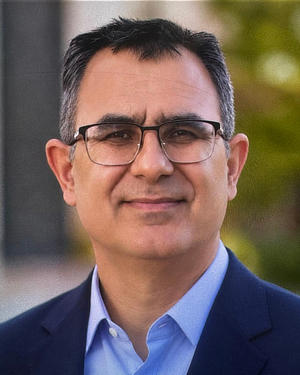 Levent Sari
Assistant Professor
Department of Biology and Biochemistry
Research Division: Biochemistry (Primary)
Office: Science & Engineering Research Center (SERC), 4024
Contact: lsari@uh.edu
Education: Ph.D., University of Georgia; B.S., Bogazici University
Dr. Sari’s research integrates both AI and Physics-based modeling, molecular simulations, and biophysical/biochemical experiments to uncover the molecular mechanisms, transition states, and critical seed structures that drive the aggregation of intrinsically disordered proteins associated with neurodegenerative disorders, including tau, amyloid-β, and α-synuclein. The central motivation is to develop molecular level mechanistic understanding and therapeutic strategies for neurodegenerative diseases.
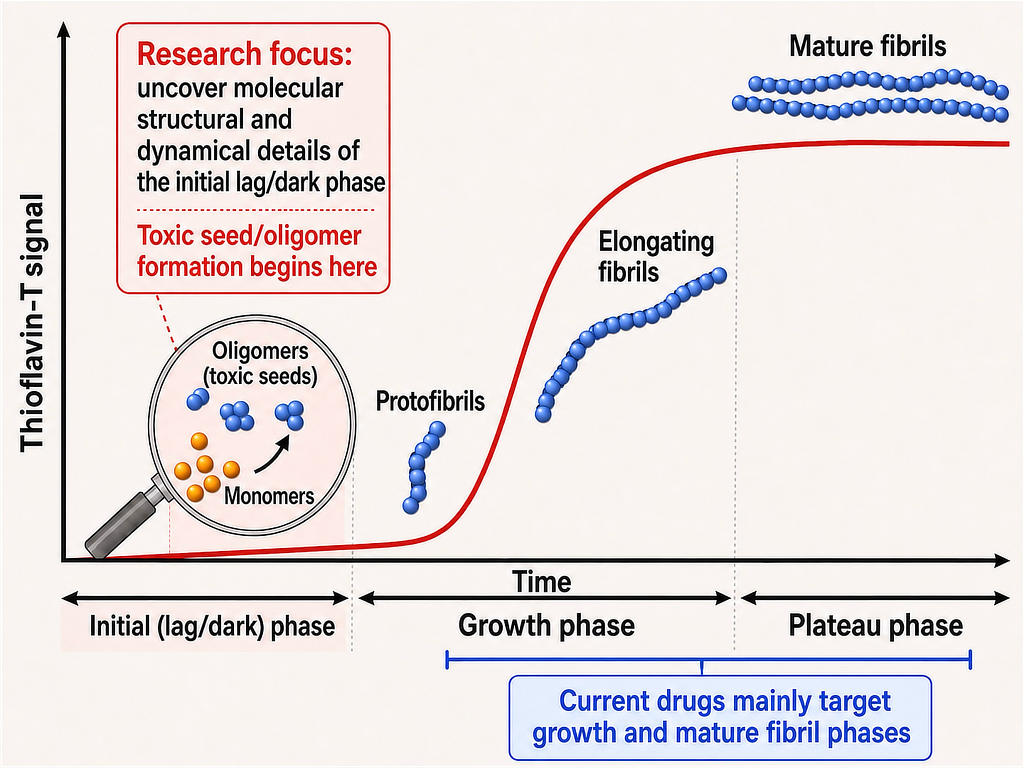
Amyloid fibrils are highly ordered protein assemblies and are closely associated with almost all neurodegenerative diseases including Alzheimer’s and Parkinson’s diseases. Amyloid formation typically proceeds through two major kinetic stages: an initial lag phase, during which critical nucleation events occur, followed by an elongation phase, in which protein monomers are incorporated into growing fibrils as seen in the figure. Although the molecular mechanisms of fibril elongation are relatively understood, the structural and dynamic events occurring during the lag phase, which we call “dark-phase”, remain largely unresolved. The transient and heterogeneous nature of early oligomeric species makes their atomistic characterization particularly challenging. Therefore, a synergistic integration of both AI and physics-based computational methods with experimental approaches is essential to determine the molecular events occurring during this largely unknown initial phase.
Our incomplete understanding of the “dark-phase” is one of the major limitations for developing effective therapies for neurodegenerative diseases. Current therapeutic strategies target mature or near-mature final amyloid assemblies, either inhibiting their growth or promoting their destabilization, rather than targeting the critical transition states and early oligomeric seeds that initiate amyloid formation. Our research aims to discover the key structural and dynamical molecular features that emerge during the lag, or “dark,” initial phase of amyloid formation and to leverage these insights to design effective ligands for diagnostic and therapeutic applications.
Another complementary direction of my research investigates how amyloid-associated changes at synaptic membranes contribute to synaptic dysfunction. A growing body of evidence links amyloid aggregation to synaptic dysfunction, with soluble amyloidogenic species disrupting presynaptic vesicle trafficking, Ca²⁺-regulated membrane fusion, and neurotransmitter release. These effects can involve direct perturbation of the SNARE machinery and alterations in the organization and dynamics of synaptic membranes. Thus, understanding the molecular mechanisms of synaptic membrane fusion provides a complementary framework for determining how amyloid formation contributes to impaired neuronal communication in neurodegenerative diseases.
- Levent Sari, Sofia Bali, Lukasz A. Joachimiak, Milo M. Lin, “Hairpin trimer transition state of amyloid fibril”, Nature Communications, 15 (1), 2756 (2024)
- D Chen, KW Drombosky, Z Hou, L Sari, et al. “Tau local structure shields an amyloid-forming motif and controls aggregation propensity”, Nature Communications, 10 (1), June 2019, 1-14
- Josep Rizo, Levent Sari, Klaudia Jaczynska, Christian Rosenmund, and Milo M. Lin, “Molecular mechanism underlying SNARE-mediated membrane fusion enlightened by all-atom molecular dynamics simulations”, Proceedings of the National Academy of Sciences, 121 (16), e2321447121 (2024)
- K Jaczynska, V Esser, J Xu, L Sari, MM Lin, C Rosenmund, J Rizo, “A lever hypothesis for Synaptotagmin-1 action in neurotransmitter release”, Proceedings of the National Academy of Sciences, 122 (1), e2417941121 (2025)
- W Nielsen, L Sari (Equal Cont.), R Fraser, MM Lin, “Protein aggregates thermodynamically order regardless of sequence”,Proteins: Structure, Function, and Bioinformatics, 91 (5), 705-711 (2023)