Faculty Profile
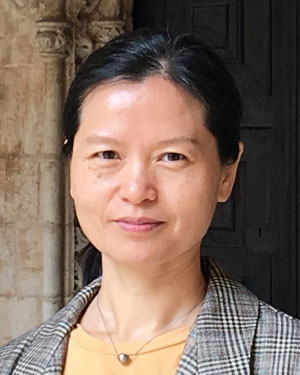 Yuhong Wang
Professor
Department of Chemistry
Office: SERC, 1019
Contact: ywang60@uh.edu - 713-743-7941
Education: Ph.D., Johns Hopkins University
Our lab investigates the ribosome, the universal molecular machine that synthesizes all proteins, using an integrated approach combining single molecule biophysics, force spectroscopy, and artificial intelligence. We developed the application of smFRET and FIRMS (force induced remnant magnetization spectroscopy) to directly visualize and measure the mechanical power stroke of elongation factor EF-G during ribosome translocation, and to dissect the mechanisms of ribosomal frameshifting with single nucleotide resolution. More recently, we developed multichannel smFRET instrumentation to study large, multidomain complexes such as EF-G in real time on the ribosome. Our lab is now integrating AI tools, including AlphaFold3 and ancestral sequence reconstruction, with experiments to address challenging problems that are not reachable before, such as more efficient drug discovery and ribosome evolutions. The tight coupling between computation and experiments within a single laboratory will pave the way for many new discoveries. If you are interested in joining the lab, please email ywang60@uh.edu.
- Zeng Y, Johnson J, Xu S, Wang Y. SURFS and AlphaFold Reveal Ribosome Footprint Shift Caused by EF-Tu D81 Mutation. bioRxiv. 2025. (AI)
- Rahaman S, Steele JH, Zeng Y, Xu S, Wang Y. Evolutionary insights into elongation factor G using AlphaFold and ancestral analysis. Comput Biol Med. 2025. (AI)
- Johnson JL, Steele JH, Lin R, Stepanov VG, Gavriliuc MN, Wang Y. Multichannel smFRET study reveals a compact conformation of EF-G on the ribosome. Int J Biochem Cell Biol. 2025.
- Chen Y, Gavriliuc M, Zeng Y, Xu S, Wang Y. Allosteric effects of EF-G domain I mutations inducing ribosome frameshifting revealed by multiplexed force spectroscopy. ChemBioChem. 2024.
- Tsai TW, Yang H, Yin H, Xu S, Wang Y. High-Efficiency "−1" and "−2" Ribosomal Frameshiftings Revealed by Force Spectroscopy. ACS Chem Biol. 2017.
- Xu D, Wang Y. Protein-free ribosomal RNA scaffolds can assemble poly-lysine oligos from charged tRNA fragments. Biochem Biophys Res Commun. 2021.
- Hu, Q., Yang, H., Wang, Y. & Xu, S.-J. Quantitatively Resolving Multivalent Bonds on Macroscopic Scale Using Force Spectroscopy. Chem. Commun. 52, 3705-3708 (2016).
- Yao, L.; Wang, Y.; Xu, S.-J. Ultrasensitive microRNA sequencing using exchange-induced remnant magnetization. Chem. Commun. 49, 5183-5185 (2013).
- Yao,L; Li, Y.; Tsai, T.-W.; Xu, S.-J.; Wang, Y. Noninvasive measurement of the mechanical force generated by motor protein EF-G during ribosome translocation. Angew. Chem. Int. Edit. 52, 14041-14044 (2013).
- De Silva, L.; Yao, L.; Wang, Y.; Xu, S.-J. Well-defined and sequence-specific noncovalent binding forces of DNA. J. Phys. Chem. B 117, 7554-7558 (2013).
- Wang, Y.; Xiao, M. Role of the ribosomal protein L27 revealed by single-molecule FRET study. Protein Sci. 21, 1696-1704 (2012).
- Kushal Raj Roy
- Mariah Noggler