Ronin Costello, a doctoral student in the University of Houston College of Natural Sciences and Mathematics Department of Earth and Atmospheric Sciences, has been selected for the U.S. Department of Energy Office of Science Graduate Student Research award, a highly competitive program that supports doctoral research at DOE national laboratories.
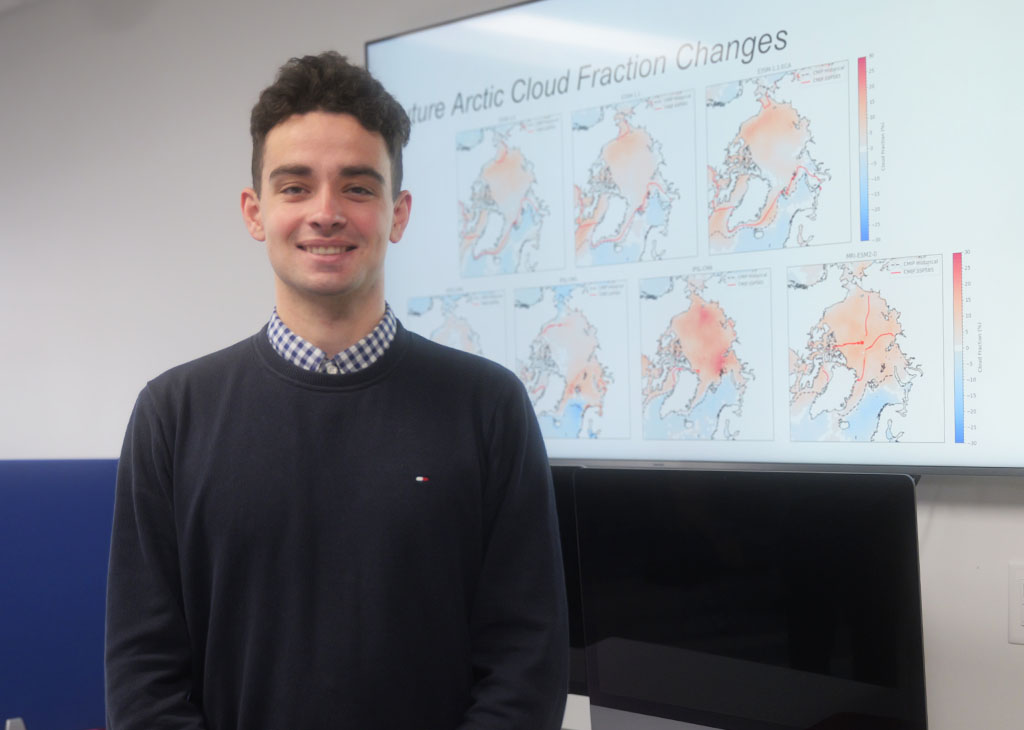
The award provides Costello with the opportunity to conduct part of his Ph.D. research alongside scientists at Lawrence Livermore National Laboratory, a Department of Energy national laboratory, where he will gain hands-on access to advanced climate models, specialized resources and world-class mentorship.
“It feels amazing,” Costello said. “It really feels like the work I have put in over the past couple of years has paid off. I had to refocus my research interests and put together a strong proposal, and being selected is incredibly validating.”
Costello’s research focuses on Arctic climate processes, specifically on how clouds respond to ongoing sea ice loss. Using output from state-of-the-art climate models, he studies how these changes may influence Arctic feedback in the near future.
“Clouds play a huge role in the Arctic system,” he said. “We’re interested in understanding how they respond to sea ice loss and what that means for future climate change.”
Costello’s interest in atmospheric science began early. As a child, he was fascinated by weather broadcasts and meteorological graphics, drawn less to the on-air personalities and more to how data were processed and communicated.
“I always loved watching the Weather Channel,” he said. “They taught me early about the chaotic nature of the atmosphere, then they took that chaos and presented it on-screen in a clear way.
That curiosity eventually led him to pursue graduate studies, first earning a meteorology-related degree before continuing to doctoral research at UH, where he found a strong research environment and faculty mentorship.
“The coursework here is challenging, but in the best way,” Costello said. “It is much more rigorous than my undergraduate experience, and the professors are true experts. I have learned so much from them, both in classes and through research discussions.”
Through the DOE Office of Science Graduate Student Research program, Costello will work closely with scientists who develop and support the climate models he uses in his research. He said that direct collaboration is one of the most valuable aspects of the award.
“Most of my work so far has been remote, using data provided online,” he said. “Now I’ll be working hands-on with the scientists who actually build these models, getting feedback and refining ideas in ways that just aren’t possible otherwise.”
Costello credits mentorship as a key factor in his success, emphasizing the importance of open communication with advisers.
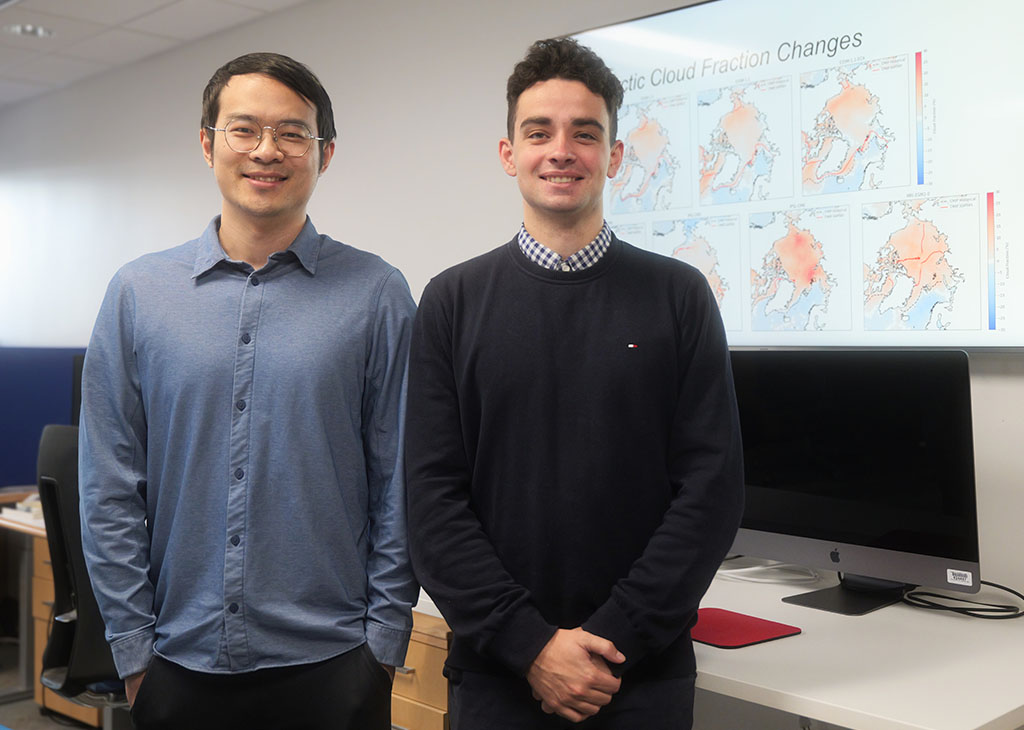
“Ronin is very sincere about his work and very honest about strengths and limitations,” Dr. Youtong Zheng, Assistant Professor, said. “That openness makes it easier to ask questions and get meaningful feedback, which is crucial for growth as a researcher.”
After completing his Ph.D., Costello plans to pursue a postdoctoral position and continue exploring research opportunities in academia, national laboratories, or industry.
“The options are wide open,” he said. “Being at UH has exposed me to so many different career paths, and this experience will only expand those opportunities.”
Costello encourages other graduate students to pursue competitive research awards, stressing the importance of clearly communicating the significance of their work.
“You need to be able to present your research in a way that translates into a clear value for an agency’s or academic institution’s mission goals,” he said. “That clarity really matters for national programs like this.”
The DOE Office of Science Graduate Student Research program supports the development of the next generation of scientists by pairing doctoral students with DOE supported national laboratories for immersive research experiences lasting from three to 12 months.
For Costello, the opportunity represents both a milestone and a launching point.
“It’s challenging work,” he said. “But it’s incredibly rewarding to see it come together.”