When scientists study proteins in isolation, they often learn how those molecules behave under ideal conditions. But inside a living cell, conditions are rarely ideal, and that difference can matter.
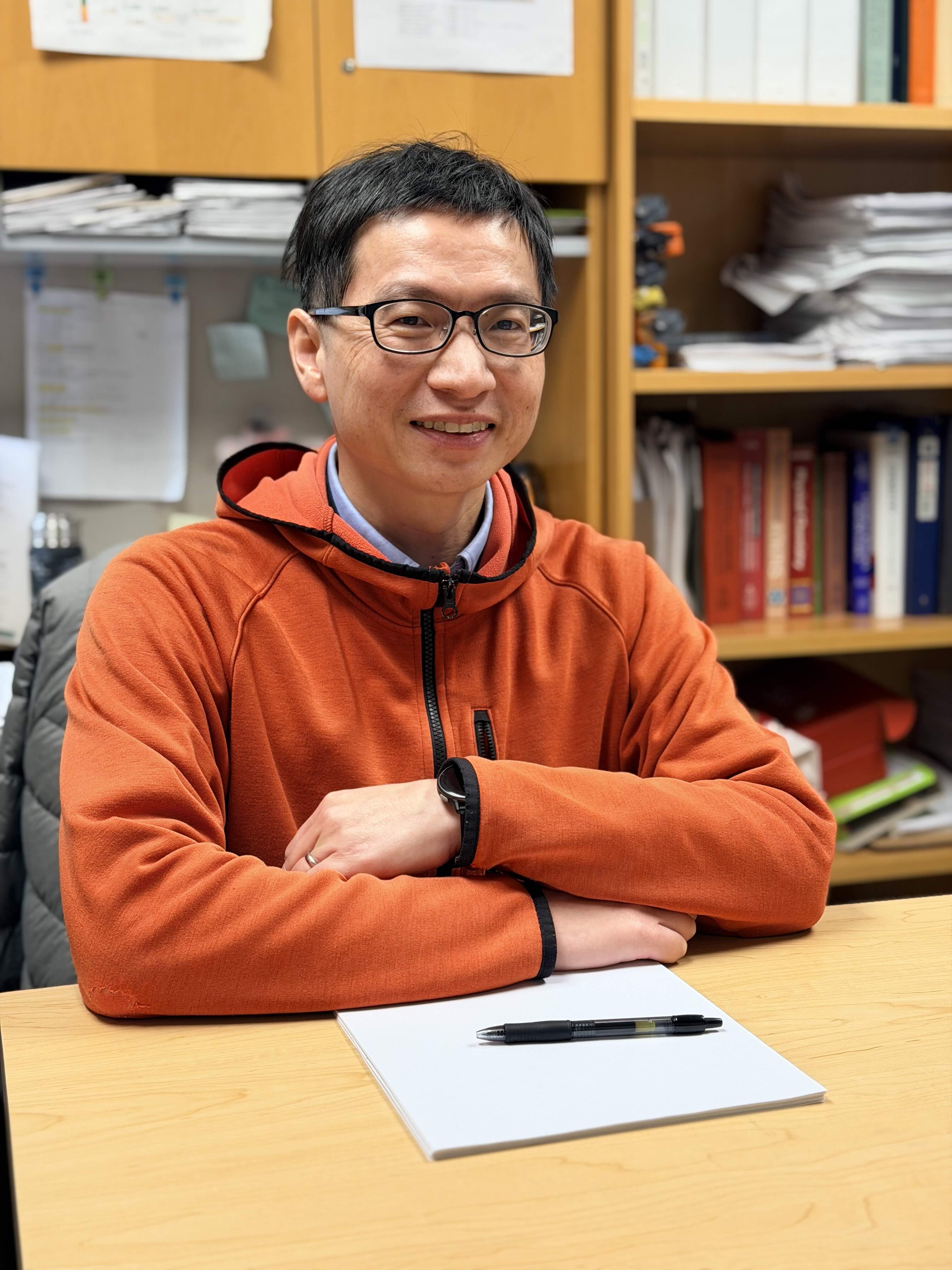
For Tai-Yen Chen, an associate professor of chemistry at the University of Houston, that gap between test tube and living cell has become the focus of a research program now earning national recognition. Chen has been selected as a 2026 Rising Star in Chemical and Biomedical Imaging by the American Chemical Society, an honor that highlights early-career researchers breaking new ground in their fields.
Chen’s work centers on developing advanced single-molecule and super-resolution microscopy tools to study how proteins behave inside cells, where chemistry, biology and physics intersect in real time.
“Much of what we know about proteins comes from studying them outside the cell,” Chen said. “But once you take them out of their native environment, you may lose important behavior that only exists in living systems.”
Studying Biology Where It Happens
Chen’s lab focuses on how cells maintain proper copper levels, a critical but potentially toxic metal that plays a role in neurological function and disease. While copper is essential for life, too much of it can trigger oxidative stress and cellular damage.
At the center of Chen’s research is a protein known as Copper Transporter 1 (CTR1), the primary gateway for copper entering cells. For years, scientists believed CTR1 functioned through relatively slow trafficking mechanisms, moving in and out of the cell membrane to regulate copper intake.
Chen’s team discovered a faster, previously unrecognized mechanism. Using high-resolution imaging inside living cells, they showed that CTR1 can rapidly change its structure in response to copper levels, effectively shutting down the channel before excess copper enters the cell.
“That structural change is a regulatory mechanism,” Chen said. “It allows the cell to respond quickly and prevent copper overload.”
The findings, published recently in Nature Communications, refined decades-old models of copper regulation and helped explain how cells balance speed, safety, and precision.
Implications Beyond Basic Science
The work may also have implications for medicine. CTR1 is known to transport cisplatin, a widely used chemotherapy drug. Over time, some cancer patients develop resistance to cisplatin, and CTR1 activity appears to decline during prolonged treatment.
Chen believes understanding how CTR1’s structure changes could point to new ways of preserving drug uptake and improving treatment effectiveness.
“If we can find ways to stabilize the transporter on the cell surface, there may be opportunities to enhance drug delivery,” Chen said.
An Unconventional Path
Chen did not begin his career in biological chemistry. His doctoral training focused on materials science and the electronic and magnetic properties of nanomaterials, far removed from cell biology.
A turning point came through personal and professional exposure to biology, which led him to apply his strengths in instrumentation and quantitative analysis to biological systems. Over more than a decade, he taught himself molecular and cell biology, gradually building a research niche that blends physical chemistry with live-cell imaging.
“There was a long period where I had to convince people—and myself—that this was a reasonable direction,” Chen said. “Recognition like this confirms that the risk was worth taking.”
Mentorship and Environment
Chen credits the University of Houston’s chemistry department for fostering an environment where early-career faculty are encouraged to take intellectual risks. He also emphasized the role of interdisciplinary collaboration, particularly with researchers at the Texas Medical Center, in shaping his work.
Equally central are his students. Chen described weekly lab meetings where students bring raw, sometimes confusing data to the table and learn how to interpret results, challenge assumptions, and develop scientific independence.
“The goal isn’t just to train them technically,” he said. “It’s to teach them how to think.”
Looking Ahead
As part of the Rising Stars program, Chen has been invited to publish in Chemical & Biomedical Imaging , an open-access ACS journal whose Rising Star papers will be collected into a special issue at the end of 2026 and promoted globally.
For Chen, the recognition is both validation and motivation.
“It’s a message that the path I chose—one that didn’t follow a traditional roadmap—can still lead to meaningful contributions,” he said. “And it makes me excited about what we can do next.”