Ali Raza, a Ph.D. candidate in the University of Houston College of Natural Sciences and Mathematics Department of Earth and Atmospheric Sciences, helped organize the sixth Summer School on Speleothem Science, held in October in Ben Guerir and Agadir, Morocco.
The biennial, student-led program is dedicated to the study of speleothems — secondary
mineral deposits in caves that preserve valuable records of Earth’s past climate and
environmental change. Since its inaugural session in Heidelberg, Germany, in 2013,
the summer school has grown into a leading international training platform for graduate
students and early-career researchers in paleoclimate science.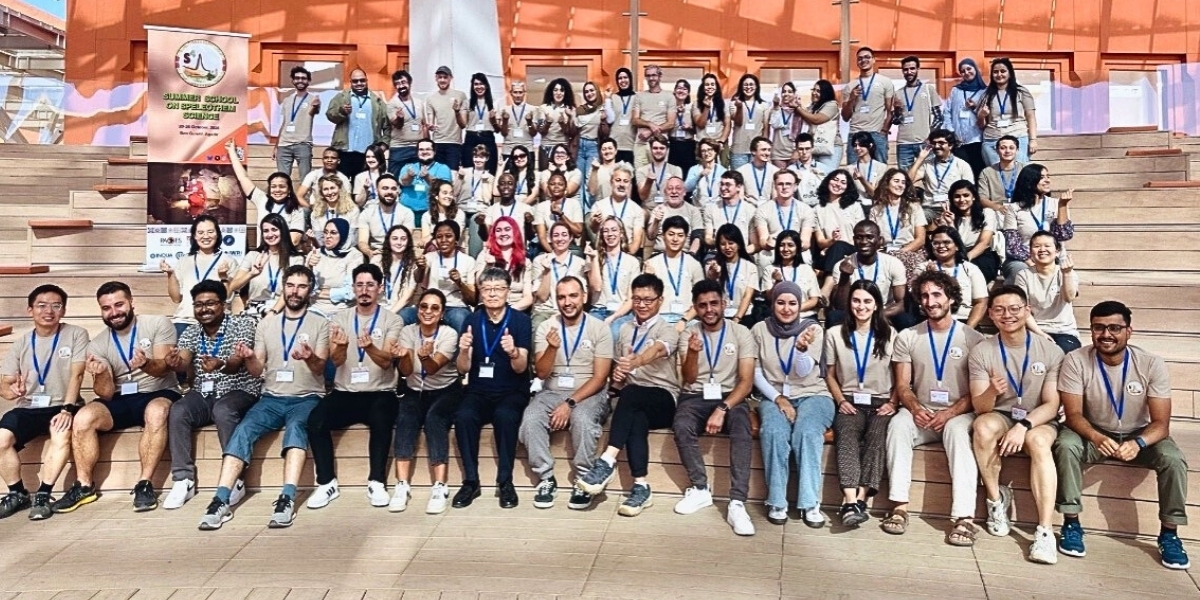
A group photo of all experts, organizers, and participants of S4 at the UM6P - University Mohammed VI Polytechnic.
From Participant to Organizer
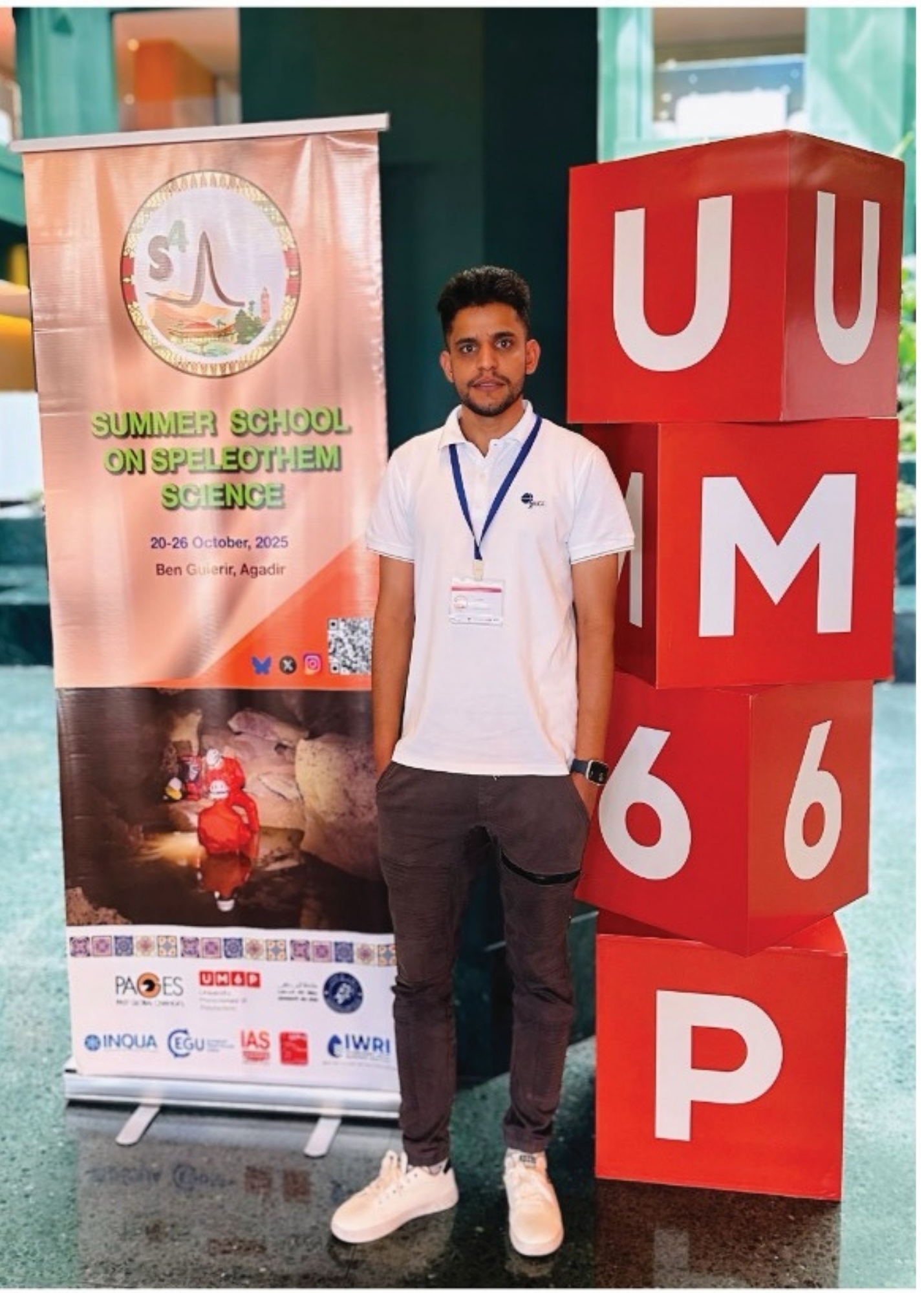
Raza is a member of the Paleoclimate Geochemistry research group led by Ny Riavo Voarintsoa, assistant professor of Earth and atmospheric sciences. Inspired by Voarintsoa’s involvement with the program as both a participant and organizer in previous years, Raza first attended the fifth edition of the summer school in Brazil in 2023. There, he presented research on non-destructive hyperspectral imaging techniques used to study stalagmites.
His participation led to an international research collaboration with the University of São Paulo. Building on that experience, Raza joined the organizing committee for the 2025 program, contributing to program coordination, grant writing and management of lectures, workshops and field excursions.
The 2025 edition welcomed 85 scientists from 33 countries. Participants spent three days attending lectures and hands-on workshops at Mohammed VI Polytechnic University’s Green Energy Park in Ben Guerir, followed by three days of field excursions across Morocco’s karst landscapes.
A Global Learning Platform
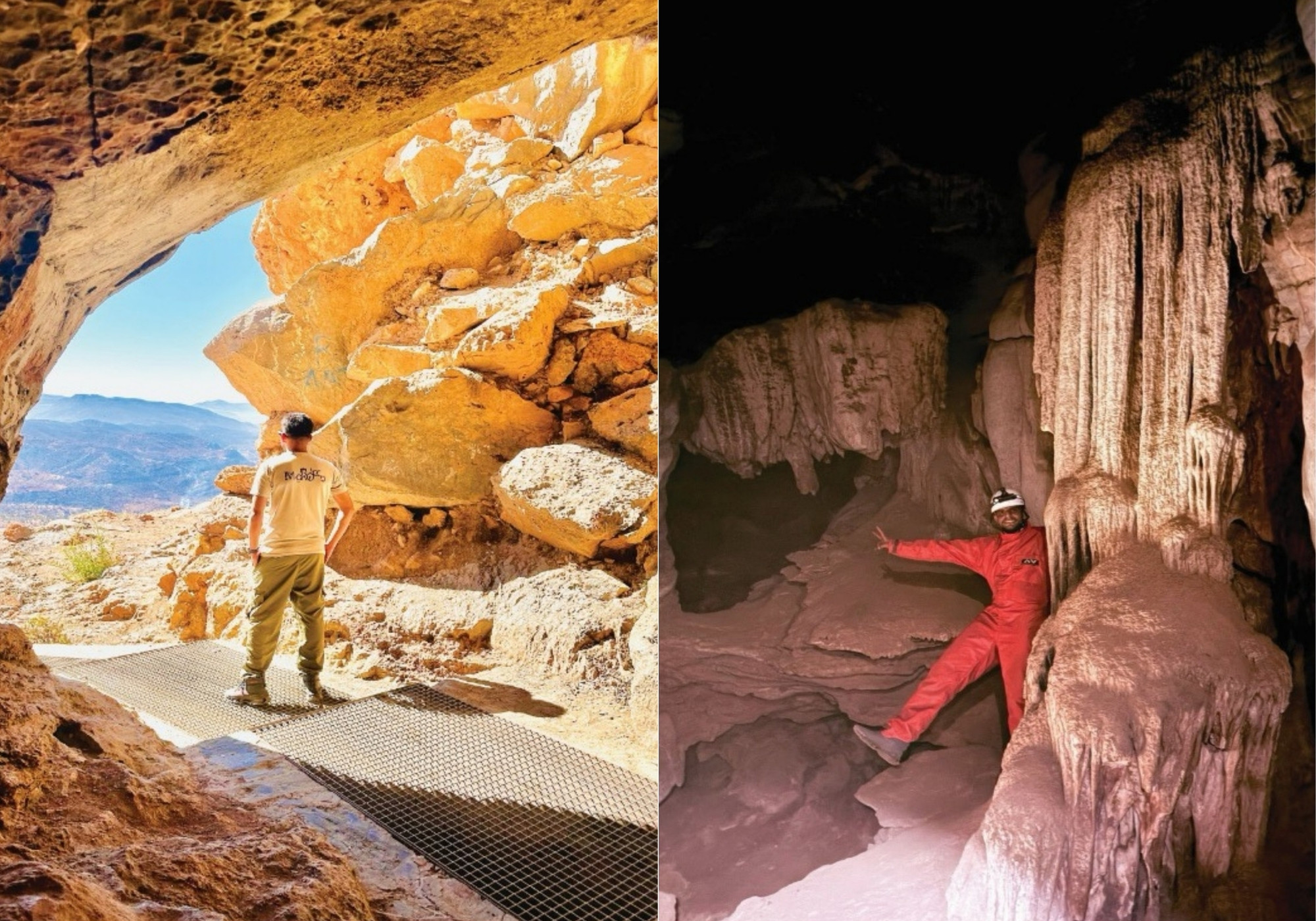 Ali Raza at Grotte de Pigeons Caves and Wintimdouine Cave
The program’s philosophy centers on education as empowerment, encouraging students not only to learn but also to lead and innovate in speleothem science. In addition to classroom instruction, the curriculum emphasizes field-based discovery and interdisciplinary collaboration.
The summer school prioritizes inclusivity and accessibility, fostering connections across cultures and scientific disciplines. Lectures and workshops are archived online, extending the program’s global reach and ensuring continued access to educational resources for the broader research community.
Research and Support
Raza expressed appreciation to Past Global Changes, the European Geosciences Union, the International Union for Quaternary Research, the International Association of Sedimentologists and the Society for Sedimentary Geology for supporting early-career researchers’ participation in the program. He also acknowledged the Department of Earth and Atmospheric Sciences for encouraging graduate student involvement in international scientific initiatives.
Upon returning from Morocco, Raza donated a trilobite specimen to the department as a gesture of appreciation. The fossil will support research, education and outreach activities.
Raza continues his doctoral research on applying hyperspectral imaging to stalagmites, contributing to a broader understanding of paleoclimate patterns. His leadership in international programs such as the Summer School on Speleothem Science reflects the University of Houston’s growing presence in the global paleoclimate research community and its commitment to developing scientific leaders within the College of Natural Sciences and Mathematics.