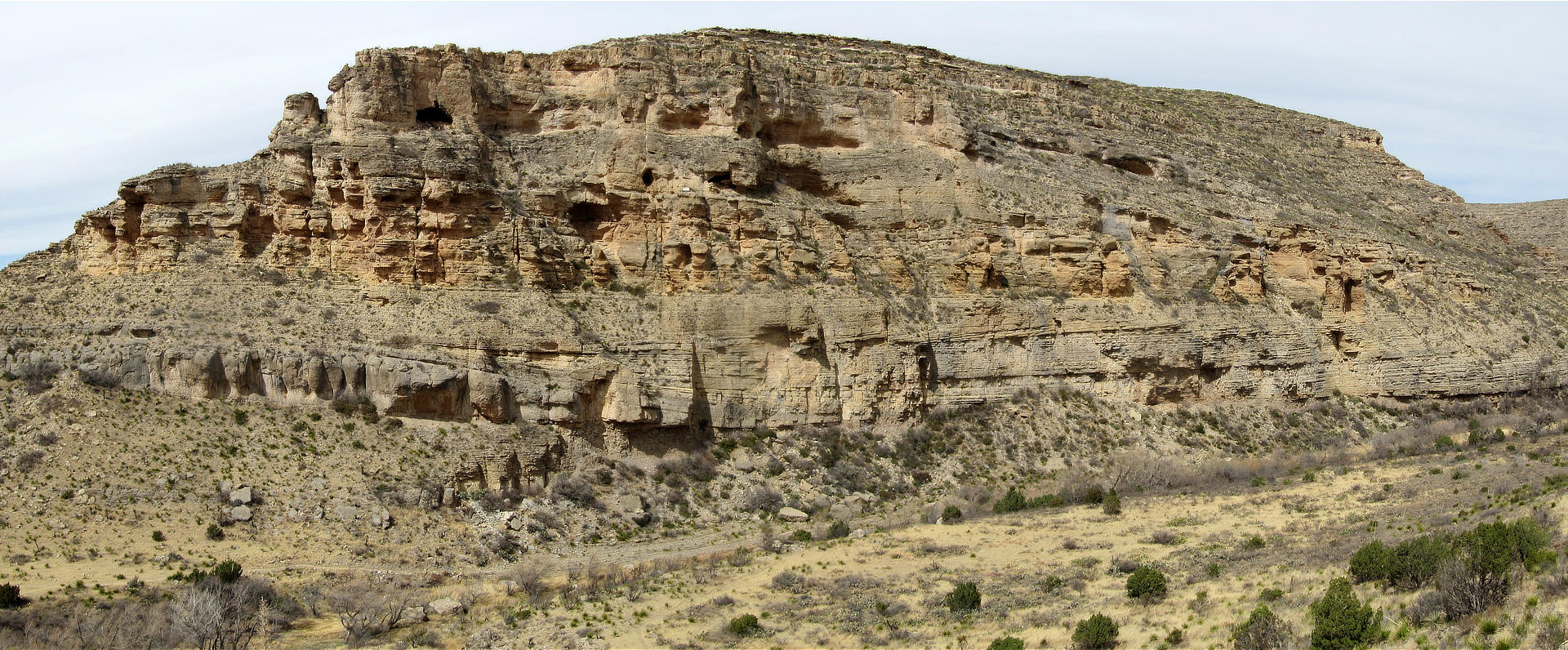
Panoramic view of the Last Chance Canyon. (Image Credit: Kurt Rudolph)
In May 2026, a UH geology group embarked on an incredible journey through West Texas and New Mexico, tracing millions of years of Earth's history from El Paso to the stunning landscapes of Carlsbad. The field work was led by UH Adjunct Professor Kurt Rudolph, who has decades of experience teaching in the area. The core of the field party was members of the Basin Analysis class taught by Dr. Julia Wellner, and two guests from the New Mexico Bureau of Geology and Mineral Resources joined in the field. The trip kicked off on Tuesday, May 5, with a flight into El Paso. Without wasting a moment, the team headed to Skyline Drive for their first traverse in the Franklin Mountains, examining the Ordovician El Paso Group. The day concluded with a scenic two-hour drive to Carlsbad, highlighted by a breathtaking overview of the Salt Flat Graben along the western escarpment.
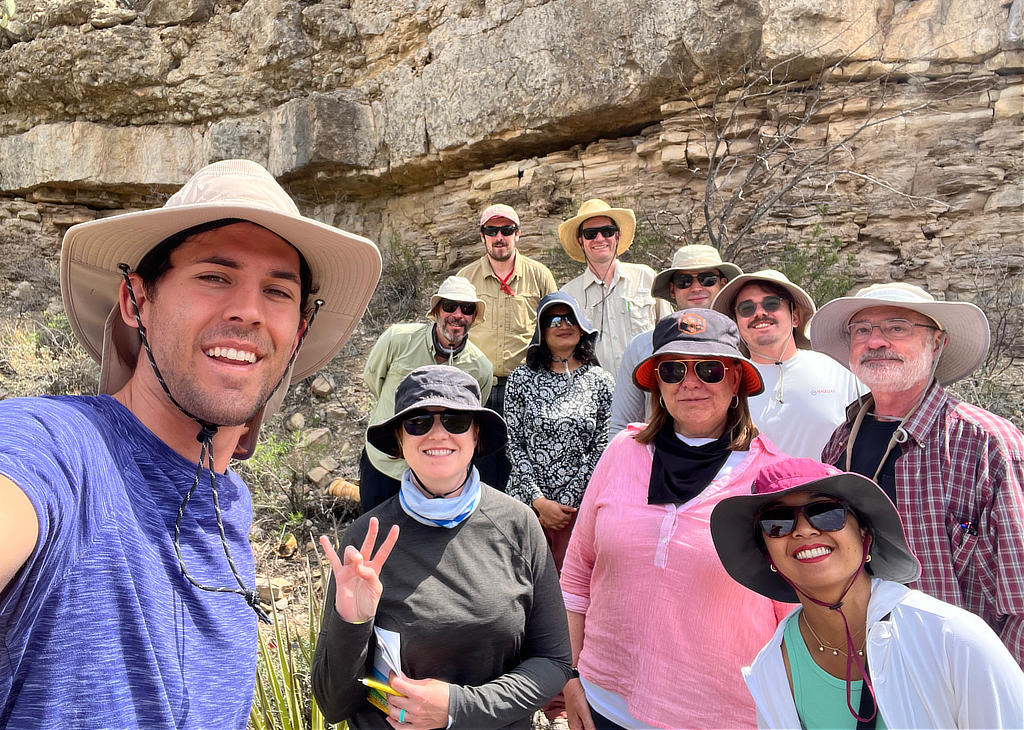
Wednesday’s itinerary took the group deep into the field to study the Basinal Lower Guadalupian Facies. The day included detailed overviews and traverses across Rest Area Gulley, where the students learned to correlate the observed sedimentary facies with their respective depositional environments and to discuss sequence stratigraphy.
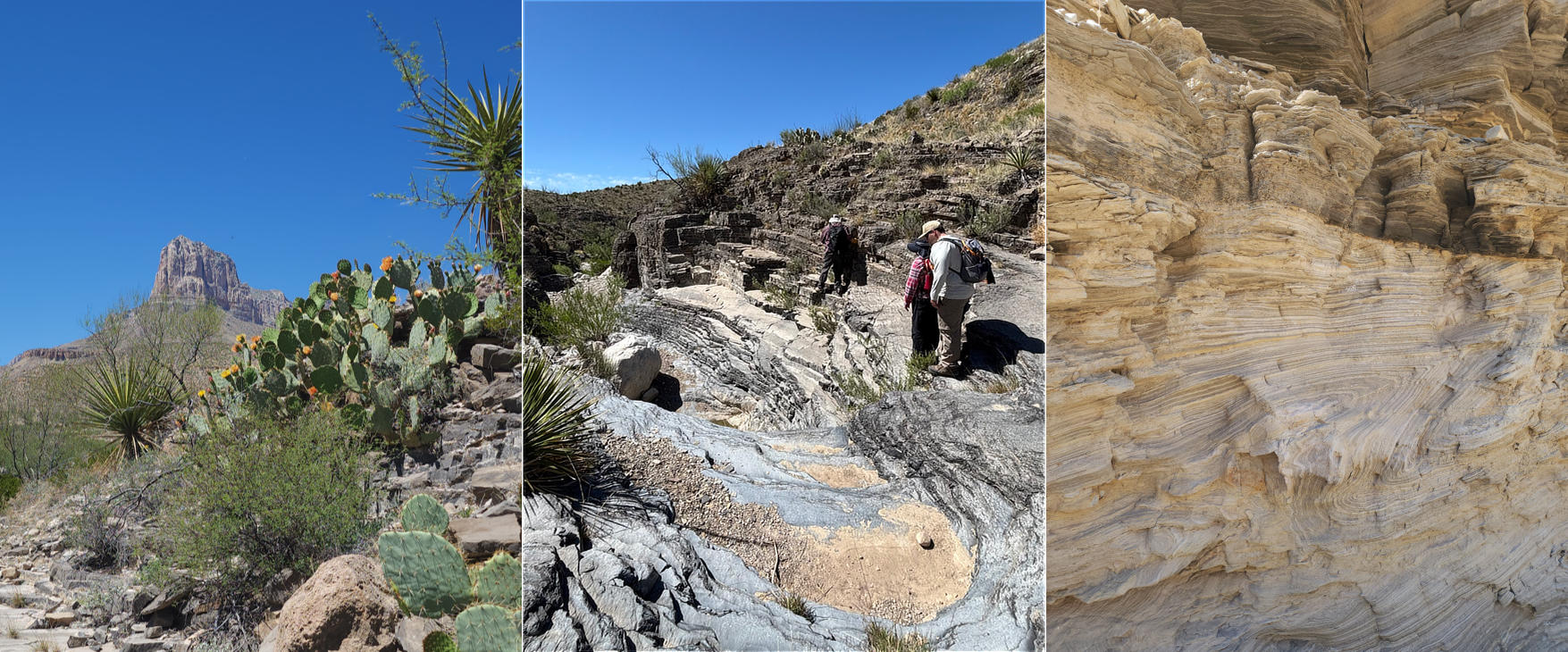
Thursday, May 7, was dedicated to the world-renowned McKittrick Canyon that offers a comprehensive look at the region's diverse depositional environments, examining the intricate Basin Floor Facies and the Forereef. On Friday, May 8, the focus remained on the Upper Guadalupian, with stops along the Walnut Canyon observing the Reef, Outer-Shelf, and Shelf Crest Facies. The afternoon included a trip to the Carlsbad Caverns, allowing the team to observe the fascinating intersection of surface geology and the spectacular karst systems.
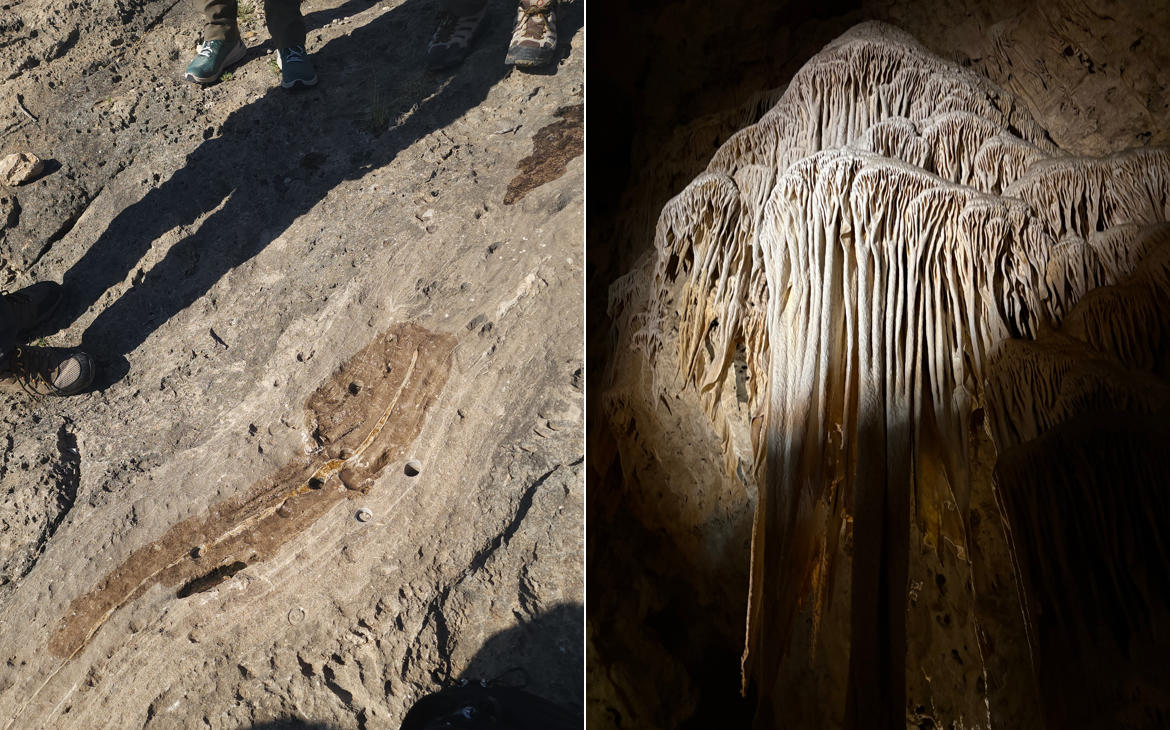
On Saturday, May 9, the focus shifted to the Upper Guadalupian Platform Interior and Lower Guadalupian Shelf-Slope. The team tackled Last Chance Canyon, taking in sweeping views from Panorama Point before conducting targeted traverses along the canyon. Sunday involved a deeper dive into the remaining features of Last Chance Canyon, studying the downlap surface and examining the complex geology of the Lower Guadalupian Shelf-Slope. Beyond the ancient rock formations, the journey was made especially beautiful by the lively wildlife we observed thriving in the modern New Mexico desert ecosystem. On Monday, May 11, the team headed back to El Paso, with road stops to observe the Castille evaporites as well as geology on Hueco Mountains roadcuts along the way.
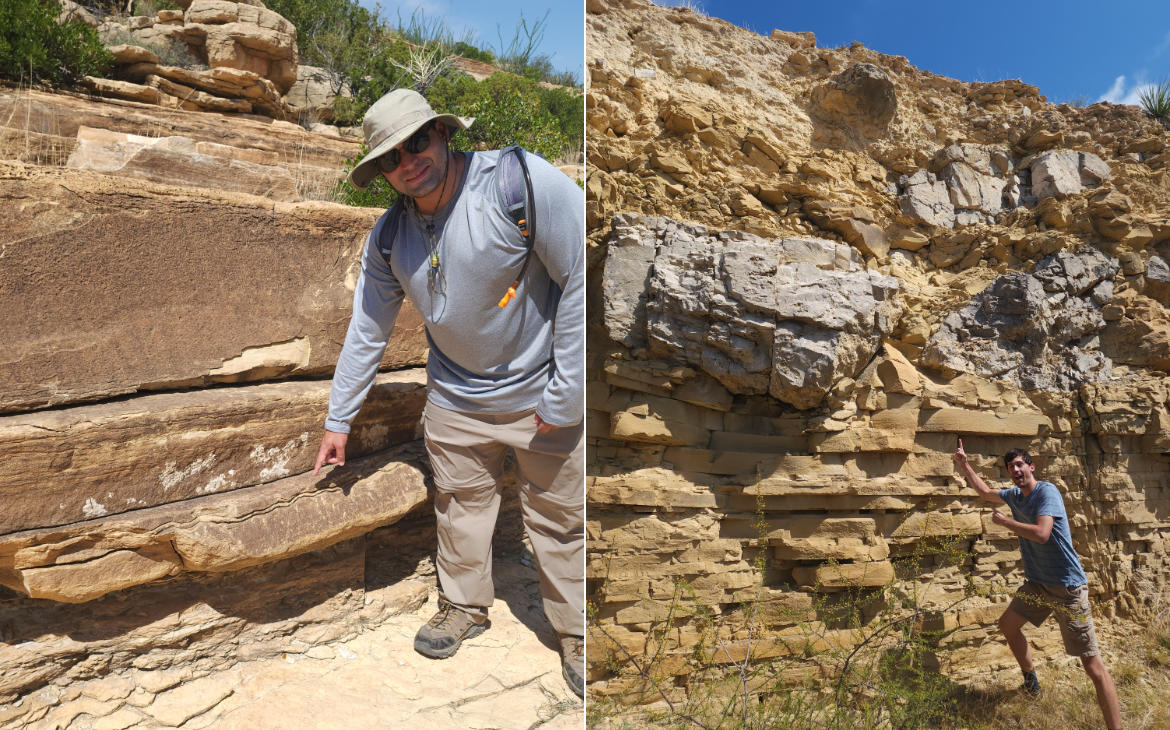
The intensive, multi-day field trip offered an unparalleled hands-on experience with some of the most spectacular geological formations in the Southwest. This field trip is part of an annual series of field trips for graduate students in stratigraphy courses in the UH Department of Earth and Atmospheric Sciences. We are grateful to Chevron for the ongoing support that makes these trips possible.