Three weeks on the Galápagos Islands gave Melody Tran a stronger grounding in field research and data analysis, experience that will be helpful as she begins medical school this fall.
But Tran, who graduated in May with a biomedical sciences degree from the College of Natural Sciences and Mathematics at the University of Houston, gained something else, too.
Living with a host family on the island of San Cristóbal sharpened her Spanish language skills, something that will translate directly to her future work with patients in the clinic and hospital. Her high school Spanish had grown rusty, but living and working on a Spanish-speaking chain of islands brought it back. “Here, it doesn’t matter if I conjugate a verb right,” she said. “I have worked as a pharmacy tech and in a clinic, and I sometimes struggle to communicate with patients. Improving my Spanish is a big thing for me.”
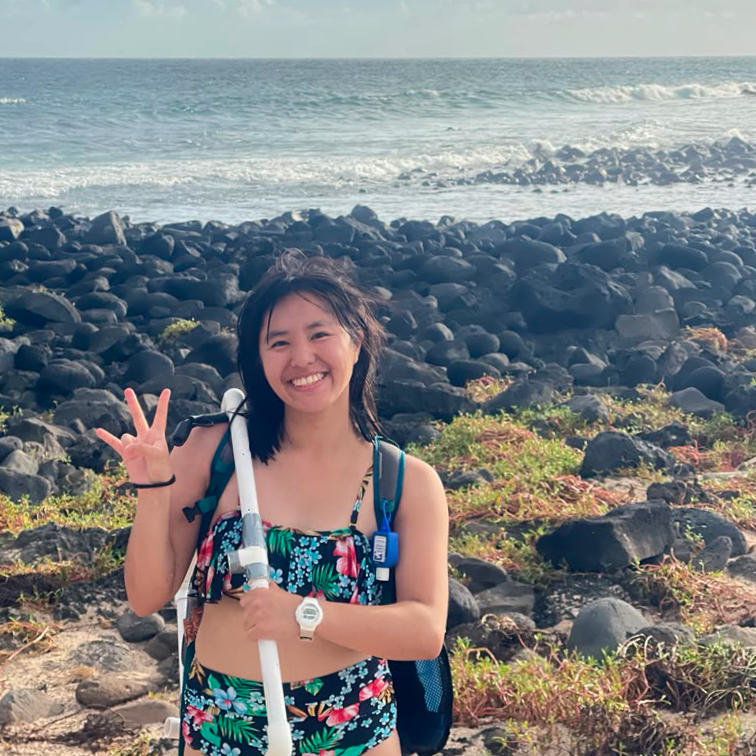
Tran is one of eight UH students awarded the Benjamin A. Gilman International Scholarship last spring, receiving $2,500 to help cover the cost of the GalapaGo! Research-based Learning Abroad Program, which is offered through a collaboration between NSM and the UH Honors College. Additional scholarships covered all but $500 of the three-week program, she said.
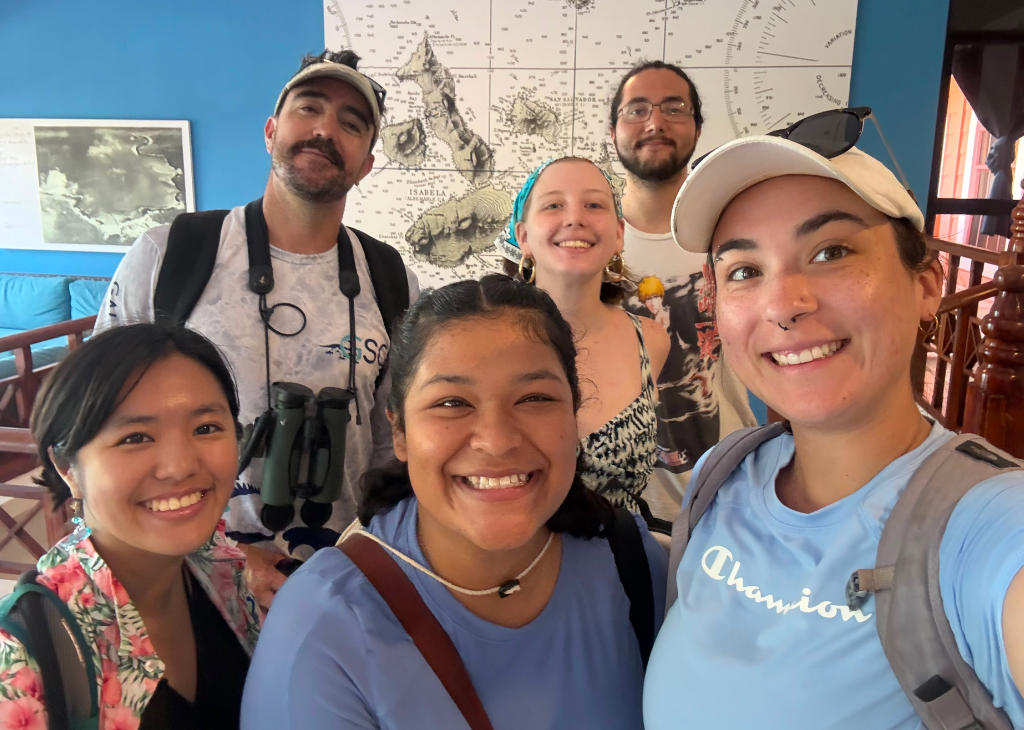
Most of the birds and other wildlife found on the remote chain of islands off the coast of Ecuador aren’t found anywhere else on earth, and the unique environment inspired 19th century naturalist Charles Darwin's Theory of Evolution. The Galápagos study abroad program is overseen by UH faculty Tony Frankino, an evolutionary biologist and associate professor of biology and biochemistry; Ricardo Azevedo, an evolutionary biologist and professor of biology and biochemistry; and marine biologist Marc Hanke, an associate professor in the UH Honors College. “Being part of their research projects, learning about genetic diversity and other research, made me want to experience the field research that happens in the Galápagos,” Tran said.
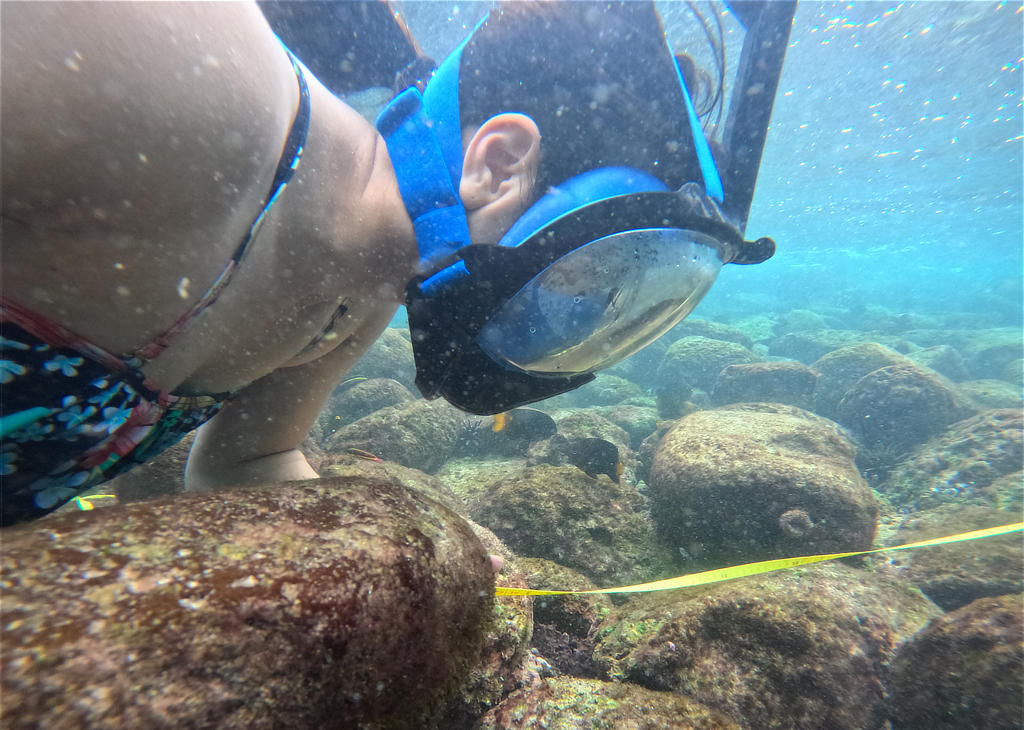
That field work included snorkeling in the crystal clear bays around San Cristóbal, recording videos of fish swimming past and, later, analyzing the video to identify species of fish in the area to aid in tracking fish populations. Another project involved hiking to the highlands to set up nearly invisible nets in order to capture the island finches. Tran said she and other students and researchers would then carefully retrieve the finches, measure the length and shape of their beaks to identify the species and inspect the birds for signs of disease before setting them free.
“It was hard. It was hot,” she said. “But it was super rewarding. I’ve started to go out and identify birds on my own.”
Back in Houston – or in Galveston, where she will attend medical school at the University of Texas Medical Branch – the birds will be different, but she expects to continue her interest in the feathered creatures.
And she will carry with her both the tangible and intangible benefits of her time in the Galápagos. “The main objective is to get immersed in field research and evolutionary biology,” she said. “Seeing how animals here might change over time.”