Samson Stern was student teaching in a seventh-grade math class last year when he decided to use his passion for physics to help explain a problem. He brought in a device commonly used in physics experiments, hoping it would help students visualize the concept.
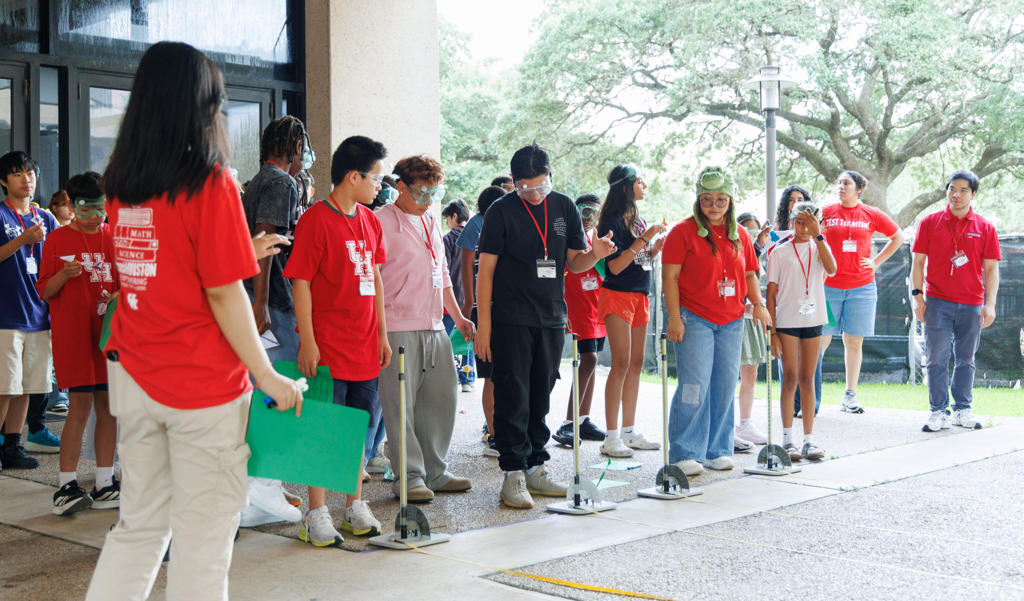
Just one problem: The device was too complicated. “There were too many variables, and it was too difficult for middle schoolers.”
So Stern relied on one of the key tenets that guide teachHOUSTON, the nationally recognized secondary STEM teacher preparation program based in the College of Natural Sciences and Mathematics at the University of Houston. “teachHOUSTON emphasizes reflection, to think about what you are doing and keep what you like and change what isn’t working,” he said.
Rather than give up on incorporating a bit of physics into the lesson, he built a simplified device that allowed his students to see what he was talking about.
“It’s about looking at how you can improve each time you’re in front of students,” said Stern, who graduated from NSM in May with teaching credentials in both mathematics and physics. “teachHOUSTON has taught me to be a reflective teacher, to look at what works and what doesn’t.” He will begin work as a high school math teacher in the Houston Independent School District this fall.
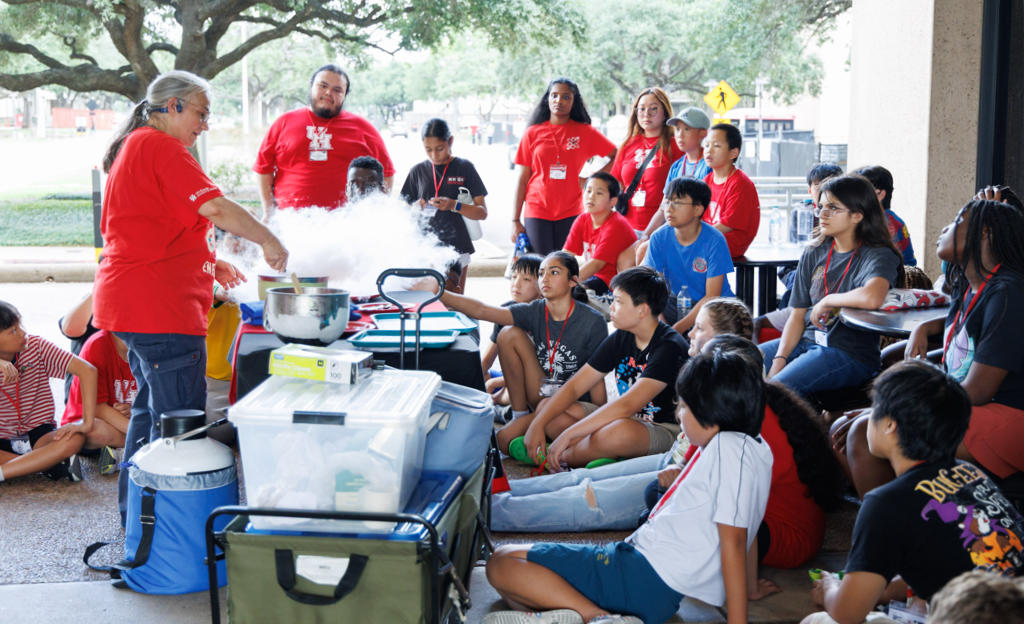
As evidence that its philosophy works, teachHOUSTON and the UH Department of Physics received a 2026 PhysTEC Local Impact Award, given by the Physics Teacher Education Council to honor programs that have made significant contributions to preparing and supporting physics teachers within their local communities. The award also recognizes the longstanding partnership between teachHOUSTON and the Department of Physics in recruiting, preparing and supporting future physics teachers.
“It recognizes institutions that make a meaningful difference in preparing and supporting physics teachers,” said Paige Evans, co-director of teachHOUSTON. “It honors programs that provide mentorship, professional development, community engagement and partnerships to help physics teachers succeed and remain in the profession.”
teachHOUSTON does all that and more, providing future physics, math, chemistry, biology, and computer science teachers with the skills and support they need to succeed and remain in the classroom. Started in 2007, the program is based in NSM and is a collaboration with the UH College of Education. Students earn a bachelor’s degree in a STEM field and minor in education, with courses and hands-on experience offered through teachHOUSTON. About 250 students are currently enrolled, and Evans said 82% of teachHOUSTON alumni are still teaching after five years in the classroom. That compares to just 56% of teachers nationally.
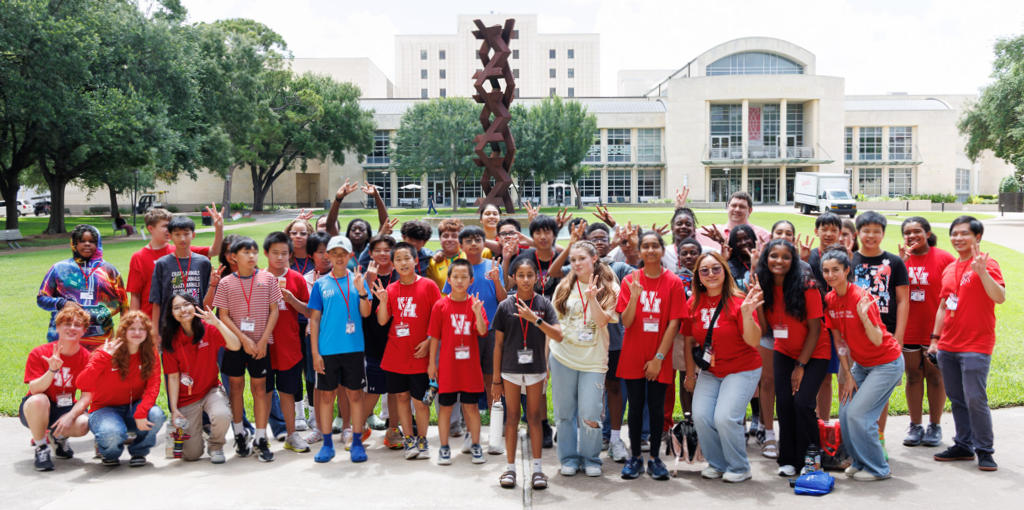
And 95% of teachHOUSTON graduates remain in the Houston area, an illustration of that “local impact” noted in the PhysTEC award. Three-fourths of program graduates teach in high-need schools.
Kayla Le will begin her teaching career this fall in the Alief ISD, working as a middle school math teacher. She will bring the classroom experience she gained through teachHOUSTON, starting with her first semester as a student at NSM. “From the start, I was in classes, teaching already.”
Students often think they aren’t good at math and other STEM classes, but Le has learned to connect. “There are a lot of ways to connect them to math,” she said. One student, for example, loved food, especially a seafood boil. Le wrote questions and story problems involving a seafood boil.
It worked. The student understood the concept.
All teachHOUSTON classes are taught by veteran secondary STEM teachers, and students spend time in secondary school classrooms from the start. “They are in the classroom immediately to see if teaching is for them,” Evans said. “That is followed by two semesters in the classroom working with a mentor teacher and one semester or a full year of student teaching.” The program also offers a New Teacher Academy for early career STEM teachers, building and reinforcing a sense of community to counter the isolation that teachers can feel in the classroom.
“It’s more than teacher preparation. It’s a community,” Evans said.
So what’s the secret sauce behind teachHOUSTON’s success? “One of the greatest strengths is the partnership between NSM, the College of Education and our (school) district partners,” she said. “Another strength is the community we build. Even though they’re taking classes, getting their minor in education, we have all sorts of experiences they can participate in, from teacher interest groups and opportunities in the community to serving as camp counselors and teachers in the STEM camps offered to the community through NSM.”
There are also networking events offered throughout the year to strengthen ties between current and future STEM teachers. “A lot of times, new teachers feel isolated, especially in subjects like physics,” Evans said. “This builds networks, builds confidence, and I believe it helps with retention. We want teachers to know they are not alone. By connecting them with a supportive professional community, we help them thrive in the classroom and continue growing throughout their careers.”