Stalagmite PM-AB-10A from Madagascar was analyzed using three complementary methods: micro-X-ray fluorescence mapping (mXRF), Laser Ablation ICP-MS (LAICPMS), and X-ray Diffraction (XRD). LAICPMS and mXRF are tools for elemental characterization, while XRD is an established tool for mineralogical characterization. Stalagmite PM-AB-10A contains both calcite and aragonite polymorphs with distinct elemental signatures, making it ideal to test the element-mineral relationship.
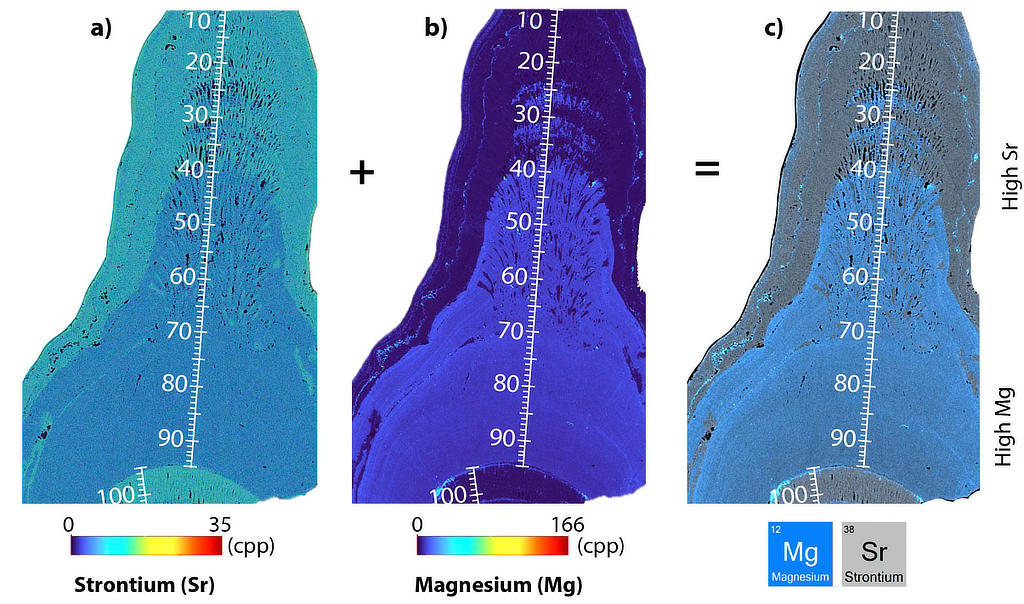
This study demonstrates that magnesium (Mg) and strontium (Sr) are excellent element indicators for identifying calcite and aragonite presence in stalagmites. Mg and Sr show an antiphase relationship: Mg is high in calcite but low in aragonite, while Sr is high in aragonite but low in calcite. This elemental approach enables researchers to identify mineral variations without extensive mineralogical expertise.
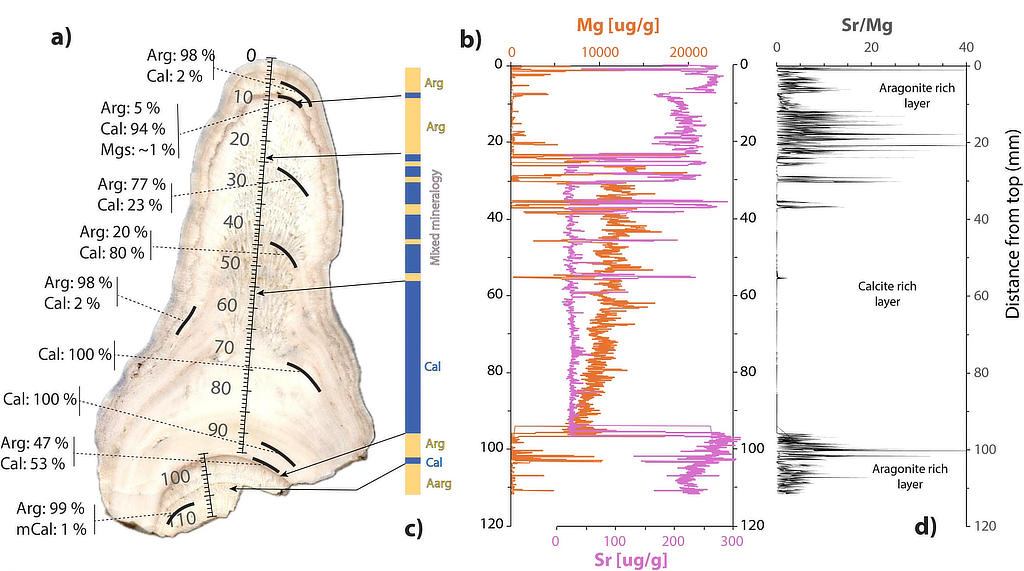
Although it is common that aragonite forms under warm, dry conditions while calcite forms under cool, wet conditions, we should also be aware that mineralogy variations can significantly influence elemental distribution and isotope fractionation in stalagmites.
Cross-verification of element distribution with mineralogy changes should be mandatory to reduce paleoclimate interpretation biases. Researchers who analyze for major and trace elements in stalagmites are encouraged to pay close attention to the antiphase variation between Mg and Sr, as it indicates the co-existence of calcite and aragonite in the sample.