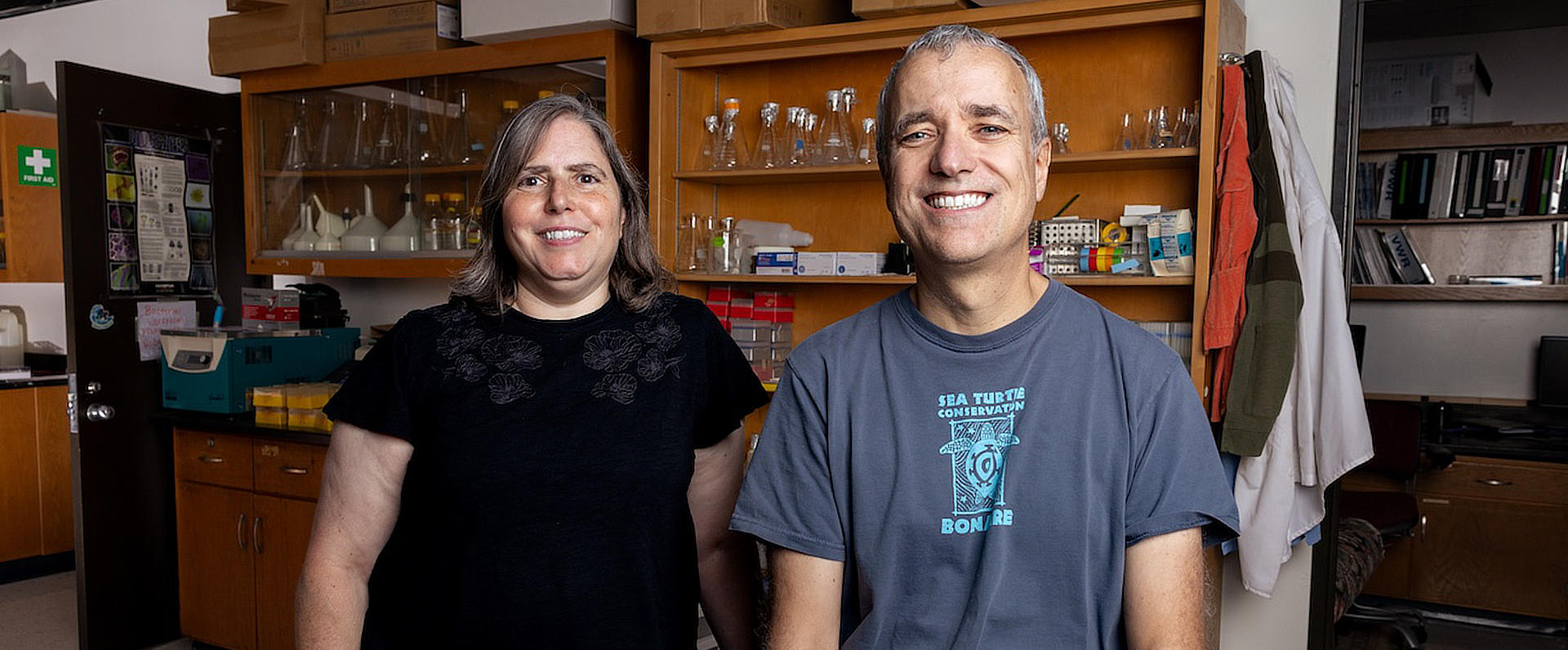
From left: University of Houston evolutionary biologists Rebecca Zufall and Ricardo Azevedo will use a nearly $1 million grant from the National Science Foundation to examine how an organism’s reproductive mode alters the speed at which its DNA mutates.
A nearly $1 million grant from the National Science Foundation will allow University of Houston researchers to investigate how mutation rates evolve across species — work that could offer critical insights into cancer progression and antibiotic resistance.
Over the next four years, UH professors and evolutionary biologists Ricardo Azevedo and Rebecca Zufall, alongside scientists Maurine Neiman from the University of Iowa and Stephen Wright from the University of Toronto, will examine how an organism’s reproductive mode — whether sexual, asexual or self-pollinating — alters the speed at which its DNA mutates. This mutation rate dictates how quickly species can adapt to changing environments.
“If we understand how mutation rates evolve, potentially, we're helping understand evolution more broadly in all kinds of systems — from cancer to the evolution of antibiotic resistance or drug resistance in active infections.”
– Ricardo Azevedo, UH professor
Supported by a combined $2.08 million in total NSF funding across partner institutions, the multi-institutional project builds on previous research by Azevedo and Zufall that found Tetrahymena, microscopic single-celled freshwater organisms, has the lowest mutation rate ever recorded. The discovery provides a foundation for the researchers’ next question: what determines how quickly mutation rates evolve across different organisms and reproductive systems?
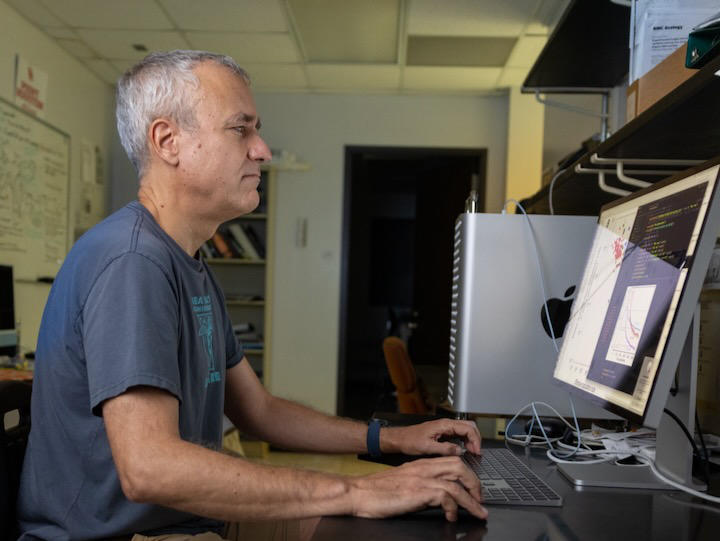
“This collaboration is really powerful because we have three empiricists who work on these three different systems, and then Ricardo is the theoretician and modeler,” Zufall said. “We won’t only focus on the outcome of our specific species. We want to find broad patterns that underlie how populations evolve across all of life.”
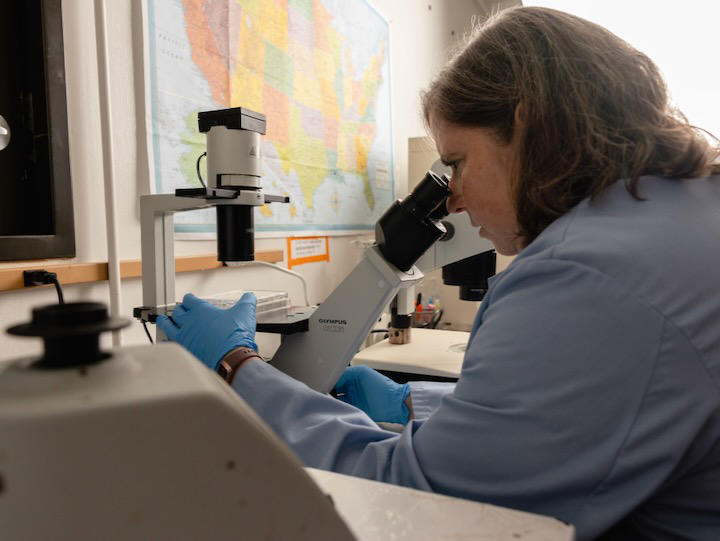
Researchers from the two other institutions will examine snails and mustard plants, respectively, with the UH team focusing on Tetrahymena. By comparing closely related organisms within each group that differ primarily in their mode of reproduction, the researchers can isolate the exact impact reproduction has on mutation rates without interference from other biological variables.

“If we understand how mutation rates evolve, potentially, we're helping understand evolution more broadly in all kinds of systems — from cancer to the evolution of antibiotic resistance or drug resistance in active infections,” said Azevedo, the grant’s principal investigator. “That’s something that has a lot of practical, interesting applications.”
Azevedo noted that cancer cells inside growing tumors reproduce asexually and often elevate their mutation rates, enabling them to adapt quickly and resist treatment. And although the project is driven by basic science rather than immediate clinical applications, understanding mutation rate mechanics addresses fundamental questions in medical research and overall human adaptation and survival.