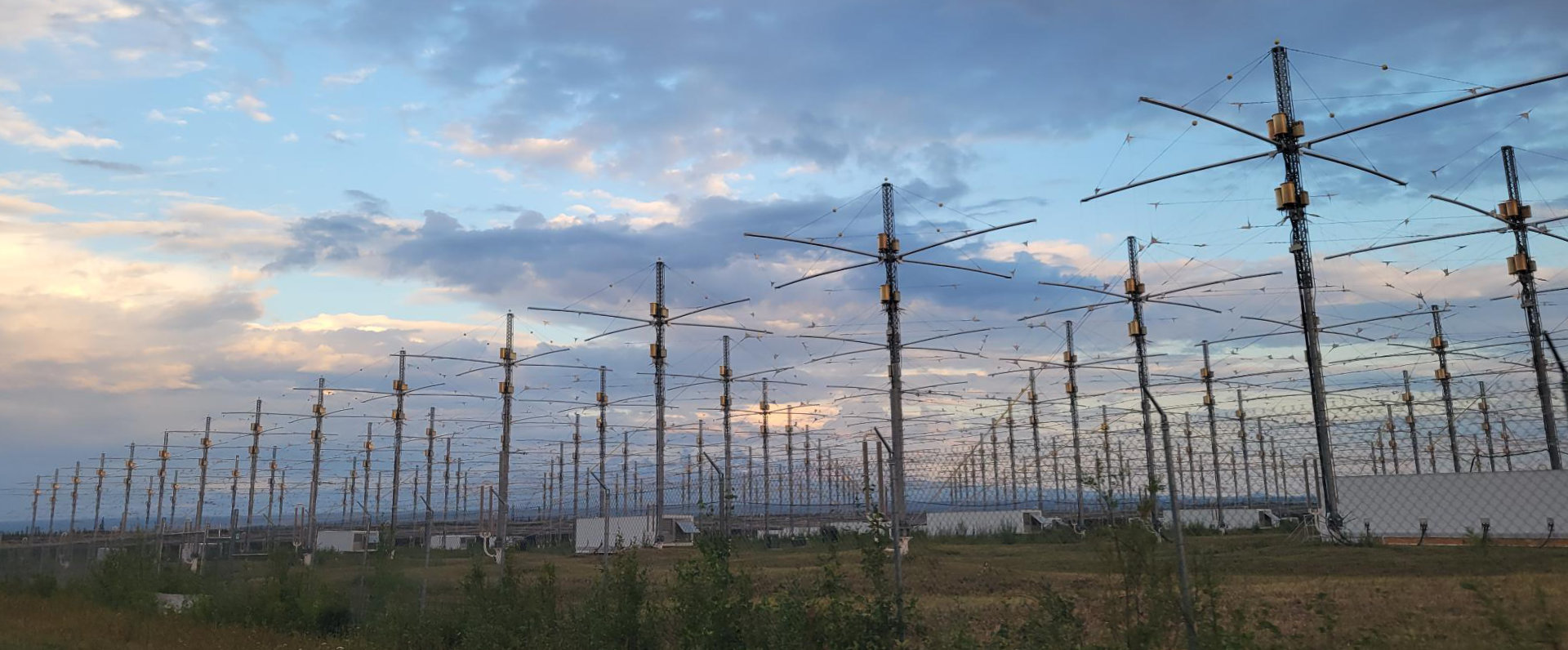
For a group of University of Houston students, a week in Alaska allowed them to put experiments they had spent months developing in Houston to the test.
The students are part of the College of Natural Sciences and Mathematics’ Undergraduate Student Instrument Project, or USIP, a NASA-designed, two-year program that gives undergraduates hands-on experience building instruments to study the upper atmosphere, space weather and Earth science.
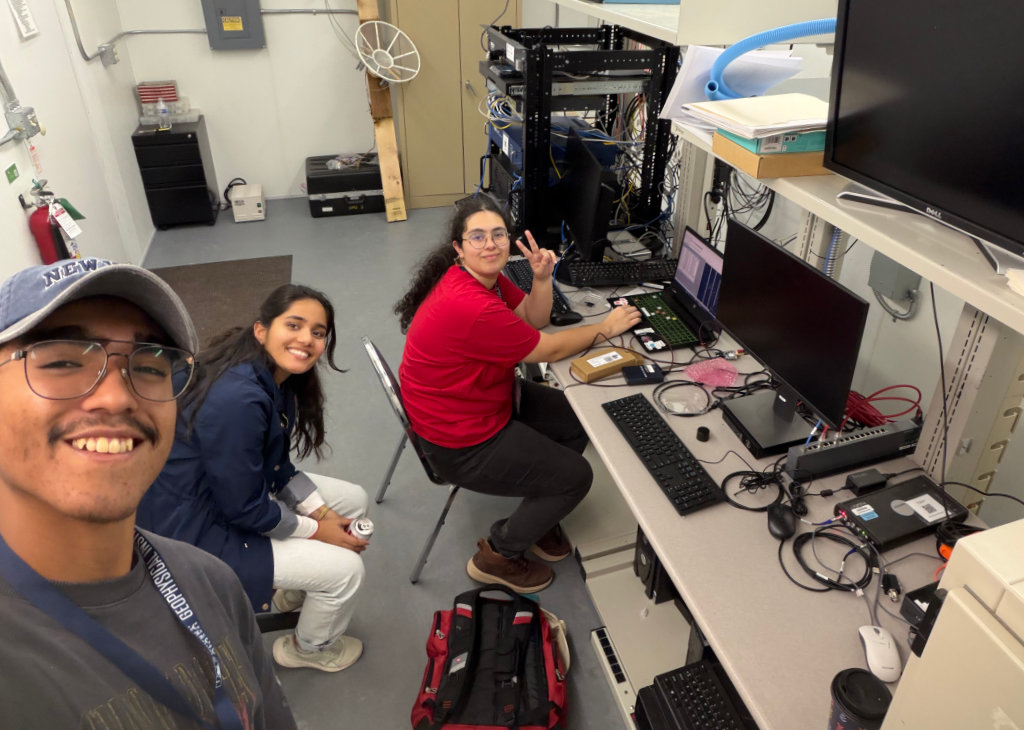
USIP operates in two-year cycles, with each cohort building toward a field campaign in Alaska. USIP VII is preparing for its larger deployment in 2027.
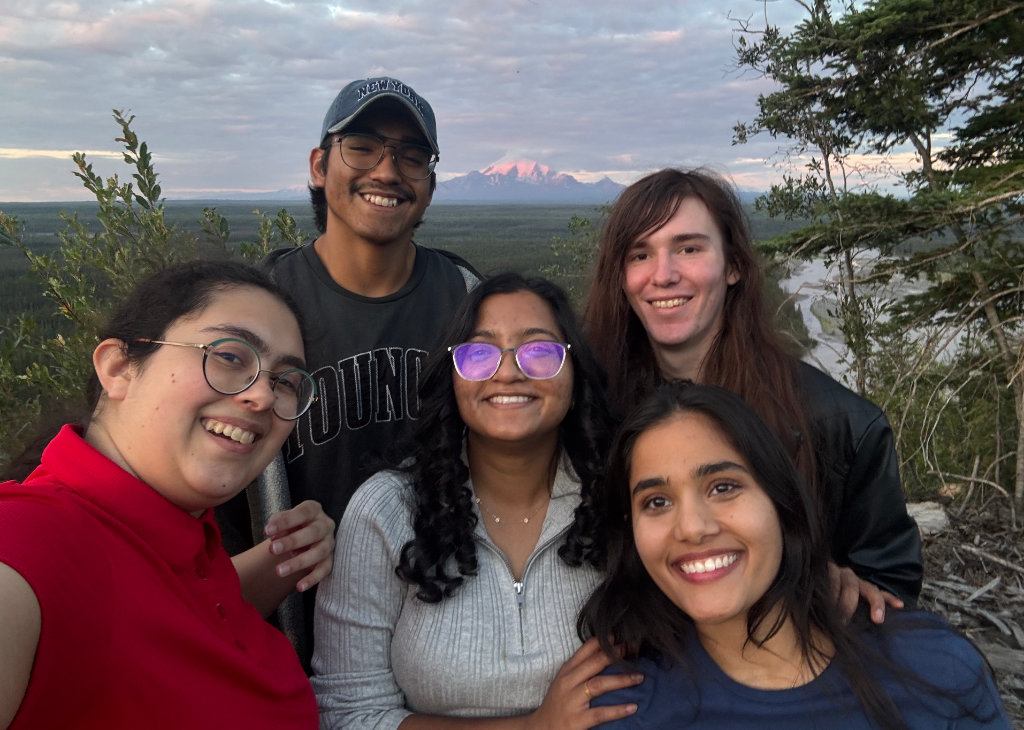
From Aug. 7–14, USIP VII students Maria Abraham, Jonathan McChesney-Fleming, Zaara Michalewicz, Jacobe West and Geetika Yadav participated in the Polar Aeronomy and Radio Science (PARS) Summer School, hosted by the University of Alaska Fairbanks. Edgar Bering, professor in the Department of Physics and a USIP faculty adviser, accompanied the students, providing instruction and guidance and delivering one of the program’s official PARS lectures.
There, they tested instruments designed to study how changes in Earth’s upper atmosphere affect radio and satellite signals. Those signals support technologies people rely on every day, including GPS and long-distance communications. Understanding how the upper atmosphere affects them can help researchers better understand their reliability.
The students conducted two experiments — one involving very low frequency, or VLF, radio signals and another involving Global Navigation Satellite System, or GNSS, signals.
Taking the Experiment Into the Field
At the HAARP research facility in Alaska, one team placed radio receivers at different locations to measure changes in signals traveling through the atmosphere. Another examined satellite navigation signals for changes caused by disturbances in the upper atmosphere.
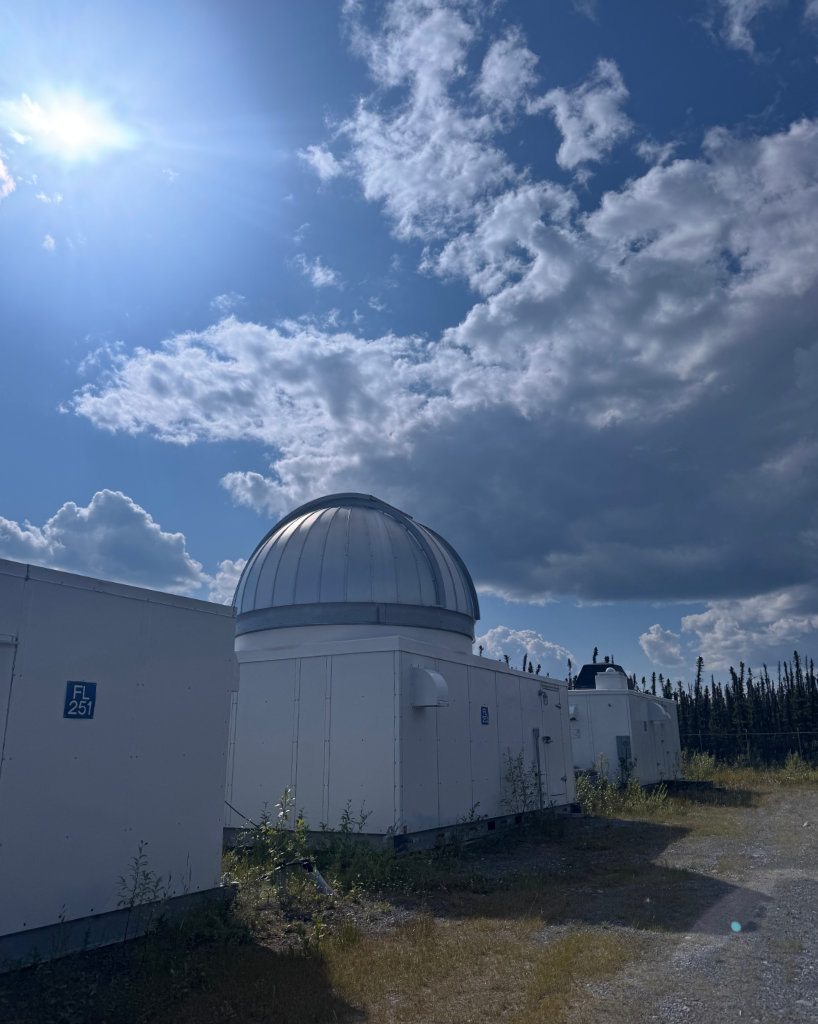
Preparing the experiments required students to draw on different areas of expertise.
McChesney-Fleming, an electrical engineering student, adapted hardware developed by previous USIP teams for the VLF experiment and worked on software used to analyze the data. Abraham, a mechanical engineering student, used additive manufacturing, including 3D printing, to create components and housing for the instruments.
The collaboration also pushed students beyond their own disciplines. Abraham learned about printed circuit boards and soldering from McChesney-Fleming, while students with physics backgrounds helped guide the science behind the experiments.
“Students act as experts and resources to others in USIP with less experience,” Michalewicz said. “And that’s a really important part of the program.”
From 45 Minutes to Three Days
The students also had to adapt once their experiments reached the field.
The GNSS team initially planned to collect data during an approximately 45-minute experiment window. Once in Alaska, however, they saw an opportunity to collect more and kept the system running for three days, including overnight.
“We went from a 45-minute window of planned experiment time to three days,” Michalewicz said.
That meant managing considerably more data than anticipated with the equipment they had brought to Alaska.
“It was a really cool experience just to be like, here’s a new challenge that we could adapt to,” Michalewicz said. “We can do more, let’s do more.”
That kind of problem-solving is central to USIP, where students combine physics and engineering to turn scientific questions into working experiments.
For Yadav, who is pursuing degrees in physics and electrical engineering, the trip also introduced a different side of research. Her previous experience has been more theoretical, and she said discovering how much she enjoyed fieldwork helped narrow the areas she may consider researching in graduate school.
For Abraham, working beyond mechanical engineering reinforced her interest in research and design.
“I realized that I really enjoy being in an environment where I’m constantly learning new things outside of my expertise,” Abraham said.
Building Toward What’s Next
The PARS trip gave students an additional opportunity to test their work before USIP VII’s larger Alaska deployment in March 2027.
It also supports another effort underway within USIP: a CubeSat initiative. West said data and experience from PARS are helping the team develop the science behind the CubeSat, refine future experiments and strengthen its technical foundation.
For West, the experience also captured what makes field research different from learning about scientific phenomena in a classroom.
“There is something extraordinary about standing in Alaska, assembling experiments, troubleshooting instruments, collecting real data, and realizing that the phenomena you have spent years seeing in textbooks are unfolding above you,” he said.
For the students, those experiences are shaping more than a single experiment. They are providing opportunities to build, troubleshoot and learn from one another while discovering where their own interests may lead.
As Abraham put it, USIP has given her “the chance to try out things I probably wouldn’t have ever encountered through classes alone.”