Death is one of life's few certainties. Yet, for many people, conversations about dying remain uncomfortable or altogether avoided.
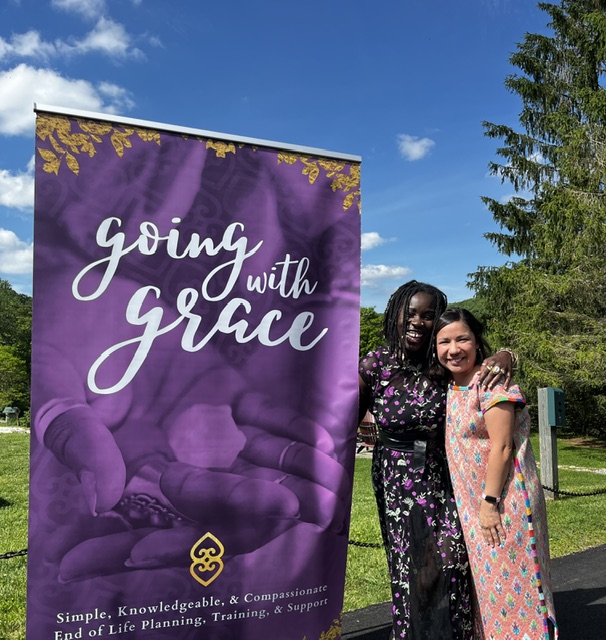 For Yvonne Mendoza, LMSW, those conversations have become both deeply personal and profoundly professional.
As a social worker, educator, and practicum faculty member at the University of Houston Graduate College of Social Work (UH GCSW), Yvonne has spent years supporting children, families, and caregivers through trauma, grief, and life's most vulnerable moments. But after experiencing a season of profound personal loss—and later navigating her own medical complications—she felt called to better understand how people can be accompanied through life's final chapter.
In 2023, Yvonne lost three beloved family members—her grandfather Arturo, her aunt Dora, and her cousin Alma.. As her family navigated funeral arrangements, memorial programs, and cemetery processions, they also witnessed the complexities and shortcomings of systems intended to support people at the end of life.
"There were so many moments where I thought, I wish we would have known," Yvonne recalls. "Sometimes we found ourselves saying, This isn't normal. And occasionally there were moments where we whispered, How beautiful that goodbye was."
The following year brought another unexpected chapter. After experiencing serious medical complications following surgery, Yvonne found herself navigating healthcare systems from a patient's perspective, revisiting the emotions and vulnerabilities she had experienced while caring for her family.
Those experiences ultimately led her to complete end-of-life doula training through Going with Grace under the guidance of renowned death doula Alua Arthur. Alongside 32 cohort members, Yvonne spent a week immersed in conversations about mortality, learning how to accompany individuals and families through end-of-life decisions while examining her own relationship with death.
Although the term death doula has gained wider recognition in recent years, Yvonne is quick to acknowledge that the practice itself is anything but new.
"Many of our cultures have had death doulas for centuries, even if we didn't call them that," she says. "Communities have accompanied the dying through ritual, presence, storytelling, caregiving, and collective grief."
Throughout twelve training modules, participants explored topics ranging from advance directives and natural death care to family support and conscious dying. Yet one of the greatest lessons extended far beyond clinical knowledge.
Before we can accompany others through death, Yvonne says, we must first be willing to sit honestly with our own mortality.
Expanding What It Means to Accompany
"Death doula work continually asks, 'What can I do for you today?'"
For Yvonne, the training did not replace the values she already practiced as a social worker—it expanded them.
Social workers are already grounded in many of the principles that define death doula work: client self-determination, informed consent, cultural humility, reflective listening, and the practice of bearing witness without immediately trying to fix another person's suffering.
"What the training expanded for me was the invitation to become a doer," Yvonne explains. "Death doulas do not simply hold space—we also help create it."
Sometimes that means helping someone complete an advance directive. Other times it means coordinating resources, gathering loved ones, creating rituals, advocating within healthcare systems, or simply ensuring someone has what they need today.
"That word—today—became incredibly important to me throughout my training," she says. "Death doula work continually asks, What can I do for you today?"
Yvonne believes social workers are uniquely positioned to transform conversations surrounding death, particularly within healthcare settings where discussions often center on diagnoses, procedures, and treatment plans.
Instead, she says, social workers help ensure that a person's values, culture, relationships, and definition of a desired death remain central to the care they receive.
For individuals —and for the families walking beside them—death doulas serve as companions and advocates, helping people navigate complex systems, connect with resources, and preserve dignity throughout the dying process.
Importantly, Yvonne notes that the inequities people experience throughout life often remain present at the end of life.
"The barriers don't disappear simply because someone is dying," she says. "Part of our role is helping people navigate those systems, mitigate harm where possible, advocate for what matters most to them, and, when necessary, help them find another path altogether."
Whether someone hopes to spend their final days at home, begin hospice earlier, incorporate meaningful cultural traditions, or simply have greater agency over end-of-life decisions, Yvonne believes social workers trained in death doula care can help make those wishes possible.
Ultimately, she says, the work asks practitioners to reimagine death and death care so people can live—and die—in alignment with their values.
Learning How to Live
We will all die.
It is a reality Yvonne believes healthcare professionals should be as comfortable discussing as they are discussing life.
One of the most transformative moments of her training came during an exercise centered on the Nine Contemplations of Death, developed by the 11th-century Buddhist scholar Atisha. Guided through a meditation while lying quietly on the floor, participants were invited to reflect deeply on their own mortality.
Several contemplations settled profoundly within her:
- My loved ones cannot save me.
- Death comes whether or not I am prepared.
- My own body cannot help me when death comes.
Rather than leaving her focused on death itself, the experience transformed the way she thinks about life.
"It challenged me to think less about how I want to die and more about how I want to live," Yvonne says. "Am I saying what needs to be said? Am I loving people well? Am I living in alignment with my values?"
She now believes one of the greatest gifts of death doula training is that it is not simply about preparing people for death—it teaches us how to live with greater intention, presence, and gratitude.
The experience also strengthened her understanding that conversations about death cannot be separated from conversations about justice.
"As a person of color, I cannot separate conversations about death from conversations about justice," she reflects. "I think about the communities that have witnessed tragic deaths at the mercy of systems and others. I think about the people whose desired deaths were denied long before they were dying."
Those reflections continue to shape her work as an educator, practitioner, and mentor.
Looking ahead, Yvonne sees tremendous opportunity for students and practitioners across the UH Health Colleges.
She hopes future healthcare professionals will become as comfortable talking about death as they are about life, understanding that healing does not always mean curing. Sometimes, she says, healing looks like accompanying.
She envisions healthcare environments where patients understand what is happening to their bodies, know the options available to them, have their pain managed with compassion, and see their cultural traditions, relationships, and values honored throughout the dying process.
"Can we create spaces where families are prepared instead of overwhelmed?" she asks. "Where interdisciplinary teams work together to preserve dignity rather than simply manage illness?"
For Yvonne, the answer begins with reimagining what compassionate end-of-life care can be and challenges the next generation of social workers to imagine a future where compassionate end-of-life care is not the exception, but the expectation.
"I am asking of myself—and I would ask of my students—to reimagine death care and the compassion to help create it." It is a vision rooted not only in professional practice, but in love, dignity, and the belief that every person deserves to be seen, heard, and accompanied through life's final journey.
Her motivation for this remains deeply personal.
"This is the opportunity I hope to co-create," she says, "because I wanted that for my Arturo, for my Dora, and for my Alma."