The Graduate College of Social Work (GCSW) is pleased to announce that two of our MSW students, Ẹniọlá A. and Edwin Marquez have been selected as recipients of the 2026-2027 CSWE Minority Fellowship Program (MFP) award.
CSWE’s Minority Fellowship Program (MFP) opportunities support the mission of the Substance Abuse and Mental Health Services Administration to reduce the effects of substance abuse and mental illness on America’s communities by increasing the number of individuals trained to work with underrepresented and underserved racial/ethnic minority persons with or at risk for mental health and/or substance abuse disorders.
The minority fellowship program offers both an MSW and PhD program. The Minority Fellowship Program for MSW students is designed to enhance the training of full-time, master’s-level social work students in their final year of study at a CSWE-accredited institution, while the Minority Fellowship Program for PhD students supports racial/ethnic minority individuals with social work master’s degree, pursuing a doctoral degree, whose career goals provide leadership in practice, research, teaching, and policy promulgation in government or private organizations serving underrepresented and underserved persons with or at risk for mental health and/or substance abuse disorders.
We asked our esteemed recipients—Ẹniọlá and Edwin—to share insight into their social work journeys and what receiving this honor means to them. Learn more about their stories and the paths they are charting toward excellence.
Recipient: Ẹniọlá A. (Requested No Photo)
Receiving the CSWE Minority Fellowship Program (MFP) award is a meaningful recognition of Ẹniọlá’s commitment to education and a future career in social work. The award will help ease the financial burden of pursuing an MSW, including paying down student loans and continuing to support academic goals, while strengthening Ẹniọlá’s focus on the future Ẹniọlá hopes to build.
Ẹniọlá’s path to an MSW has been shaped by experiences both locally and internationally. Exposure to diverse communities and perspectives left a lasting impression and ultimately inspired Ẹniọlá to pursue social work. Ẹniọlá values opportunities to learn from people whose experiences differ from Ẹniọlá’s own, recognizing that those perspectives deepen an understanding of individuals, communities, and the world around us. While Ẹniọlá has considered eventually pursuing a doctoral degree in Clinical Psychology, Ẹniọlá views the MSW as an important foundation for developing the knowledge and skills needed to create meaningful, lasting change. “I value exposure to diverse perspectives, especially those that differ from my own,” Ẹniọlá shared. “They help me better understand individuals, communities, and the world around me.”
That commitment to understanding people beyond assumptions also shapes how Ẹniọlá defines social justice and the people who inspire the work. Rather than pointing to a single social work leader, Ẹniọlá looks to “average folk”—people who make sacrifices each day to create better lives for themselves, their children, and those around them. Ẹniọlá admires people who write their own stories, overcome barriers and expectations placed before them, and continue to believe in themselves even when others attempt to limit who they can become.
In a future career, Ẹniọlá hopes to serve as a “conduit of abundance” for people in need, allowing that impact to extend across practice, research, teaching, and policy. While Ẹniọlá is still defining what leadership will ultimately look like, the hope is to use every opportunity and space encountered to create meaningful change, whether that impact reaches a community, an institution, or simply one person.
“At this stage of my life, my focus is simply to do what I can, wherever I am, to expand access, empower others, and contribute to a more healed world,” Ẹniọlá said.
Ẹniọlá’s commitment is particularly evident in a desire to serve underrepresented and underserved individuals who experience barriers to mental health care by reducing systemic and self-imposed barriers while creating spaces where people feel genuinely seen, heard, and supported. The approach begins with recognizing people as whole human beings rather than defining them primarily by labels such as “underrepresented” or “underserved.” Experiences with diverse communities have reinforced the importance of meeting people where they are, honoring their unique stories and strengths, and creating opportunities for individuals to heal, grow, and thrive on their own terms.
The GCSW has played an important role in preparing Ẹniọlá for this work, both inside and outside the classroom. While formal coursework has provided an essential foundation, Ẹniọlá credits the extracurricular activities and experiences intentionally pursued with shaping much of personal and professional development. Faculty, staff, and fellow students—including those outside of the GCSW—have challenged Ẹniọlá’s thinking and exposed Ẹniọlá to perspectives that continue to influence how Ẹniọlá understands and engages with others.
When asked what type of impact Ẹniọlá would like to make, the answer was “being a ‘pesky reminder.’” Ẹniọlá wants to remind people that they have the right and ability to tell and own their own stories, including their mental health journeys, despite the narratives and expectations imposed upon them. Ẹniọlá hopes to create spaces where people can recognize the meaning and value in their own experiences, even when those experiences are misunderstood or stigmatized by others.
Ẹniọlá’s work will center on supporting people in their own becoming—helping create the conditions for individuals to recognize their agency, access meaningful support, and define their stories for themselves.
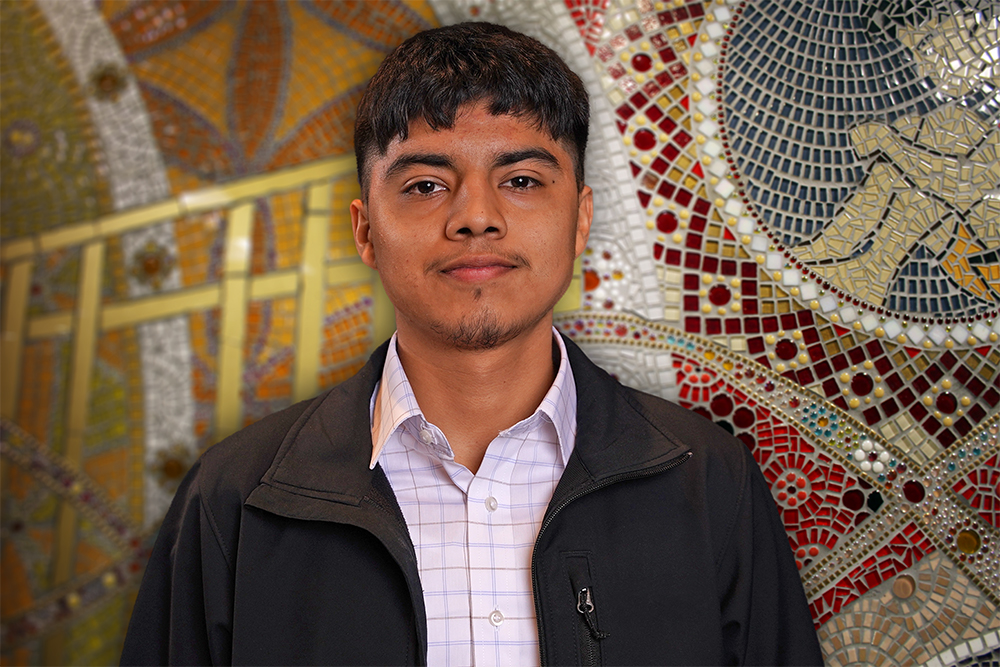
For MSW Student Edwin Marquez, receiving the CSWE Minority Fellowship Program (MFP) award supports his continued education and long-term goals of earning a PhD in Social Work and becoming a Licensed Clinical Social Worker (LCSW). By combining research and clinical practice, he hopes to improve mental health services and outcomes for underserved communities while helping reduce barriers to care.
Edwin’s path to social work began during an undergraduate internship at The Petoskey Center, an intensive outpatient program, where he observed social workers and other mental health professionals providing group psychotherapy and working directly with clients. Witnessing how these professionals addressed clients’ mental health needs and created safe, supportive spaces showed him the meaningful impact of social work. Encouragement from his mentors at Petoskey helped him recognize an opportunity to combine his interest in mental health with his desire to serve others, ultimately leading him to pursue an MSW at the GCSW. Throughout his education and professional development, mentors, faculty, staff, peers, and social work professionals have continued to influence his understanding of social justice and the importance of service. His Catholic faith has also shaped his commitment to compassion and helping individuals and communities who may be overlooked.
In his future career, Edwin aspires to lead at the intersection of clinical mental health and research, focusing on improving services for underserved communities and individuals experiencing mental health or substance use challenges. His goal is to pursue doctoral education while developing his clinical expertise as an LCSW. He hopes to use research to better understand mental health needs, identify gaps in existing services, and develop culturally appropriate approaches to care. By integrating research and clinical practice, he aims to help create more accessible services that respond to the needs of diverse populations.
His commitment to serving underrepresented and underserved communities is informed by his clinical and research experiences working with people from a variety of backgrounds. He has seen how culture, stigma, and language can influence mental health and create barriers to accessing care. As a bilingual social worker, Edwin hopes to use his language skills and clinical training to provide culturally responsive services and help individuals feel more comfortable seeking support. His clinical placement has strengthened his practice skills, while his research experiences have deepened his understanding of disparities and unmet needs in mental health and substance use services.
When asked how the GCSW has prepared him for this work, Edwin pointed to a combination of classroom instruction, hands-on clinical training and research opportunities. His coursework and practicum have equipped him with a foundation in assessment, ethics, therapy and working with individuals from diverse backgrounds. His research experience has deepened his understanding of health disparities and barriers to care, while the support and guidance of faculty, staff and fellow students have helped shape the social worker he aspires to become.
Looking ahead, Edwin hopes to make mental health services more accessible and welcoming, ensuring that individuals feel respected, understood, and comfortable seeking help. Ultimately, he aims to bridge research and clinical practice to reduce barriers, strengthen services, and improve the overall well-being of underserved communities.
Congratulations to our outstanding students—we are honored to be part of your academic journey and proud to witness your continued growth, leadership, and dedication to the future of social work.