For Graduate Students
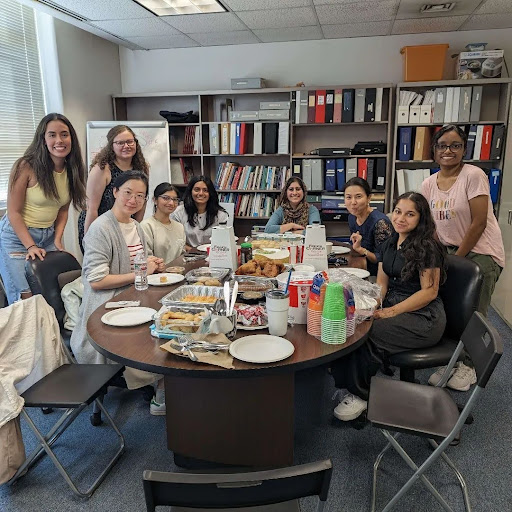 The Cognitive Development Lab is seeking motivated, curious, and collaborative thinkers
to join our research team at the University of Houston. We offer a vibrant, transdisciplinary
environment where students are empowered to lead innovative research that bridges
developmental psychology and cognitive neuroscience.
The Cognitive Development Lab is seeking motivated, curious, and collaborative thinkers
to join our research team at the University of Houston. We offer a vibrant, transdisciplinary
environment where students are empowered to lead innovative research that bridges
developmental psychology and cognitive neuroscience.
Dr. Hanako Yoshida accepts doctoral student applications to the Integrative Program in Developmental, Cognitive, & Behavioral Neuroscience (DCBN) Ph.D. program. Students with experience and/or interest in cognitive development, neuroscientific methods (eye-tracking, EEG, ECG), and parent-child interactions are especially encouraged to apply.
Interested applicants should reach out directly to Dr. Yoshida before applying and indicate Dr. Yoshida as a potential faculty mentor in their career statement. For more information, please visit the Developmental, Cognitive, and Behavioral Neuroscience program page and UH’s Graduate School admissions page.
Dr. Yoshida will be reviewing graduate student applications for the 2027-2028 academic year.
Research Highlights & Innovation
 Joining our lab means contributing to high-impact science, using a multi-method approach
to see the world from a child’s perspective. Our research moves beyond traditional
observation, utilizing synchronized physiological and behavioral data to understand
the "how" and "why" of early learning.
Joining our lab means contributing to high-impact science, using a multi-method approach
to see the world from a child’s perspective. Our research moves beyond traditional
observation, utilizing synchronized physiological and behavioral data to understand
the "how" and "why" of early learning.
Key areas of investigation include:
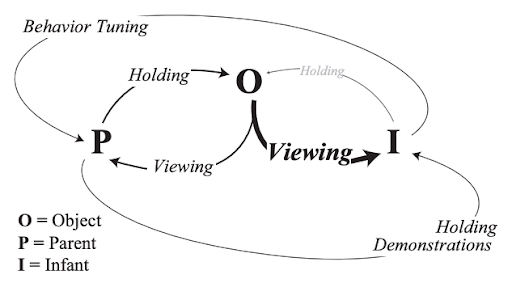
- Social Coordination: We investigate the synchronized interaction between parents and children, seeing exactly how a parent’s manual actions (like holding a toy) and an infant's visual focus align to create the perfect window for learning a new word.
- Bilingualism: We explore how bilingual infants navigate word-learning challenges, focusing on how their unique environments shape the way they distribute their attention during social interactions.
- Neurodevelopment: We compare the attentional and physiological responses of neurotypical children with those who have a diagnosis or family history of autism, helping us understand how early experiences vary across neurodiverse populations.
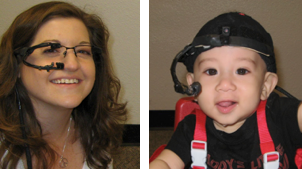
- Cutting-Edge Technology: We leverage a variety of advanced technologies to capture the hidden signals of development, including eye-tracking, EEG, and ECG.
 Funding & Fellowship Opportunities
We are committed to the professional development of our trainees, and our students have a strong track record of securing both university-wide and national awards to support their doctoral research, including but not limited to:
- NIH Predoctoral Individual National Research Service Award (F31)
- NSF Graduate Research Fellowship Program (GRFP)
- UH Graduate School Awards, Scholarships, and Fellowships
- SRCD SECC Dissertation Research Funding Award
- LoneStar LEND Training Program in ASD/DD
 Why Graduate School in Houston?
Life as a graduate student at UH extends far beyond the lab. Houston is the fourth-largest city in the U.S. and offers a unique ecosystem for developmental scientists:
- The Texas Medical Center (TMC): We are minutes away from the world’s largest medical complex, offering unparalleled opportunities for clinical collaboration and networking.
- A Global City: Houston is one of the most diverse cities in the country. This diversity is reflected in our research participants and provides a rich cultural backdrop for studying how the environment influences development.
- Quality of Life: From the world-class Museum District to a legendary food scene and year-round outdoor festivals, Houston provides an affordable and exciting home for your doctoral journey.