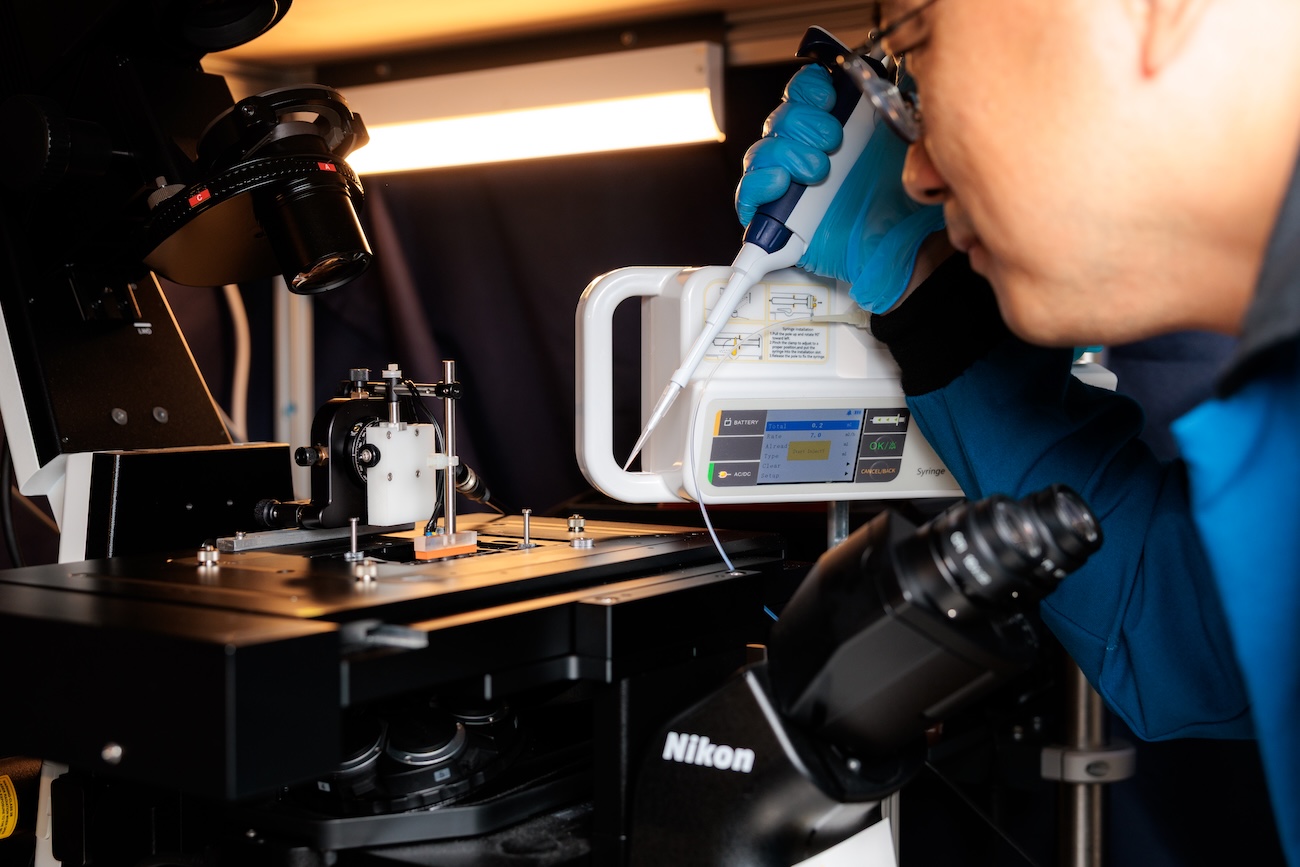
Professor Shoujun Xu (pictured) is collaborating with Professor Yuhong Wang to study how microscopic molecular "machines" inside cells use energy and change shape to build proteins.
Key Takeaways
- University of Houston chemistry professors Yuhong Wang and Shoujun Xu secured a $1.26 million National Institutes of Health (NIH) grant — bringing total federal support to over $3.5 million across 11 years — to combat antibiotic-resistant superbugs like MRSA.
- The project pioneers a hybrid methodology combining AlphaFold AI virtual screening with atomic magnetometer quantum sensing to track ribosome protein mechanics with extreme precision.
- By mapping shape changes in key bacterial enzymes (EF-G and EF-Tu), the team aims to identify novel drug leads and develop predictive software that spots drug-resistant mutation hotspots before they occur in nature.
Two University of Houston chemists are guiding the future discovery of treatments against antibiotic-resistant bacteria by studying how microscopic molecular "machines" inside cells use energy and change shape to build proteins.
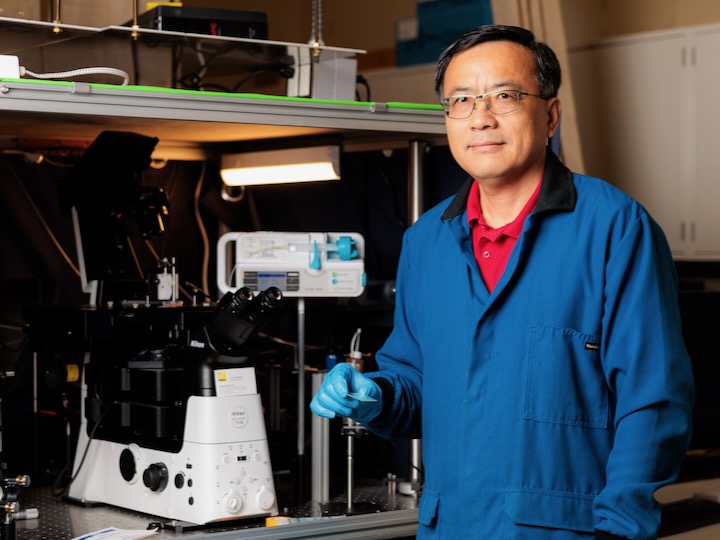
Backed by a four-year, $1.26 million grant from the National Institutes of Health, chemistry professors Yuhong Wang and Shoujun Xu will combine artificial intelligence and advanced physical measurement techniques to study two essential bacterial enzymes: elongation factors G and Tu (EF-G and EF-Tu). These helper proteins push cellular machinery along as proteins are built.
Through the research, the team aims to combat hard-to-treat superbugs like MRSA, an antibiotic-resistant type of staph infection. If a bacterium mutates and alters its protein shape, it can become resistant to that medicine — making it crucial to understand how subtle shape changes alter a protein’s function.
“Drug-resistant bacterial infections such as MRSA are becoming harder to treat, creating an urgent need for faster ways to understand how antibiotics and other small molecules interact with bacterial proteins,” Wang said.
A Decade of Research
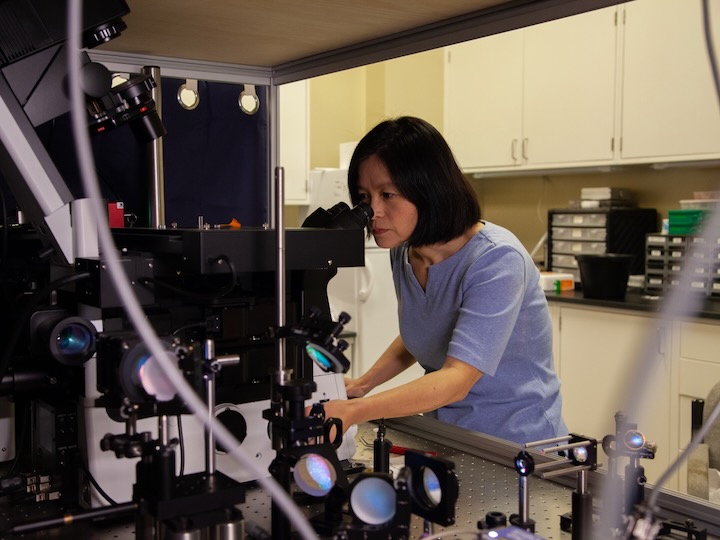
The grant is the latest federal support Wang and Xu have received for their ribosome research, bringing their total NIH backing to over $3.5 million across 11 years. The project was originally sparked by Wang’s biological curiosity about the exact mechanics of protein synthesis and how antibiotics disrupt that process.
In earlier research, the team examined how proteins use a cellular fuel called GTP — functioning much like gasoline in a car engine. They discovered that a small mutation where the protein binds its GTP fuel triggered a physical shape change far across the opposite side of the same molecule. This spurred a critical question: how does a distant mutation alter a protein's overall shape, and how can scientists exploit those shape shifts to stop drug-resistant bacteria?
“Because ribosome function is such a central function in biology, anything affecting that will be a good approach for drug development,” Xu said. “With this grant, we are introducing a new technique called dual force spectroscopy imaging to test many molecules simultaneously. This makes our investigation more efficient and more compatible with the AI-designed proteins Dr. Wang’s group is producing.”
A New Approach
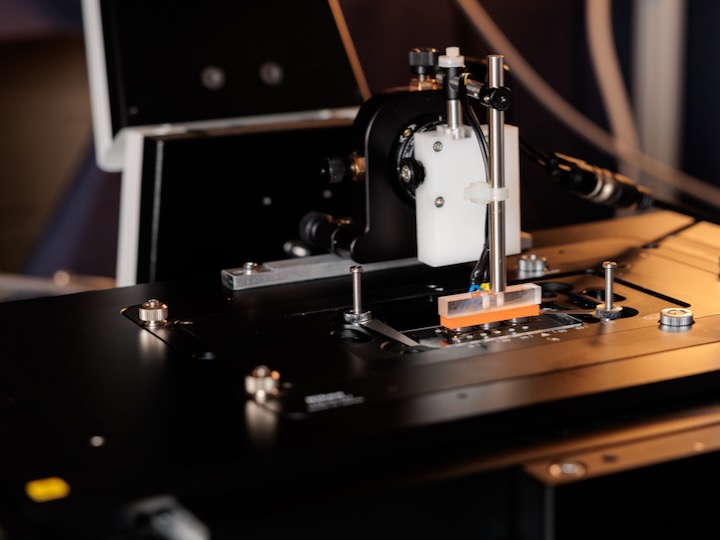
With the new grant, the team begins its research on a computer screen using AlphaFold, an AI tool that screens large molecular libraries in seconds. The software predicts multiple protein shapes, including drug-resistant and ancestral forms, and rapidly identifies promising drug compounds that may bind to them.
Once a shortlist of drug candidates is generated, the team takes those molecules into the lab for physical testing using a technique they invented called super-resolution force spectroscopy. The researchers attach tiny magnetic beads to strands of genetic material and pull on them using magnetic fields to measure molecular binding strength.
What sets the team apart from other chemistry labs worldwide is their detector: an atomic magnetometer. Borrowed from quantum sensing in physics, this precise sensor is more sensitive than standard laboratory techniques and can track cellular movements more closely.
“We're the only chemists in the world that use an atomic magnetometer for biological research,” Xu said. “It's a technique developed by physicists, and there is usually a gap between techniques developed by physicists and biological applications. Yuhong and I have been bridging that gap together for the past 10 years.”
Looking Ahead
The ultimate goal of the 11-year, $3.5 million research initiative is to create predictive software for drug developers worldwide. The researchers are building a predictive computer algorithm that can analyze a protein's genetic sequence, spot potential mutation "hotspots" in advance and allow scientists to design new treatments before drug-resistant bacterial strains even emerge in nature.
"We want an algorithm where you input a protein sequence, score the mutation hotspots, and develop new inhibitors before a drug-resistant species even emerges," Wang said.