Environmental & Geophysical Field Camps to Sierre Madera & Meteor Crater 2026
By Pragya Lama, Ph.D. Geophysics Student
On May 18, 2026, a group of 15 from the University of Houston- a diverse team of faculty members, graduate students, and undergraduate students set off on a ten-day geophysics field expedition with a shared mission: to uncover the geologic secrets hidden beneath two extraordinary meteor impact structures, Sierra Madera, Texas, and Meteor Crater, Arizona.
This expedition was far more than a field trip. It was an immersive classroom without walls, where rugged landscapes replaced lecture halls and every survey line and instrument became part of the learning experience. Under the guidance of Dr. Robert Stewart, students stepped into the role of practicing geophysicists, discovering firsthand how scientific theories are transformed into field observations and meaningful geological interpretations.
From May 18 to 28, each day introduced new challenges and new opportunities to learn. During this 10-day fieldwork, students investigated the location of interest using a diverse suite of geophysical techniques. The expedition featured seismic surveys. Gravity measurements, magnetic surveys, ground-penetrating radar (GPR), Geiger counter measurements, and drone-based aerial mapping. Each method offered a unique window into the subsurface, revealing different aspects of Earth’s hidden structure and demonstrating how multiple datasets can be integrated to solve complex geological problems.
Our two primary destinations presented remarkably different stories of extraterrestrial impacts. Sierra Madera, nestled in the rugged terrain of West Texas, stands as an ancient and deeply eroded impact structure whose geological record has been reshaped by millions of years of tectonic activity and erosion. In contrast, Meteor Crater in northern Arizona is one of the best- preserved impact craters on Earth, providing an exceptional glimpse into the dramatic consequences of a meteorite collision. Visiting both sites offered a rare opportunity for students to compare two impact structures at different stages of geological evolution while appreciating the diverse ways geophysical methods can reveal what lies beneath the surface.
Location 1: Sierra Madera
We began our journey on May 18, spending the entire day on the road to reach our first survey site at Sierra Madera. We travelled from Houston to Fort Stockton, where we stayed in a modest hotel that served as our base camp. On our first day of survey, we began planning the survey and drove to the location, approximately 13km complex meteor impact crater featuring a well-developed central rebound (central uplift) structure. Different survey groups were then organized, with each student assigned to a specific geophysical survey under the guidance of faculty members or graduate students. We worked at Sierra Madera for two and a half days before departing on the afternoon of the third survey day to begin our drive to Roswell, New Mexico.
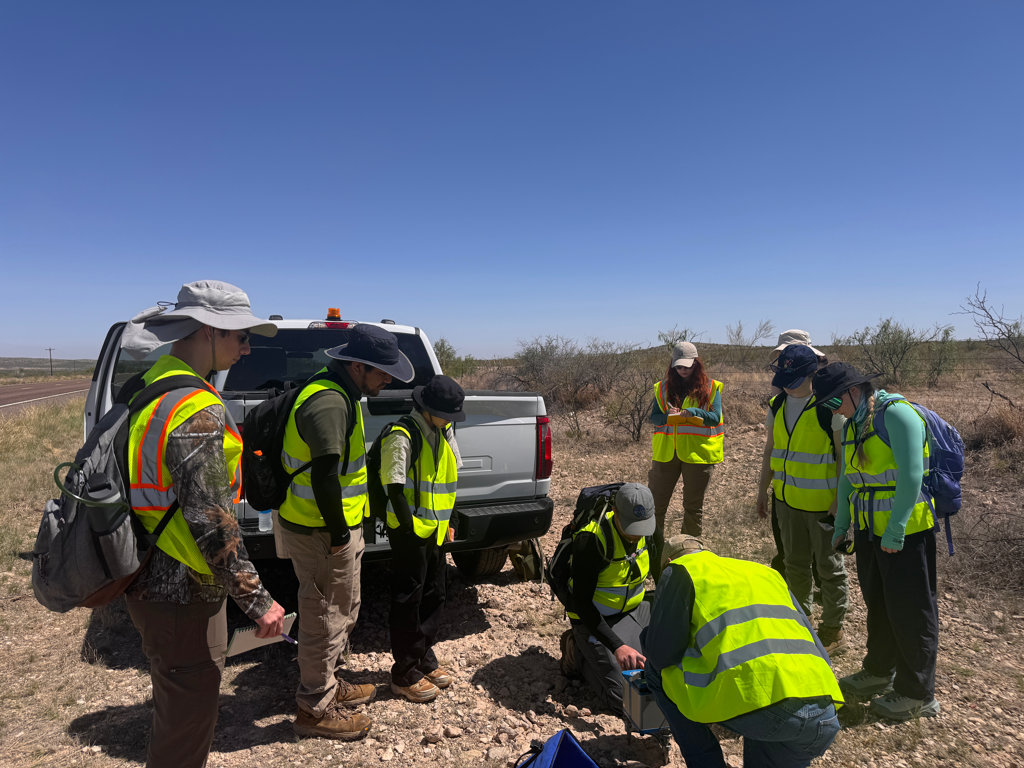
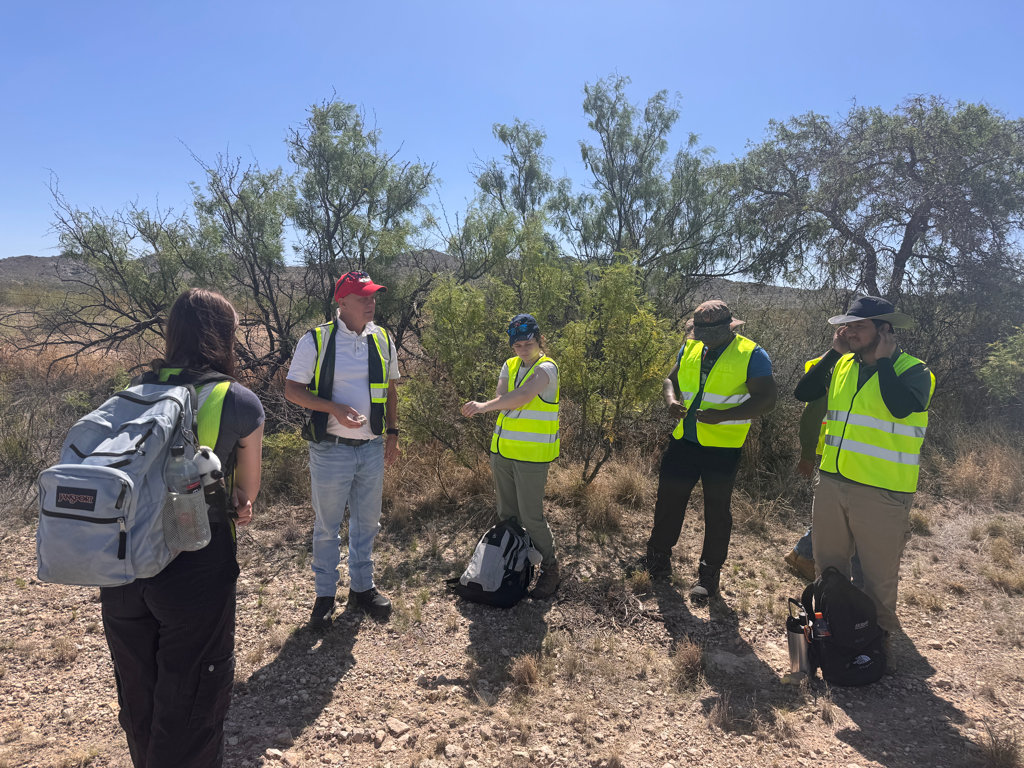
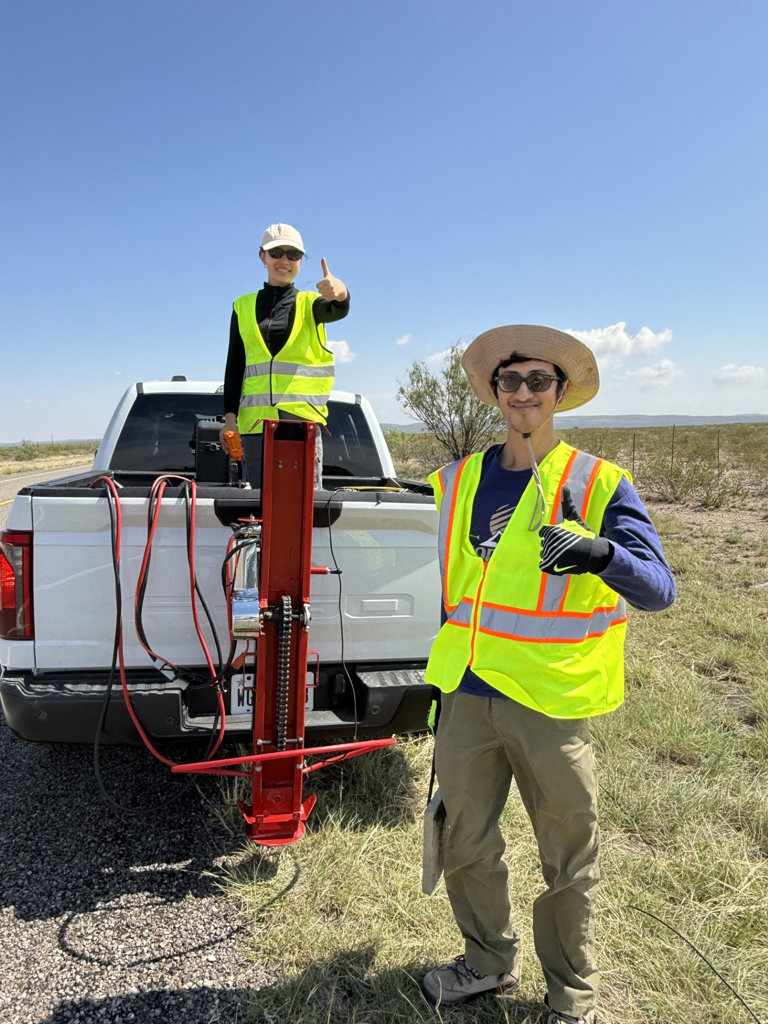
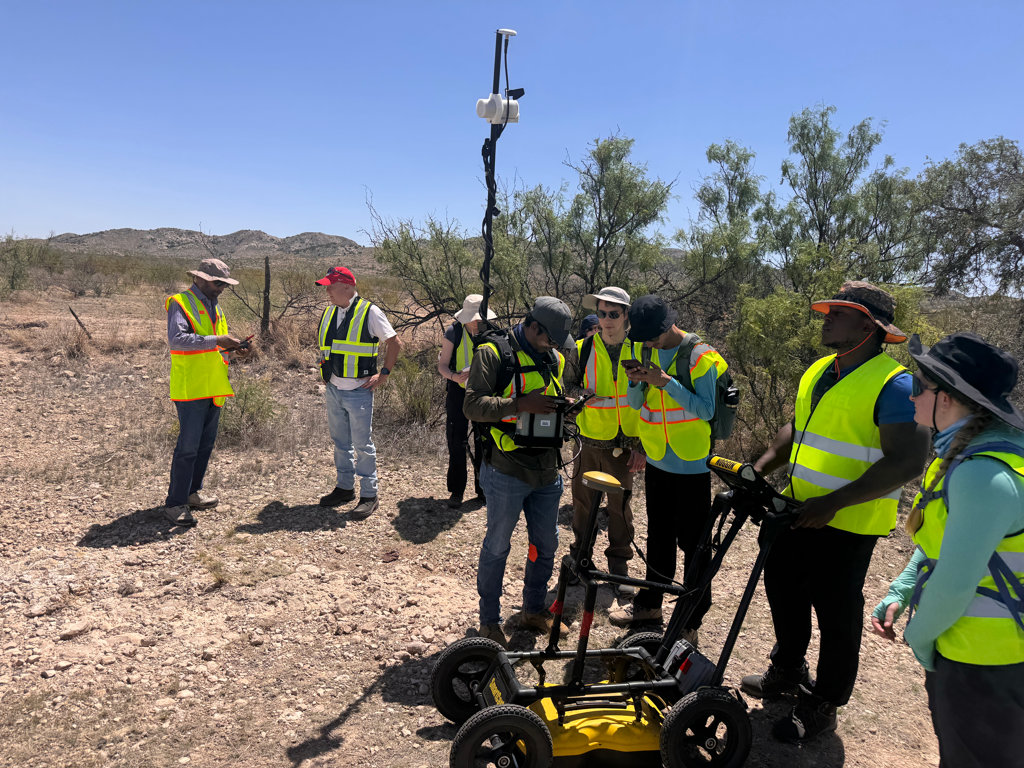
Dr. Stewart set up the strata Viser to record the seismic data with students monitoring thumper truck on left and students with magnetic probe and Ground penetration radar to start reading data on their traverse. We covered approximately 13km of magnetic and GPR reading at Sierra Madera
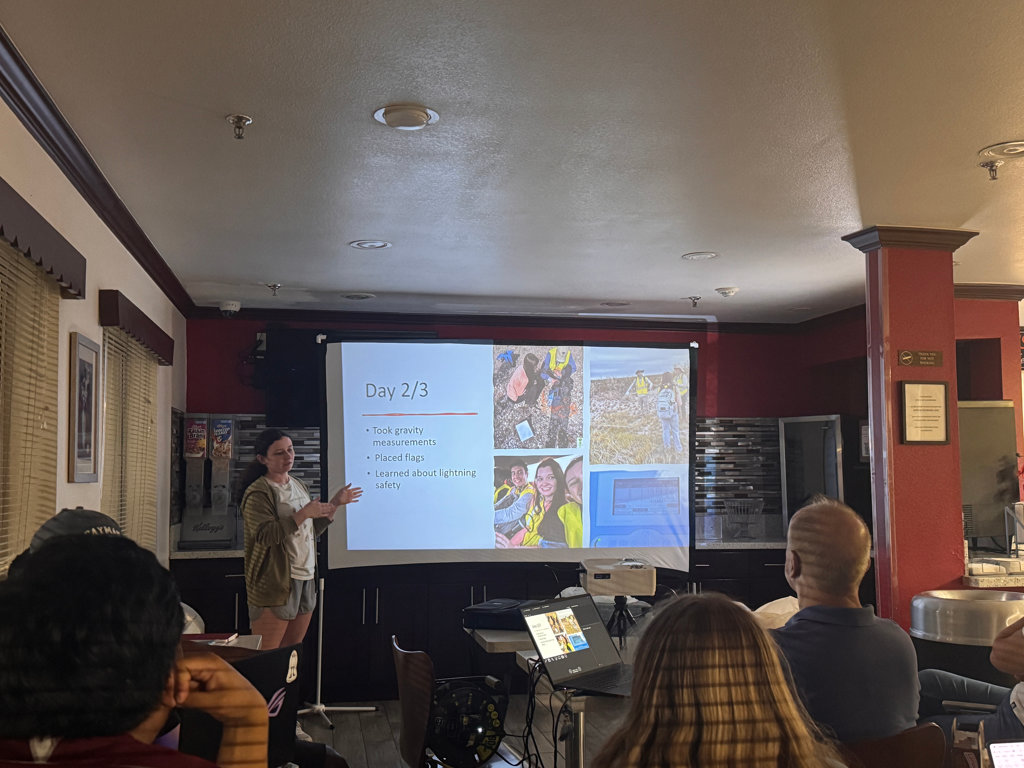
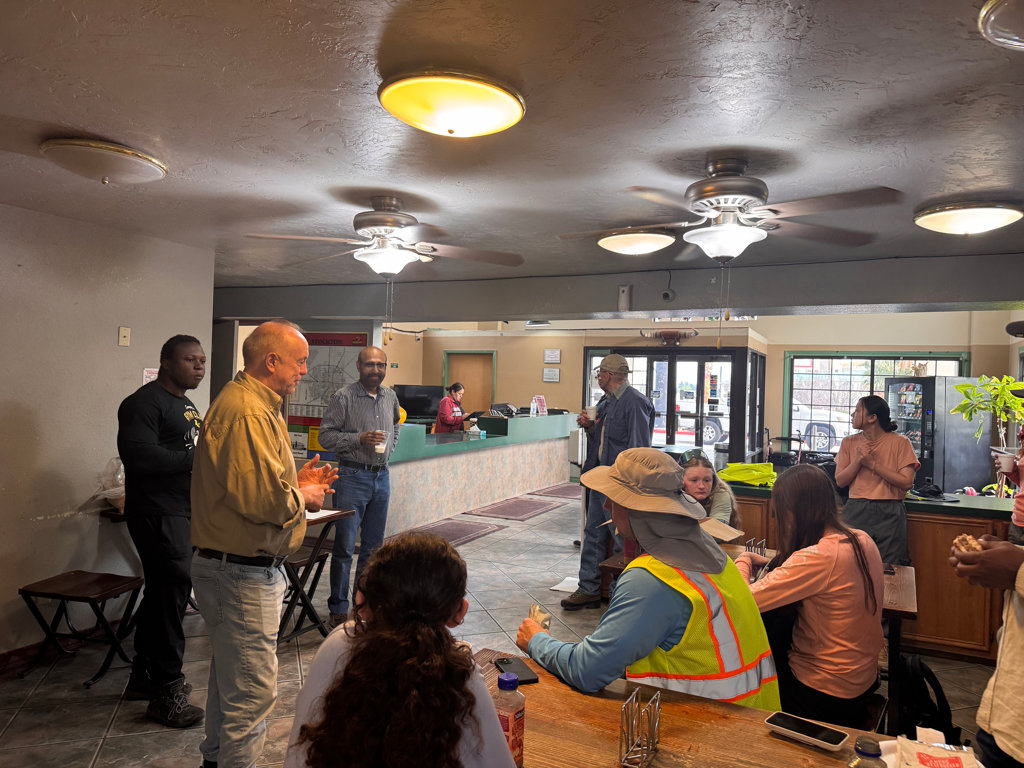
On the third day of the expedition, after completing a half-day of field surveying, we departed from Fort Stockton and travelled to Roswell, New Mexico. Upon arriving in Roswell and having dinner, students participated in individual presentations summarizing what they had learned during the fieldwork at Sierra Madera. Each Student was allotted 3minutes to discuss their observations, experiences, and key takeaways from the survey. The presentation also formed an important component of the course evaluation.
Before heading to Arizona, we made sure to visit the International UFO Museum in Roswell, the world’s most famous alien town. No visit would have been complete without making the acquaintance of a few “aliens” before continuing our journey west.
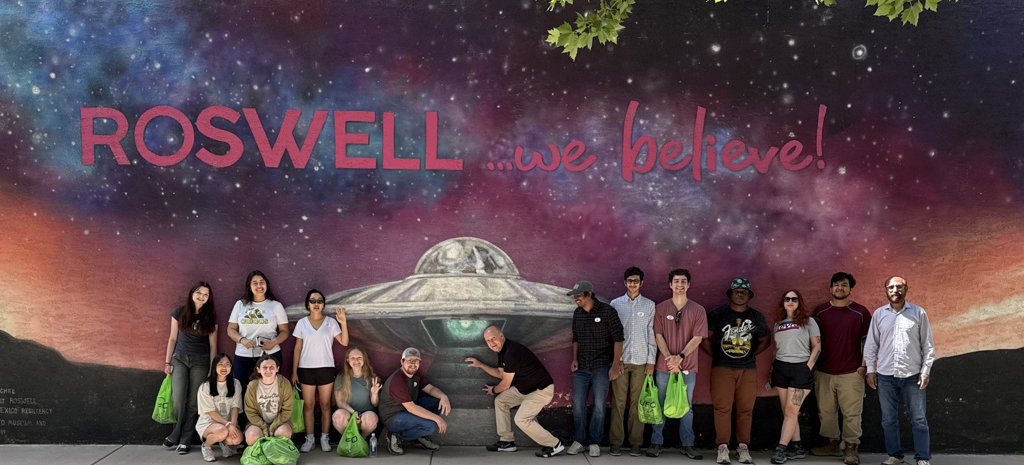
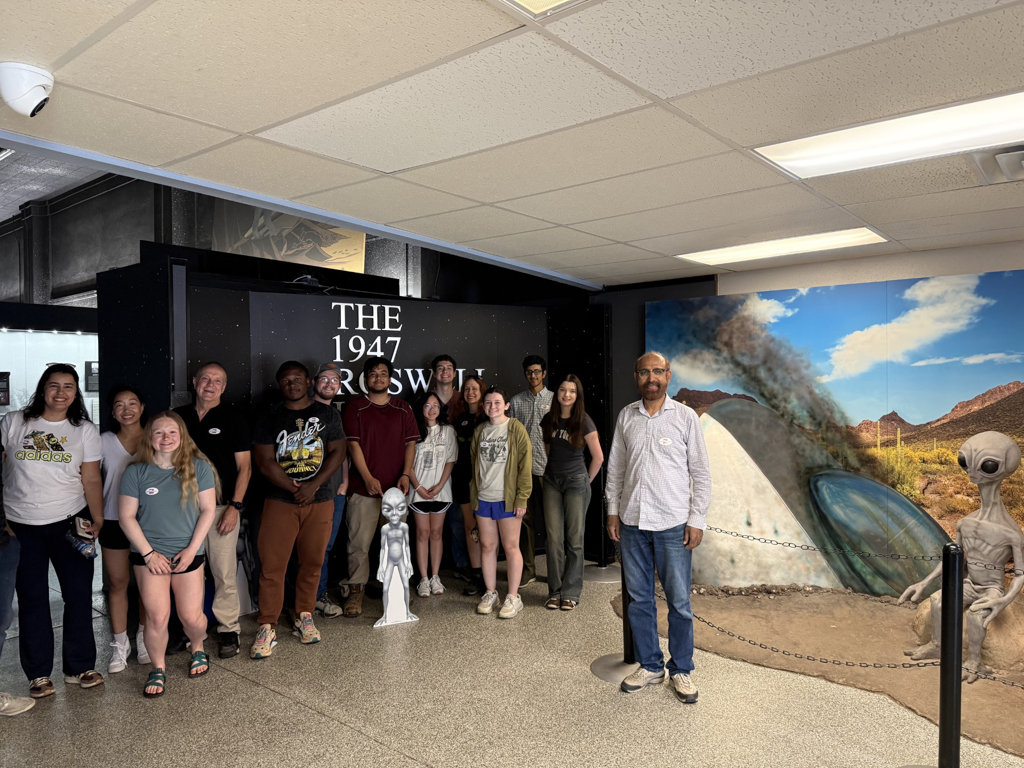
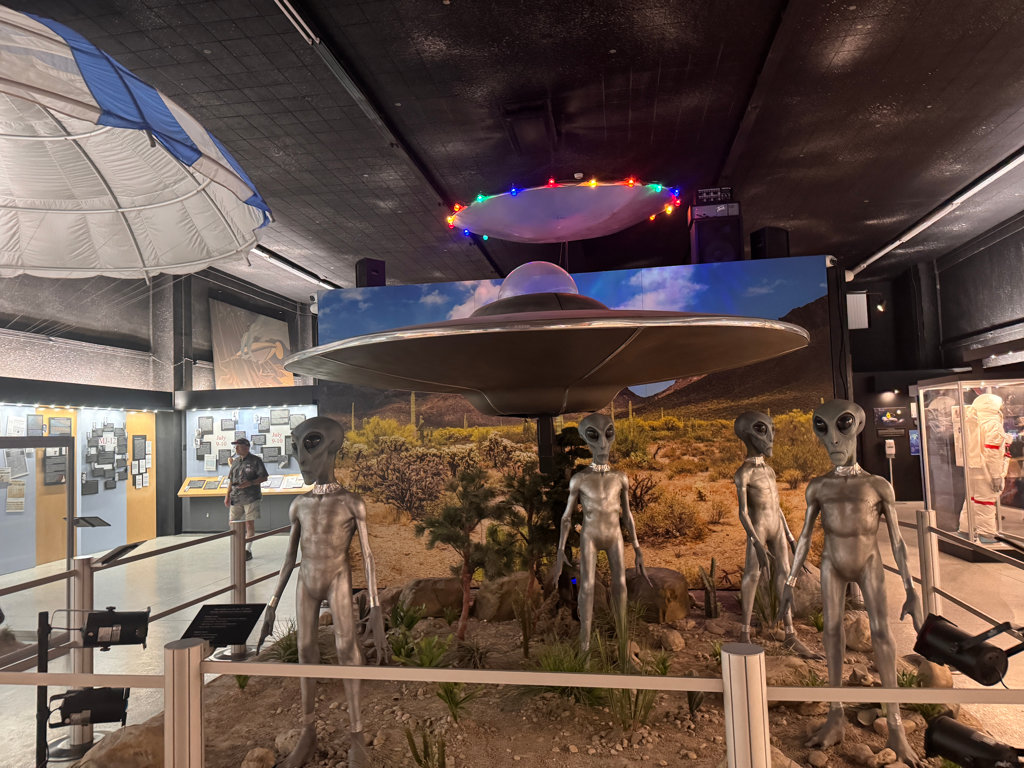
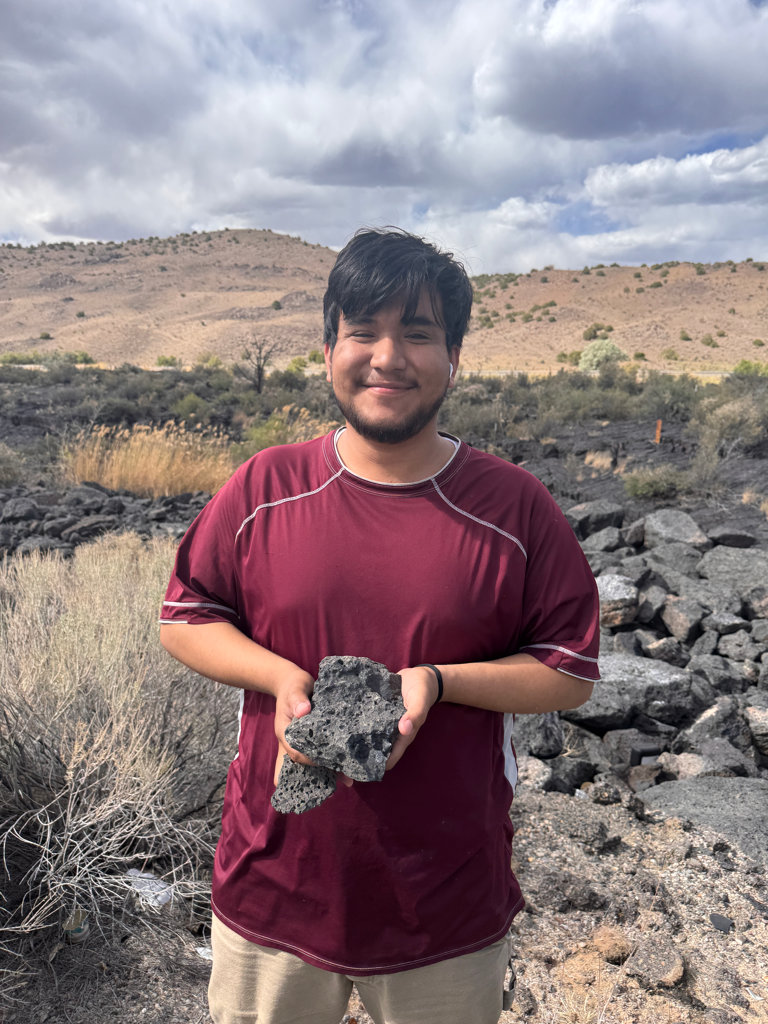
On our way to Arizona, we made several interesting stops, including the Carrizozo Volcanic Field Scenic Area, where we observed extensive basaltic Lava flows, as well as the Indian art and cultural center, gaining insight into the region’s geologic and cultural heritage
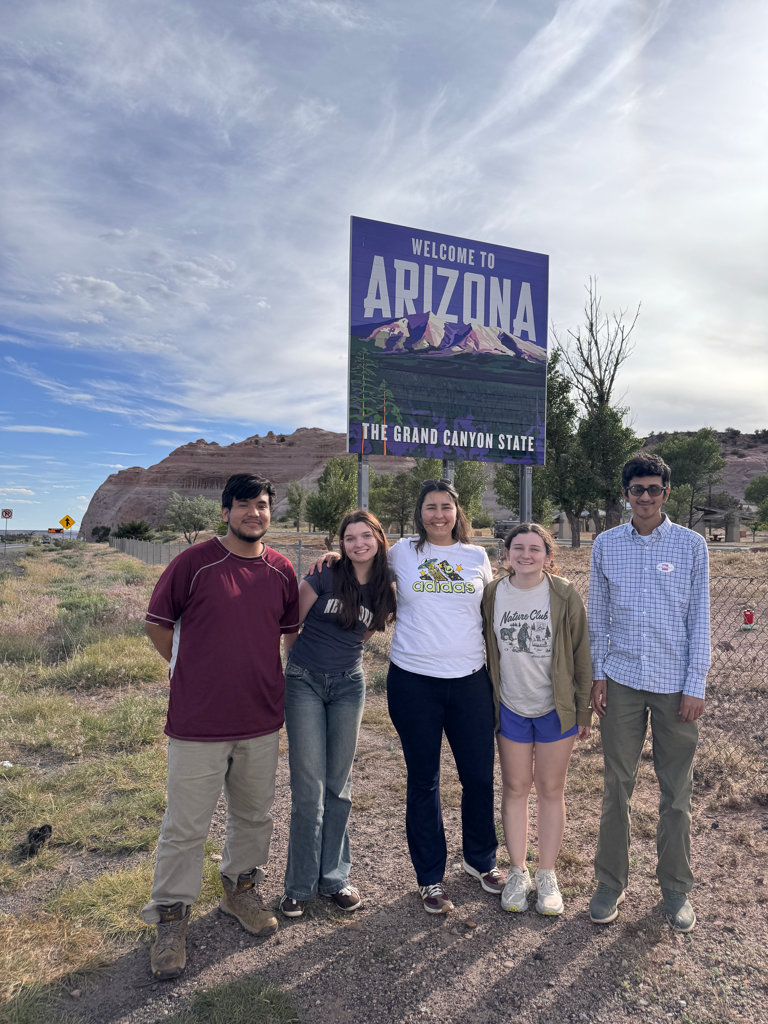
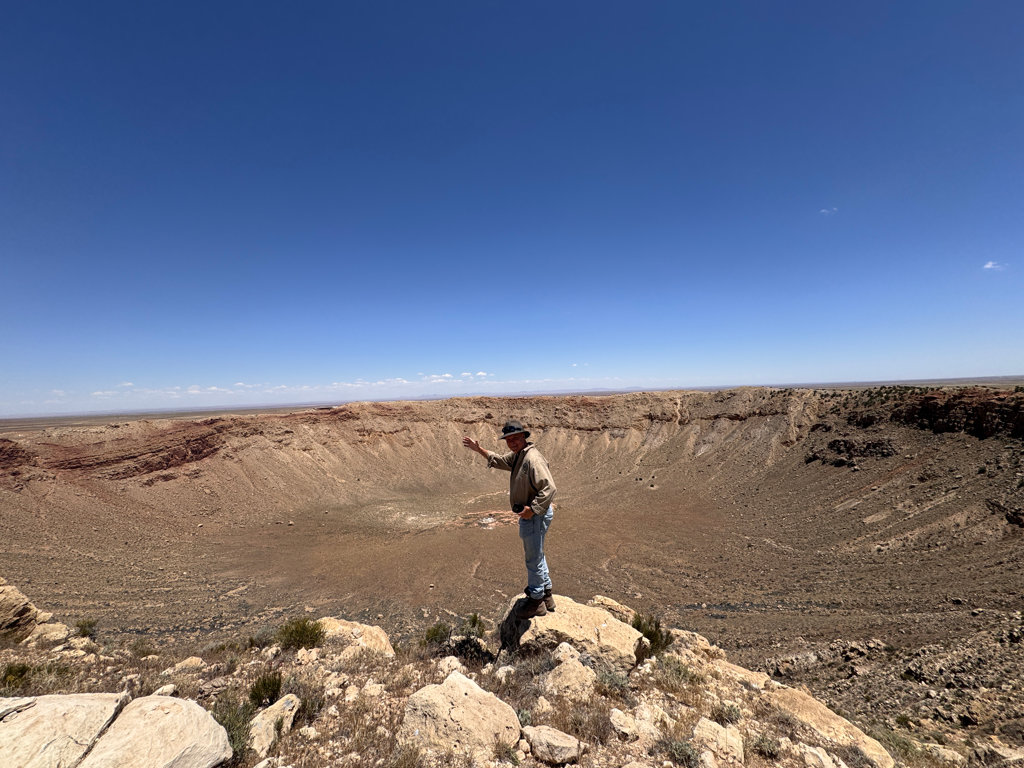
Location 2: Meteor (Barringer) Crater, Arizona
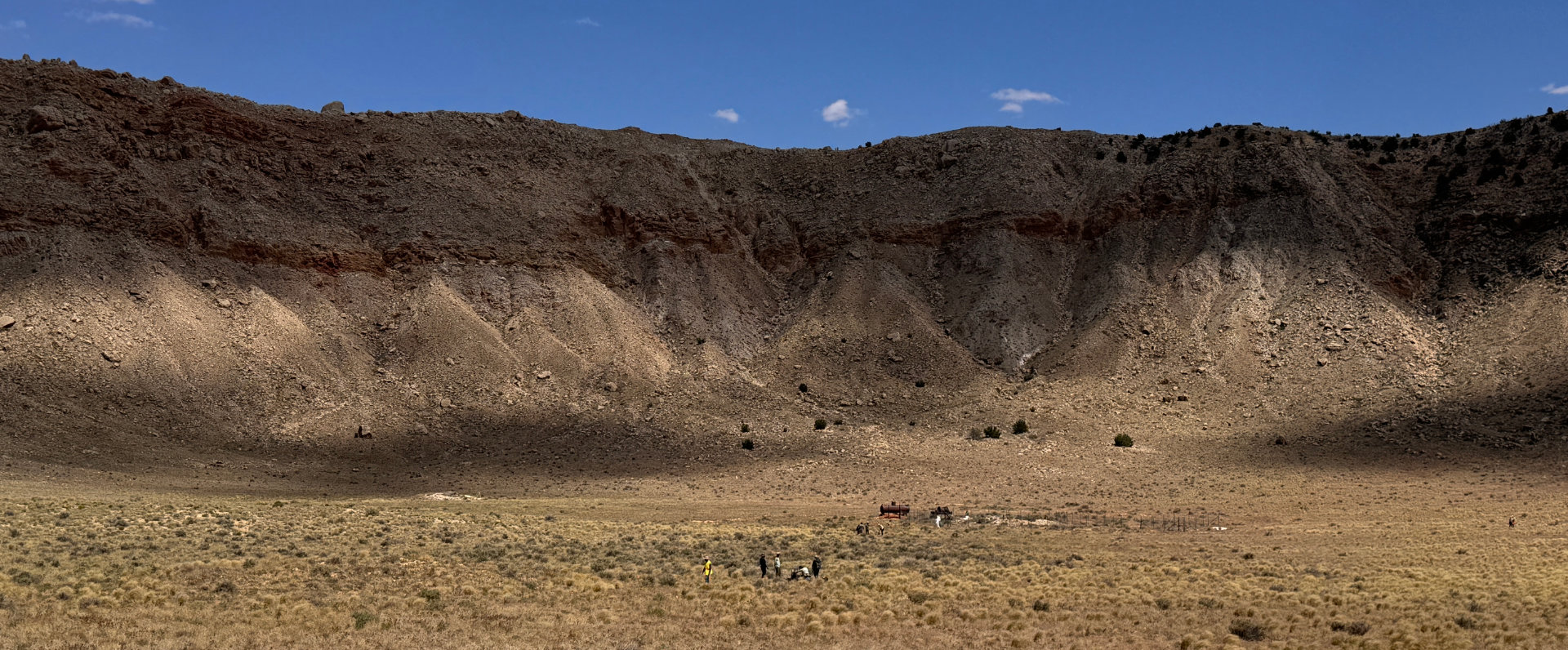
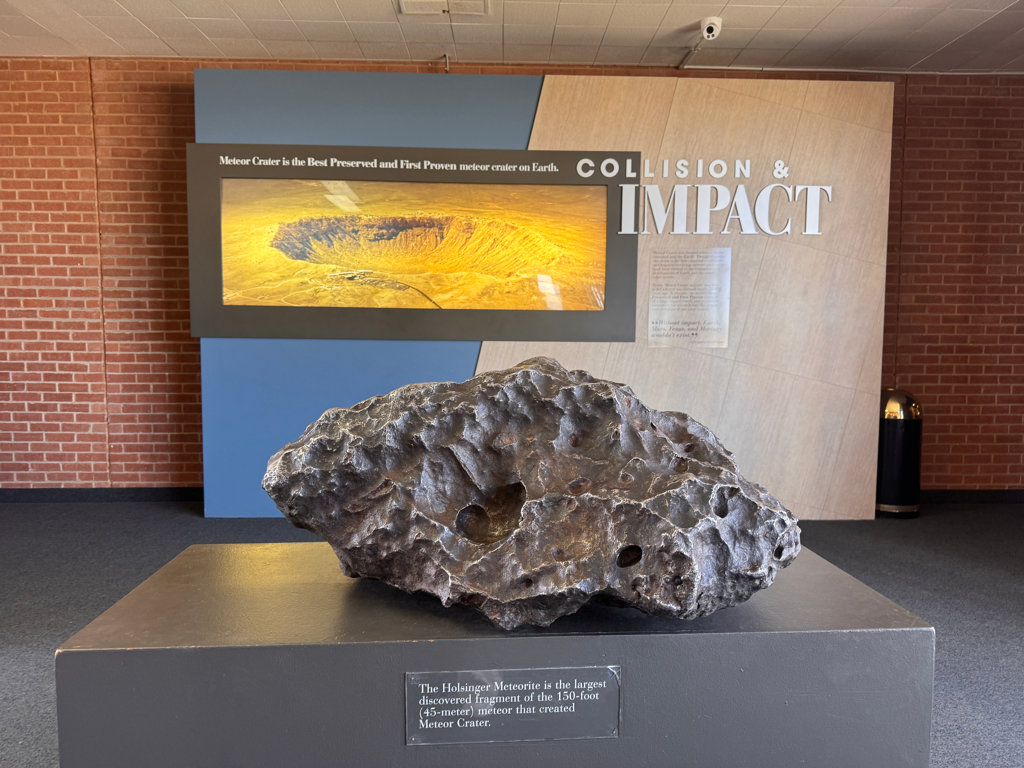
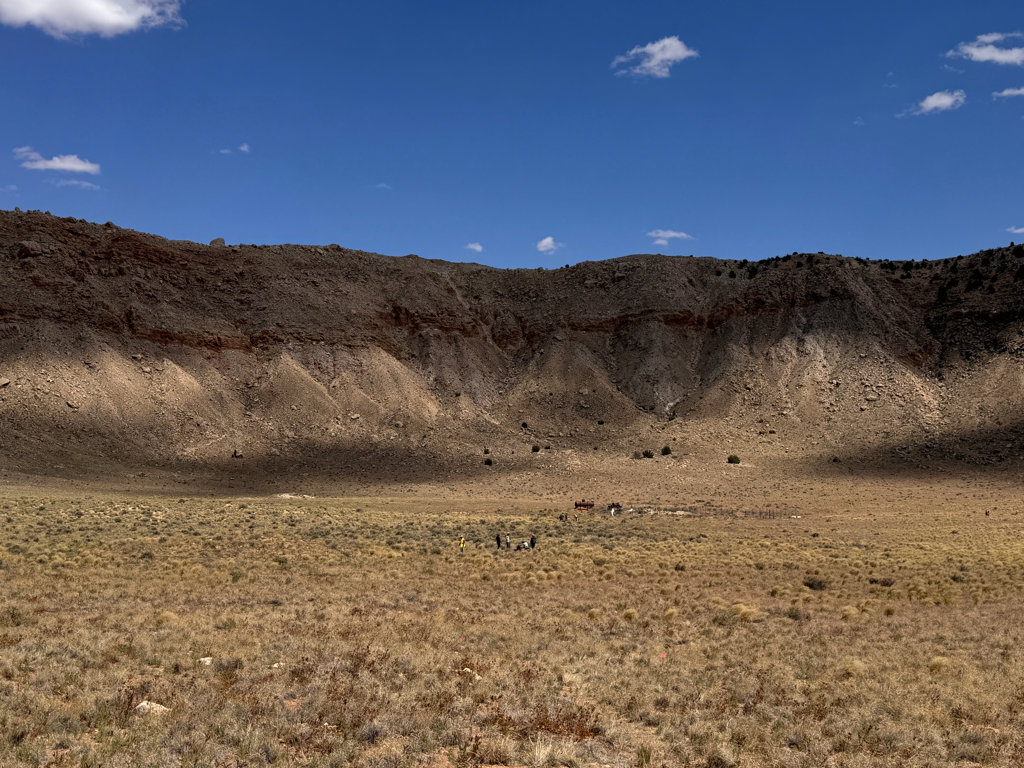
On May 22, we drove from Roswell, New Mexico, to Winslow, Arizona, to our second study location. Meteor Crater, a National Natural Landmark in Arizona, is one of the best-preserved meteor impact craters on Earth. It is approximately 1.2 km in diameter and 570ft deep.
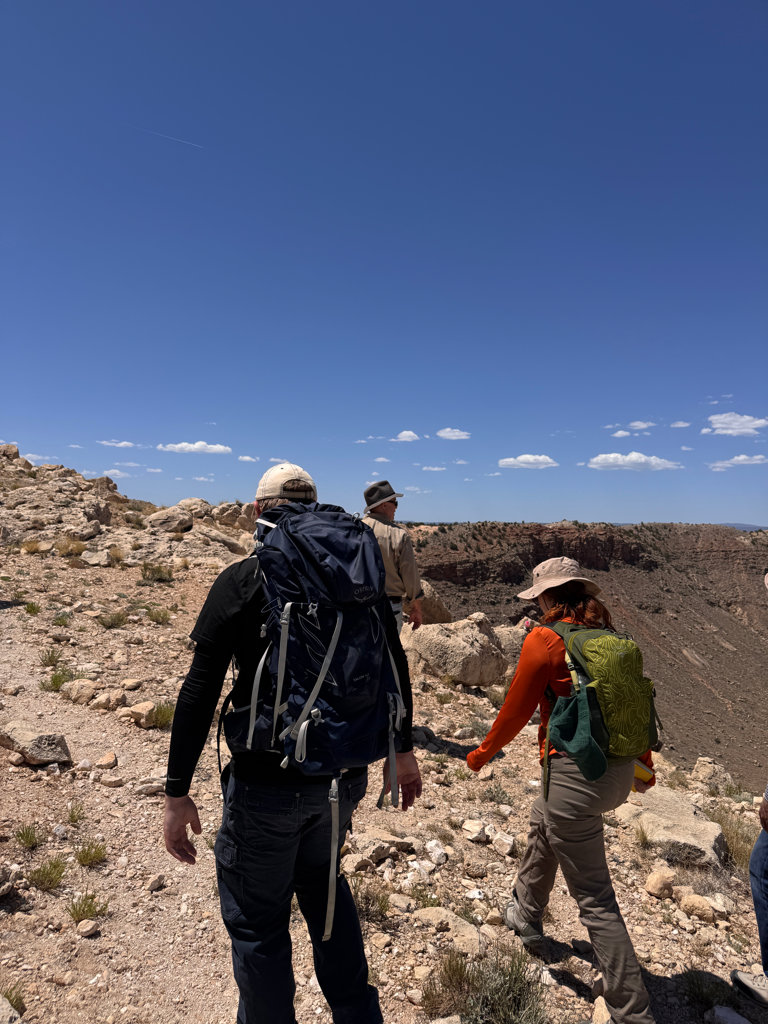
We spent four survey days at Meteor Crater conducting radioactivity measurements, seismic data acquisition, drone surveys, and robotic surveys. Magnetic surveys, and GPR surveys around the outer rim of the crater. We also performed a hammer seismic survey within the crater.
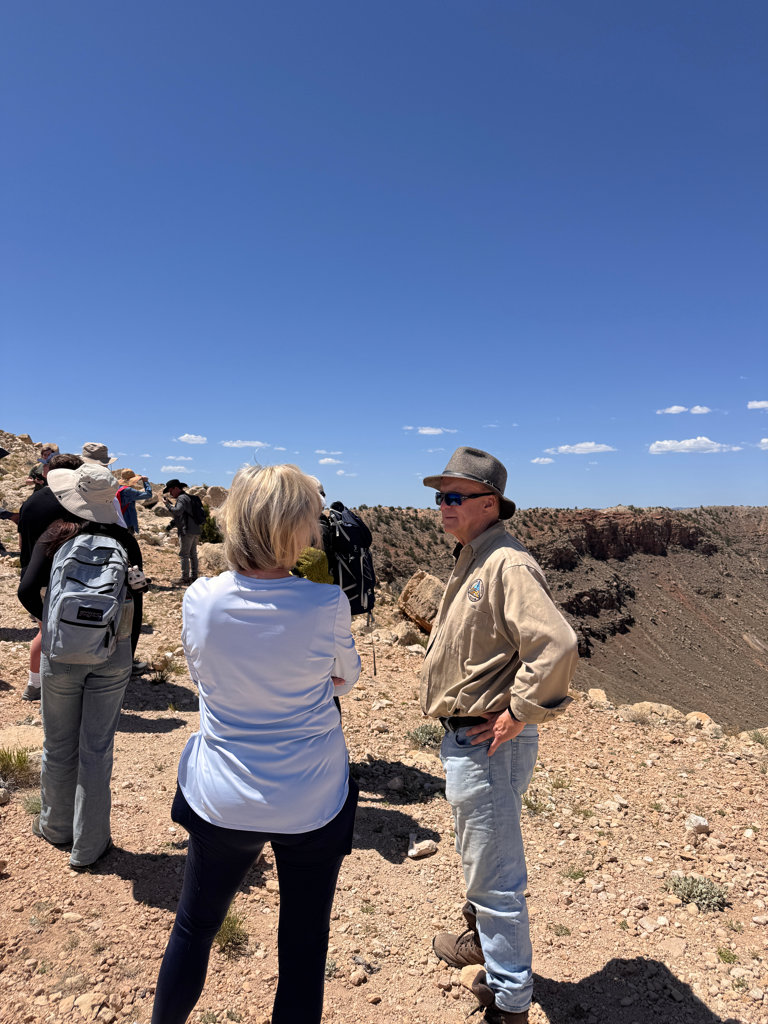
On the first day of fieldwork at Meteor Crater, all students and faculty members participated in a guided rim tour to gain a better understanding of the crater’s origin, geological history, and the rock formations affected by the meteor impact
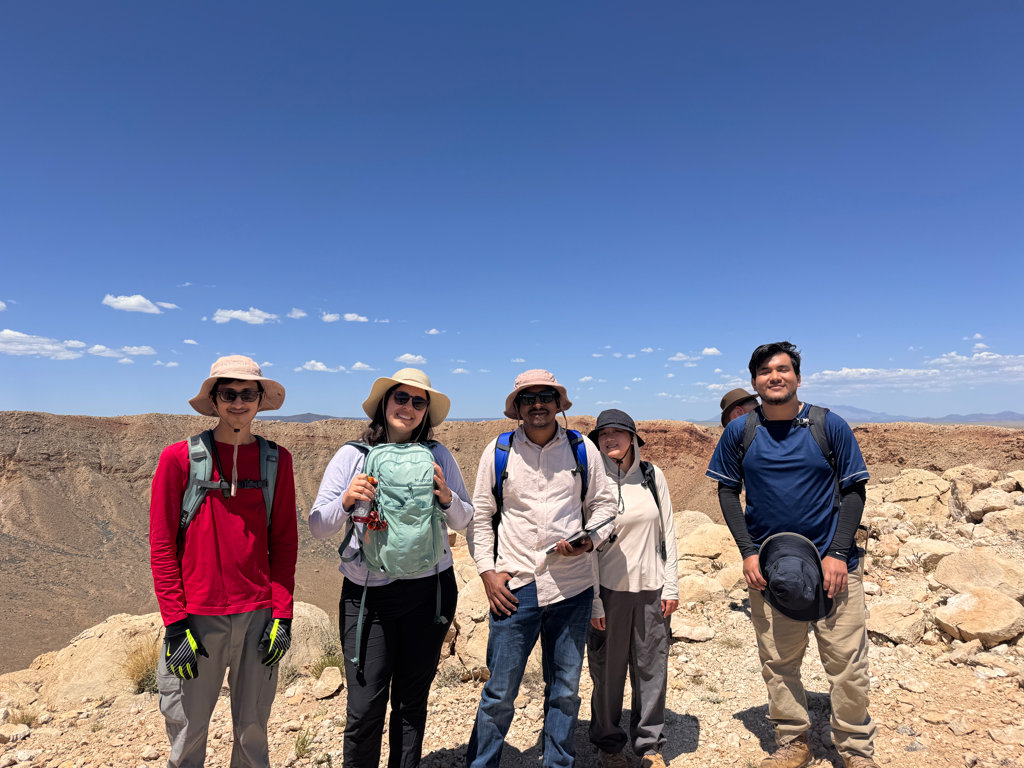
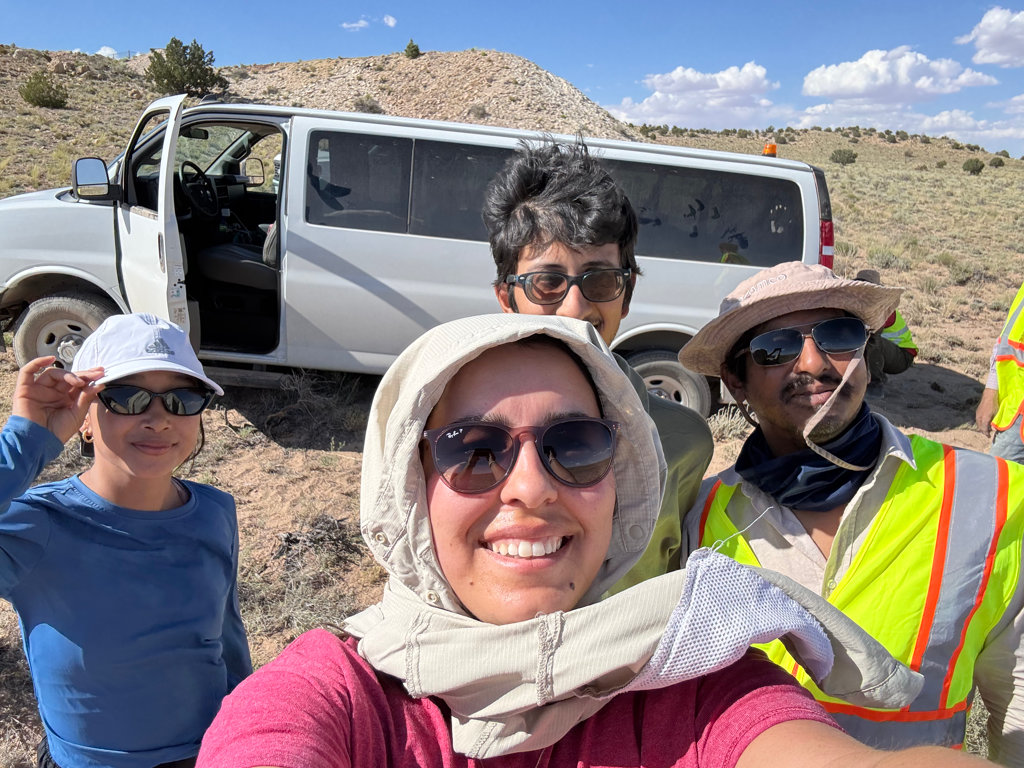
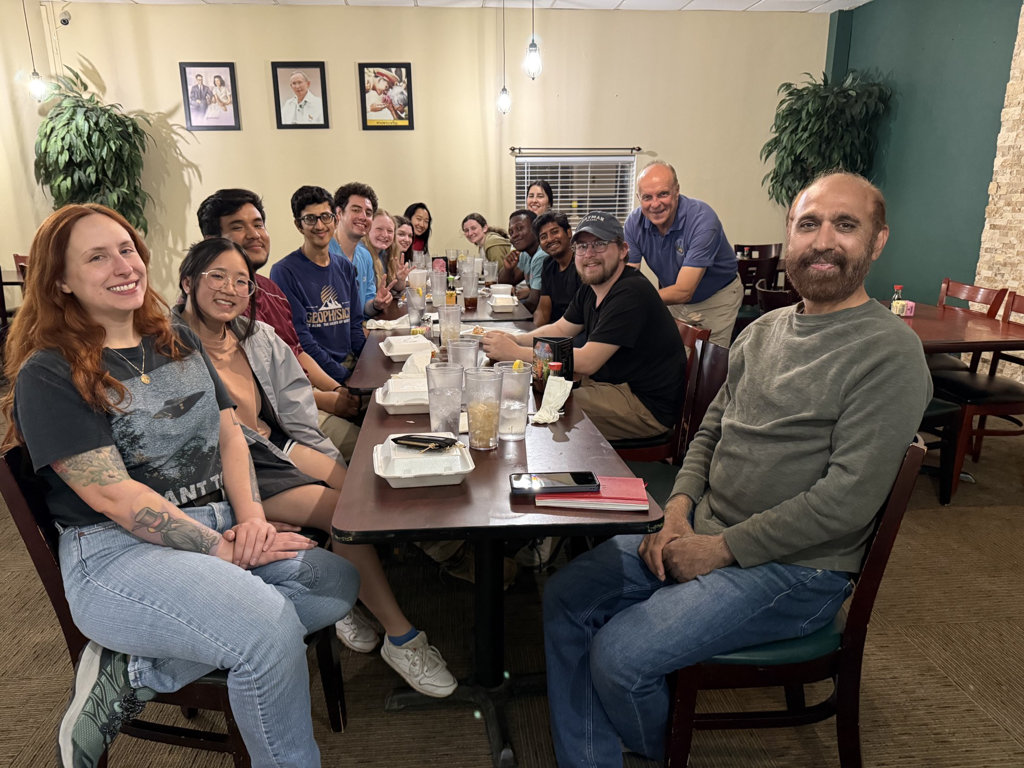
The 2026 Geophysics Field Expedition was far more than a visit to remarkable geological landmarks; it was an immersive experience that transformed classroom knowledge into a real-world scientific practice. Throughout those ten days, students learned lessons that extended far beyond science. Long days in the field fostered patience, resilience, and adaptability, while every challenge reinforced the importance of teamwork. Whether collecting data under the Texas and Arizona sun, writing and presenting work in a span of an hour, recovering a van from soft sand, or gathering each evening to share laugh and stories over dinner, everyone learned that successful fieldwork depends as much as collaboration as it does on technical knowledge.
By the end of the journey, we had gained much more than practical geophysical skills. We returned home with lasting friendships, unforgettable memories, and a deeper appreciation for teamwork, perseverance, and stories the Earth has to tell. In the end, this field trip did not just teach us geophysics; it taught us valuable lessons about life.
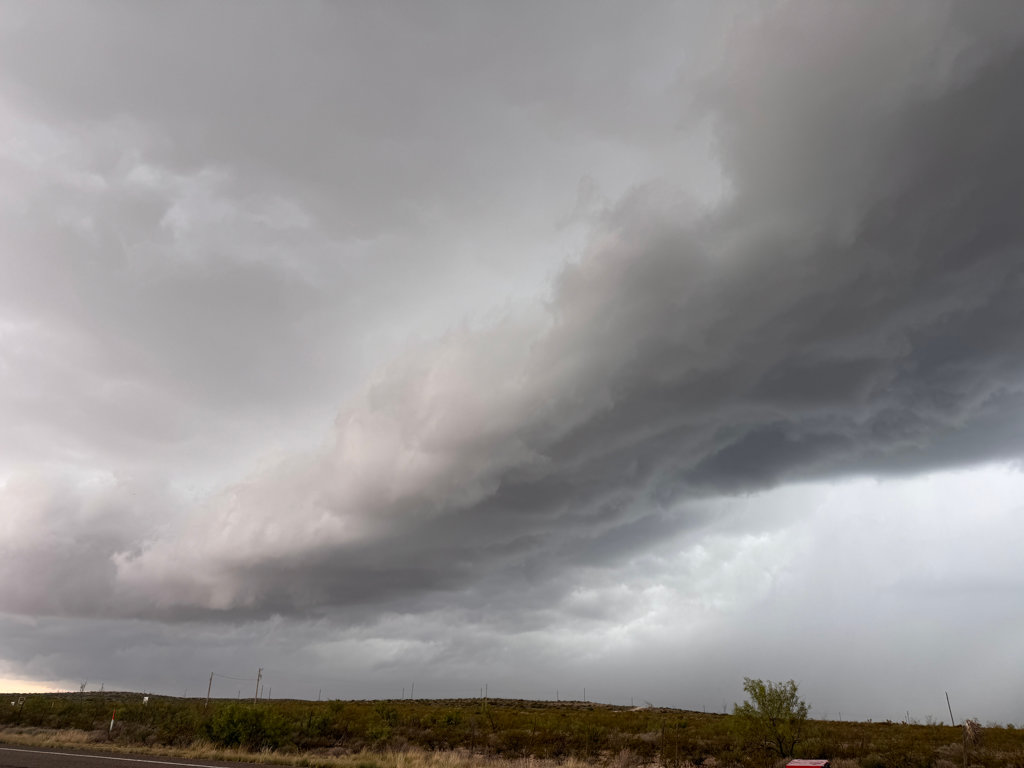
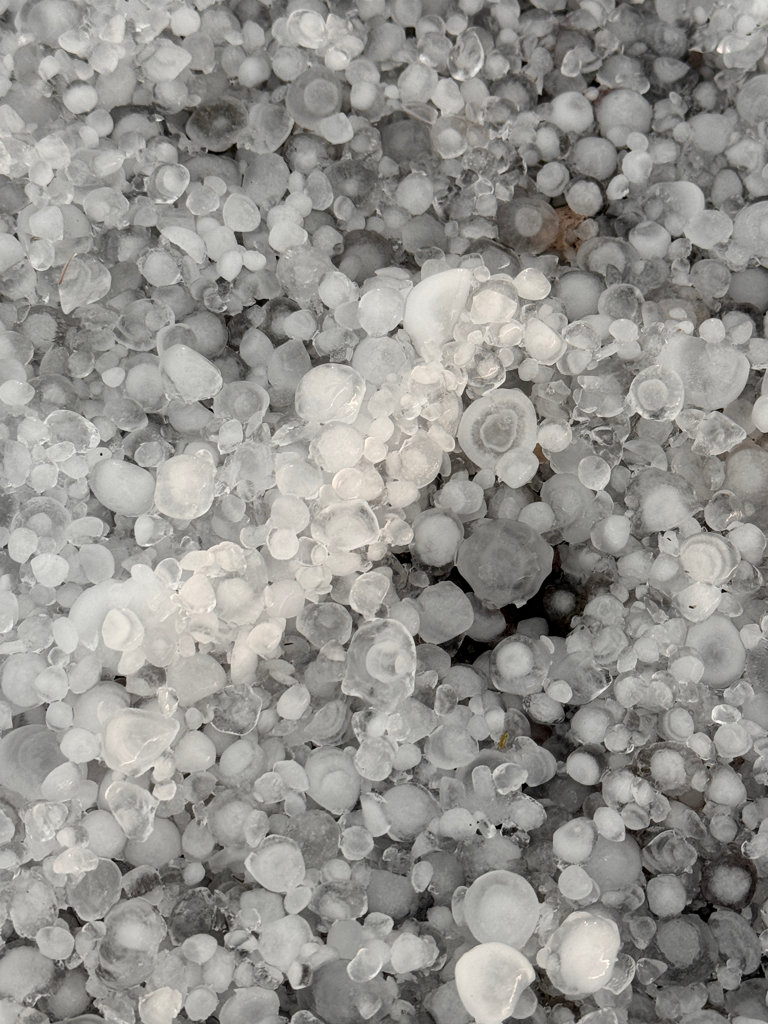
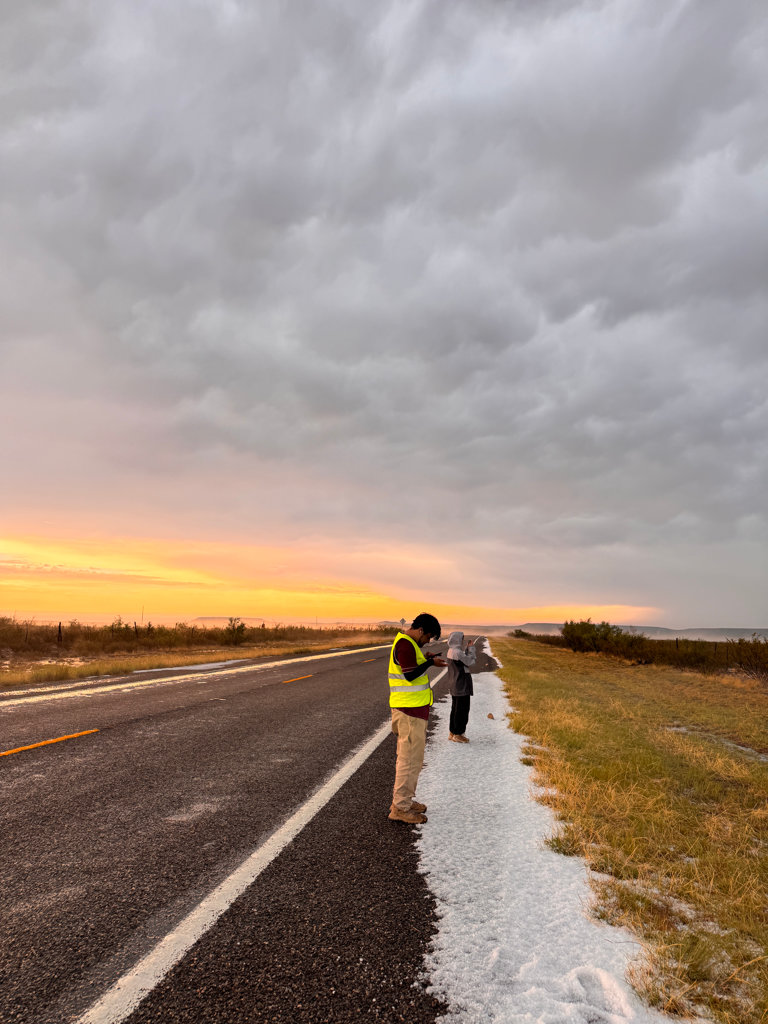
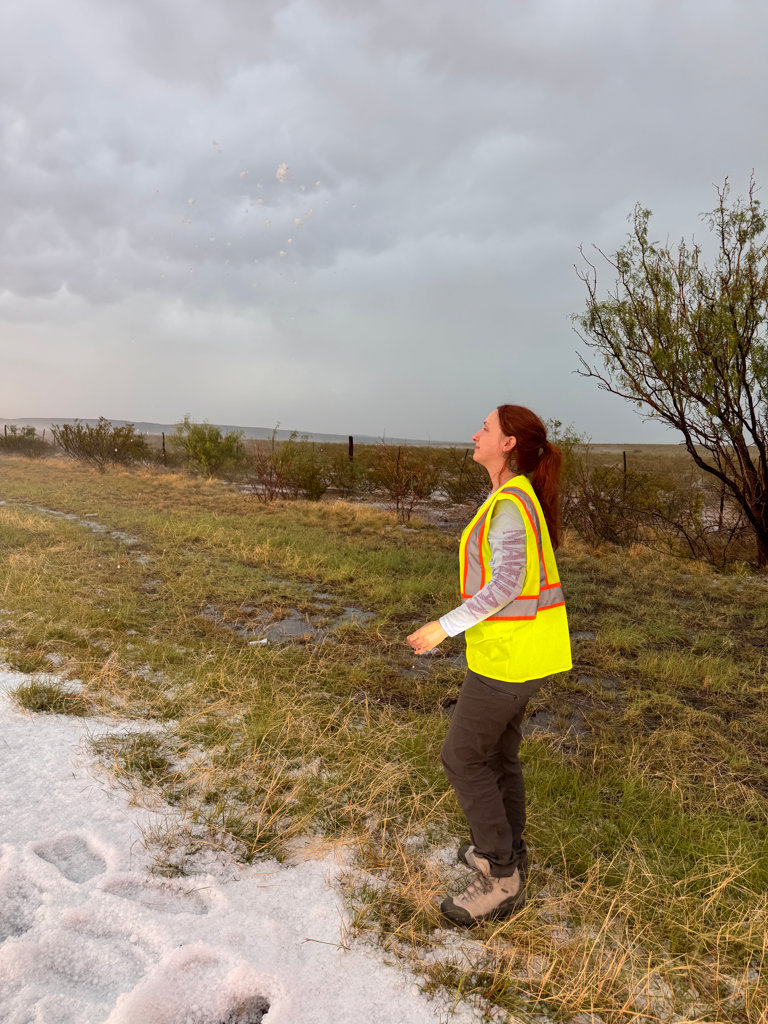
“Just as the storm gave way to a sky painted in brilliant shades of orange, the expedition reminded us that, much like fieldwork and life itself, the greatest challenges are often followed by the most rewarding moments, revealing a beauty that can only be appreciated after the storm has passed.”
With all the sweet and bitter experiences during the field and our phone space full of pictures, we concluded the field trip of the decade!!