Events
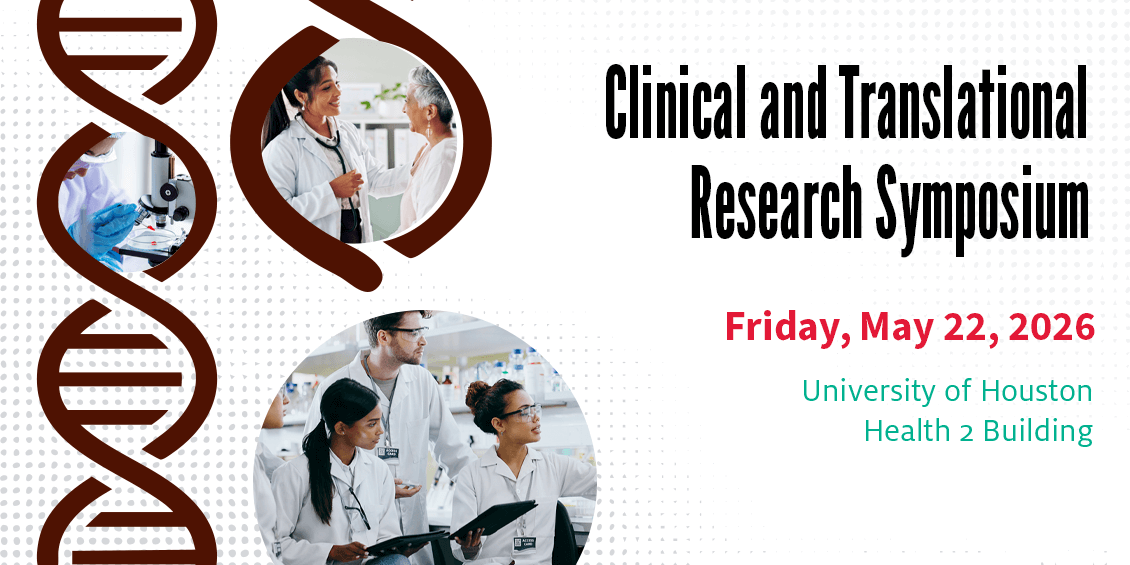
Thank you to our participants and sponsors!
Read the 2026 CTRS news release
View the CTRS photo album
Sponsors
Gold
 |
 |
|---|---|
 |
|
 |
|

Bronze
 |
 |
The Clinical and Translational Research Symposium provides a forum for sharing recent scientific advances and enhance interactions among scientists to promote collaborations in the area of clinical and translational research.
The symposium is open to clinical practitioners, translational researchers, residents, fellows, graduate students and undergraduate students. On-site parking will be available to registrants. There is no cost to register/attend, but space is limited.
2026 CTRS Keynote Presenters
Christine Colvis, Director, Office of Drug Development Partnership Programs &
Acting Director, Office of Special Initiatives, National Center for Advancing Translational
Sciences
Pamela Hill, Senior Director, Global Head of Open Innovation, AstraZeneca
About the Speakers
Christine M. Colvis serves as Director of the Office of Drug Development Partnership Programs (ODDPP) at the National Center for Advancing Translational Sciences (NCATS), National Institutes of Health. The office leads a broad portfolio focused on accelerating therapeutic discovery and early-stage development through innovative partnerships, data-driven approaches, and cross-sector collaboration. Her office spans activities from expanding the target landscape through clinical evaluation as well as catalyzing the development of high-impact, next-generation tools and platforms that will improve the efficiency of diagnostic and therapeutic development. The small office also oversees biomedical AI and AI-enabling initiatives, including the Biomedical Data Translator program and LitCoin.
Colvis also serves as Acting Director of the NCATS Office of Special Initiatives, which leads transformative programs including microphysiological systems ("tissue chips"), automated chemistry platforms, quantum-enabled biomedical applications, advanced diagnostic technologies, and novel biomarker strategies.
Through extensive collaborations across NIH, federal partners such as FDA, CMS and NASA, as well as industry, Dr. Colvis advances innovative strategies to make translational science faster, more predictive, and more efficient.
Pamela Hill is a seasoned biopharmaceutical leader with more than two decades of experience advancing scientific innovation, external partnerships, and early stage drug discovery. As Head of Open Innovation at AstraZeneca, she leads an externally aligned program that elevates the company's global scientific reputation, expands access to external expertise, and delivers meaningful impact across preclinical and clinical portfolios.
Hill is widely recognized as a trusted collaborator and expert in academic engagement, public-private partnerships, and cross functional leadership, drawing on her extensive scientific background and early career contributions leading antiviral and antibacterial discovery programs through candidate selection. Her work has established AstraZeneca as a longstanding industry leader in Open Innovation, and her influence extends beyond R&D through her deep commitment to mentoring, community engagement, and STEM outreach.
Schedule
| 7:15 am – 8:00 am | Breakfast |
| 8:00 am - 8:15 am | Welcome Address |
| 8:15 am – 9:15 am | Keynote Speaker: Pamela Hill |
| 9:15 am – 10:15 am | Target Identification & Drug Discovery Session |
| 10:15 am – 10:30 am | Break |
| 10:30 am – 11:30 am | Drug & Biomarker Development Session |
| 11:30 am – 1:30 pm | Lunch/Poster Presentations/Vendor Showcase |
| 1:30 pm – 2:30 pm | Keynote Speaker: Christine Colvis |
| 2:30 pm – 3:30 pm | Clinical Studies & Health Outcomes Session |
| 3:30 pm – 3:45 pm | Break |
| 3:45 pm – 4:45 pm | Panel discussion |
| 4:45 pm – 5:00 pm | Closing remarks |
Contacts
Egina Villalobos-Hernandez, Ph.D.
Research Associate 2, Office of Research
University of Houston College of Pharmacy
Meghana Trivedi, Pharm.D., Ph.D., BCOP
Professor of Pharmacy and Pharmacology
Director, Clinical and Translational Research Programs
University of Houston College of Pharmacy
Thank you to our 2025 presenting researchers and attendees!
Read the News Release
What is translational research?
Simply put, translational research "describes the process by which the results of research done in the laboratory are used to develop new ways to diagnose and treat disease" (National Cancer Institute).
According to the National Institutes of Health, "Translational research includes two areas of translation. One is the process of applying discoveries generated during research in the laboratory, and in preclinical studies, to the development of trials and studies in humans. The second area of translation concerns research aimed at enhancing the adoption of best practices in the community. Cost-effectiveness of prevention and treatment strategies is also an important part of translational science."