
For Ying Xu, a Ph.D. candidate in Pharmaceutical Sciences at the University of Houston College of Pharmacy (UHCOP), the study of the human heart is not merely a clinical pursuit, it is a personal mission.
Growing up in a household where cardiovascular disease and hypertension were prevalent, Xu witnessed firsthand the long-term toll these conditions take on patients. These early experiences, coupled with her journey as a first-generation college student, provided the spark that led her to the laboratory of UHCOP Professor Bradley K. McConnell, Ph.D., FCVS, FAHA, to investigate the complexity of cardiac dysfunction.
Mapping Molecular Beats
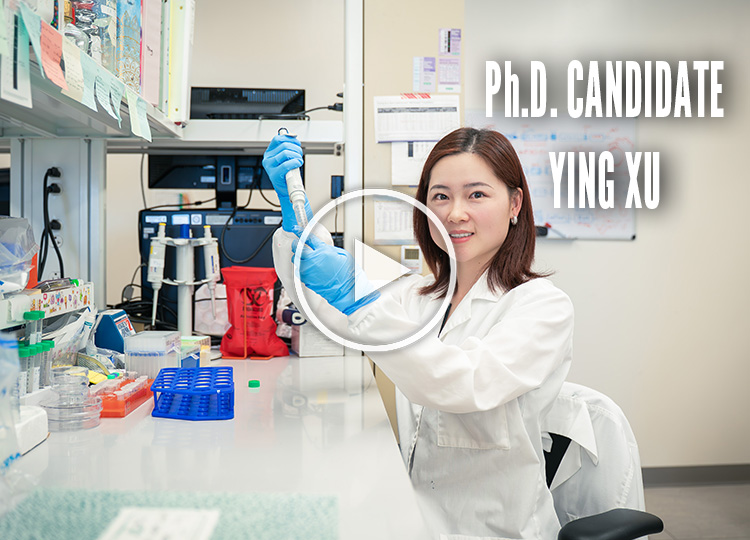
To advance Xu’s work in better understanding the problematic proteins contributing to heart failure, the American Heart Association has awarded her a one-year, $35,338 predoctoral fellowship. Her research project explores how disrupted signaling inside heart muscle cells interferes with cardiac contraction, paving the way for new insights into the molecular drivers of heart failure.
“My interest in cardiovascular research is deeply personal,” Xu said. “On my father’s side of the family, cardiovascular disease and hypertension are very common, and witnessing their long-term impact has strongly shaped how I think about health and disease.”
Heart failure’s complex etiology is primarily driven by prior heart attacks, high blood pressure and diabetes as well as a variety of deleterious lifestyle choices, genetics and infections. Although first-line therapies such as beta-blockers improve survival and help slow disease progression, they do not fully restore normal cardiac function. Xu’s research explores molecular mechanisms that may offer additional therapeutic strategies to improve contractile signaling.
Unlocking the "Information Hub" of the Heart
Xu’s research is focused on the molecular signaling that occurs within cardiomyocytes—the cells responsible for the heart's rhythmic contraction. Heart failure often occurs when the heart’s ability to "squeeze" or contract is impaired, a process regulated by signals like cyclic adenosine monophosphate (cAMP). Xu is specifically looking at two key players in this process: A Kinase Anchoring Protein 12 (AKAP12) and Phosphodiesterase 8A (PDE8A).
In a healthy heart, AKAP12 acts as an "information hub" or a scaffold, bringing various proteins together to ensure signals are delivered to the right place at the right time. Emerging evidence suggests that AKAP12 expression is elevated in failing hearts, particularly in advanced disease states. Xu’s central hypothesis is that excess AKAP12 recruits the enzyme PDE8A, which then prematurely breaks down the cAMP signals the heart needs to function, effectively "muting" the heart's ability to pump blood.
From the Lab Bench to the Patient Bedside
Through her fellowship, Xu will use advanced animal models and cell studies to determine exactly how the AKAP12-PDE8A axis disrupts calcium handling and electrical activity. Her preliminary data has already shown a glimmer of hope: preliminary data suggest that inhibiting PDE8A may improve contractile signaling and mitigate dysfunction associated with AKAP12 overexpression.
“This award allows me to deepen my technical and analytical training while also thinking carefully about the broader significance of the work, rather than focusing solely on immediate experimental outcomes,” Xu said.