Oral contraceptive pills are a common form of birth control, but they only work well when taken consistently. With typical use, oral contraceptive pills have a failure rate of about 7%, meaning about 7 in 100 users become pregnant during the first year of use, according to the Centers for Disease Control and Prevention.
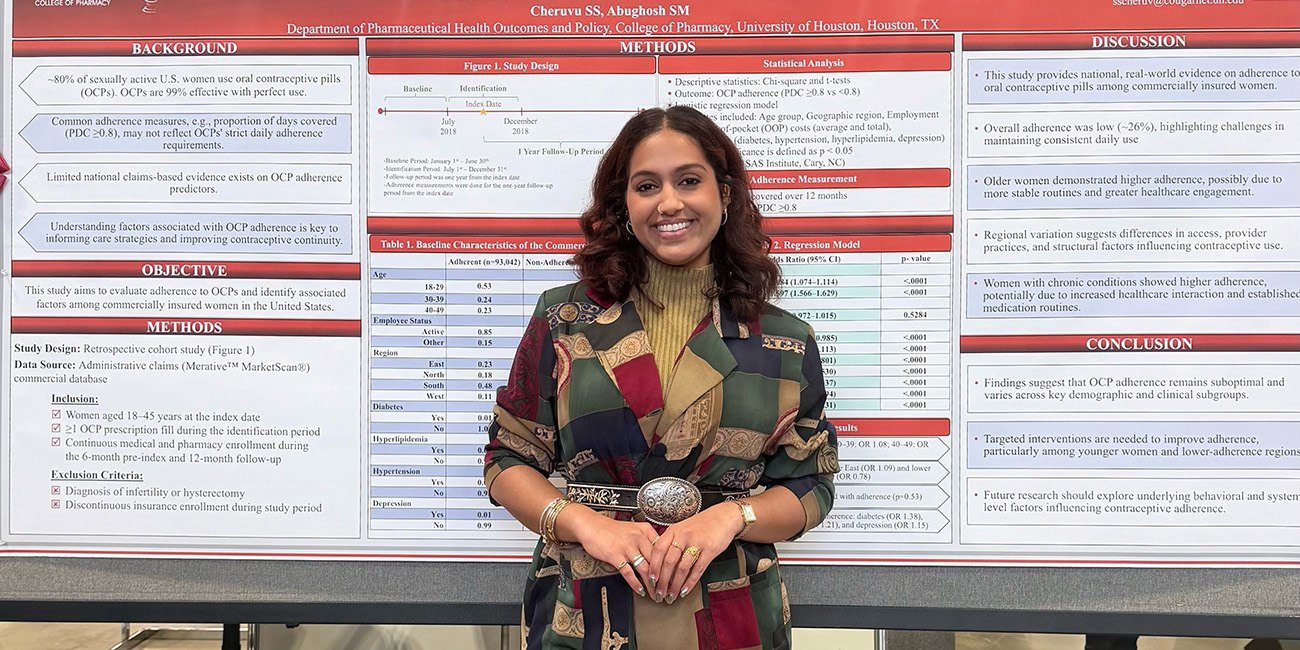
A new study examining adherence to oral contraceptive pills has drawn a top award for a University of Houston College of Pharmacy (UHCOP) Ph.D. candidate from the Academy of Managed Care Pharmacy (AMCP). Sai Sammitha Cheruvu, MPH, was a Best Poster recipient in the Graduate Student category at the organization’s annual meeting April 13-16 in Nashville, Tenn.
Cheruvu’s research, “Adherence to Oral Contraceptive Pills and Associated Factors Among Women with MarketScan Commercial Insurance,” looked at 2018-19 insurance claims data to see how consistently women in the U.S. filled their birth control pill prescriptions. Cheruvu and her graduate mentor and coauthor, UHCOP Professor Susan Abughosh, Ph.D., used proportion of days covered (PDC), a common medication adherence metric in pharmacy outcomes research. In the study, adherence was defined as having medication on hand for at least 80% of the year.
The study included more than 359,000 women ages 18-45 who had at least one oral contraceptive prescription and were continuously enrolled in medical and pharmacy benefits for a full year before and after their first prescription fill.
The key finding: Using the PDC threshold, only about 26% of women met the study’s definition of adherence despite the importance of consistent daily use for preventing unintended pregnancy. Younger women, especially those ages 18-21, were the least likely to be adherent. Older women were more likely to stay on track, especially those in the oldest age group analyzed. The study also found differences by region. Compared with women in the South, women in the North and West were less likely to be adherent, while women in the East were more likely to be adherent.
Women with certain chronic conditions, including diabetes, hypertension, high cholesterol and depression, were more likely to be adherent. Employment status did not appear to make a significant difference after other factors were considered.
Overall, Cheruvu’s research suggests that many women are not maintaining consistent access to oral contraceptive pills, even when they have commercial insurance. The findings may help health plans, clinicians and managed care organizations identify groups who may benefit from extra support, reminders, counseling or improved access to longer prescription supplies.
“Oral contraceptives are highly effective when taken as directed,” Cheruvu said. “Imperfect use may result in unintended pregnancies, leading to an estimated $21 billion in total healthcare costs in the United States. This highlights the need for targeted interventions to support consistent adherence, enhance contraceptive continuity and reduce preventable healthcare and economic burdens.”