
When the heart’s most powerful chamber begins to lose its structure, the consequences can be life-threatening — and the cause is often a mystery. Luqi Zhao, M.D., University of Houston College of Pharmacy postdoctoral research scientist in the Department of Pharmacological & Pharmaceutical Sciences (PPS), is working to change that. She has received a two-year, $163,864 postdoctoral fellowship from the American Heart Association (AHA) to investigate the “Pathogenesis of acquired left ventricular non-compaction,” a rare and severe cardiomyopathy.
Left ventricular non-compaction (LVNC) is marked by abnormal development of the heart’s main pumping chamber that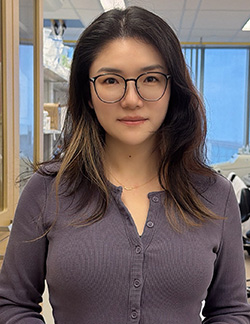 affects both children and adults. Despite mortality rates of 35–38% within five to
11 years of diagnosis, the biological mechanisms underlying LVNC remain poorly understood,
limiting disease-specific treatment options.
affects both children and adults. Despite mortality rates of 35–38% within five to
11 years of diagnosis, the biological mechanisms underlying LVNC remain poorly understood,
limiting disease-specific treatment options.
Her new study is investigating the potential link of LVNC to defects in autophagy, the cellular recycling process responsible for clearing damaged proteins and organelles. Zhao has identified a previously unrecognized role for Numb Family Proteins — best known for regulating cell fate — in maintaining the proper rate of autophagy in heart muscle cells, which rely on efficient internal cleanup to function over a lifetime.
Using a murine model that develops LVNC in adulthood, Zhao found that loss of Numb Family Proteins disrupts autophagy, leading to toxic protein accumulation and progressive deterioration of cardiac structure and function. This work has already gained significant recognition: for two consecutive years, Zhao earned first place in the postdoctoral presentation category at her department’s 2024 and 2025 research symposia for her project, “Numb Family Proteins regulate ventricular compaction by modulating autophagic flux.”
Her AHA-funded study will define how Numb loss interferes with autophagy and tests whether restoring this process can halt or reverse disease progression. Strategies include genetic restoration of autophagy pathways, enhancement of lysosomal function and delivery of Numb-enriched endosomes (organelles that act as sorting hubs within cells) to affected heart cells.
“After isolating endosomes from healthy hearts and injecting them into diseased hearts, we observed that the endosomes were able to enter the heart cells and rescue the phenotype,” Zhao said. “If this strategy continues to show success, it may eventually lead to new therapeutic approaches in the future.”
Beyond advancing fundamental knowledge of LVNC, the findings could suggest the condition may be acquired in some patients rather than strictly congenital, reshaping how adult-onset disease is understood. If successful, Zhao’s work could pave the way for autophagy-targeted therapies for LVNC, a cardiomyopathy that currently has no disease-specific treatments.
Zhao studies in the research lab of her mentor, UHCOP Professor of Pharmacology Mingfu Wu, Ph.D.