The University of Houston College of Pharmacy’s (UHCOP) Prescription Drug Misuse Education and Research (PREMIER) Center has appointed two faculty members to new assistant director roles designed to strengthen and expand the center’s multidisciplinary research capabilities.
Dipali V. Rinker, Ph.D., LPC, research assistant professor, and Moosa Tatar, Ph.D., assistant professor, have been named assistant directors for Interventional and Behavioral Sciences, and Decision Science and Modeling, respectively.
Advancing Behavioral Interventions
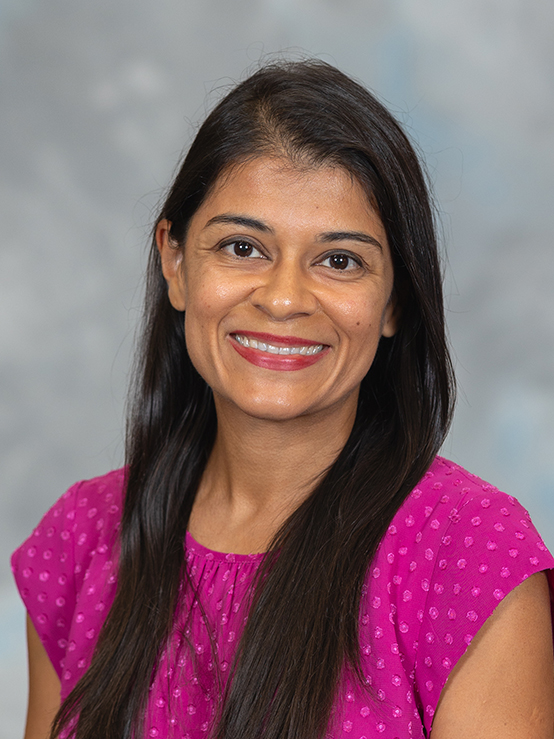 In her new role, Rinker will lead efforts focused on designing, testing and evaluating
interventions to improve health behaviors, with particular emphasis on reducing high-risk
and addictive behaviors and increasing substance use treatment adherence. Her work
also will encompass digital health interventions, clinical trials and implementation
science.
In her new role, Rinker will lead efforts focused on designing, testing and evaluating
interventions to improve health behaviors, with particular emphasis on reducing high-risk
and addictive behaviors and increasing substance use treatment adherence. Her work
also will encompass digital health interventions, clinical trials and implementation
science.
Rinker also plans to build on her research interest in patient-provider communication, including how healthcare professionals screen for substance use, provide brief interventions and connect patients with treatment when appropriate.
“Primary care is really a place where providers can make a big difference,” Rinker said. “They are trusted individuals, and there are opportunities to improve that patient-provider relationship while also helping patients learn how to communicate with their providers.”
The new position adds a behavioral sciences component alongside the center’s existing strengths in health services research, policy and medication access.
Strengthening Decision-Making Through Modeling
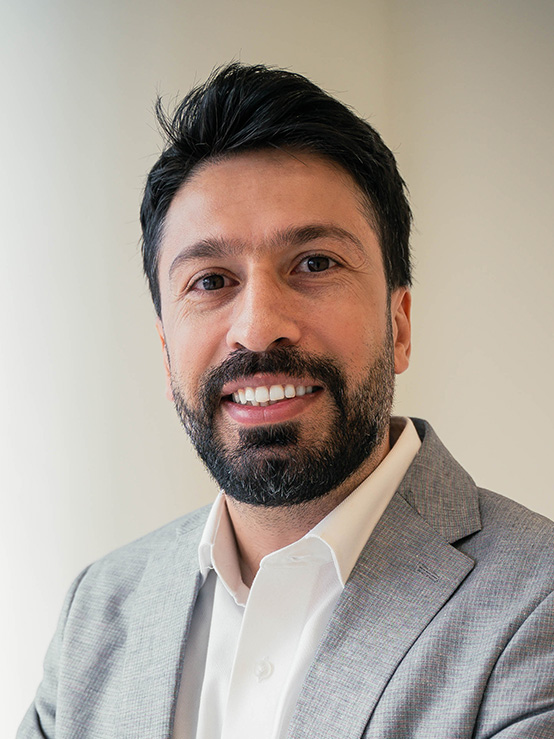 As assistant director for Decision Science and Modeling, Tatar will bring expertise
in decision science and health economics, including economic evaluation, cost-effectiveness
analysis, and simulation modeling, to PREMIER Center research. His work will help
researchers assess not only whether an intervention is effective, but also whether
it represents an efficient use of resources and can be successfully scaled.
As assistant director for Decision Science and Modeling, Tatar will bring expertise
in decision science and health economics, including economic evaluation, cost-effectiveness
analysis, and simulation modeling, to PREMIER Center research. His work will help
researchers assess not only whether an intervention is effective, but also whether
it represents an efficient use of resources and can be successfully scaled.
Tatar said the addition of decision science and modeling can help translate research findings into evidence that can inform decisions by policymakers, healthcare organizations and other stakeholders.
“I hope adding this angle to the research provides actionable evidence for health policy, intervention scaling, and optimized resource allocation,” Tatar said.
The role also creates opportunities for collaboration beyond the PREMIER Center, including projects with other UH colleges and healthcare and research institutions across Houston and Texas. Tatar said decision science methods can help collaborators compare different strategies, model outcomes and determine which approaches may offer the greatest value.
Together, the new assistant director positions expand the PREMIER Center’s ability to move research from identifying health and substance use challenges to developing, evaluating and informing the implementation of interventions designed to improve outcomes. They join Matthew Wanat, Pharm.D., BCPS, BCCCP, FCCM who is the assistant director for clinical and institutional engagement for the center.
“These appointments are an important step in the continued growth of the PREMIER Center,” said Douglas Thornton, Ph.D., Pharm.D., BCPS, director of the PREMIER Center and UHCOP associate professor. “The strongest health services research is built on people who bring methodological depth.
Interventional and decision sciences are core disciplines of health services research, the field that asks not only whether a treatment works, but whether it reaches patients, changes behavior, and is worth the cost. Naming them as assistant directors makes that expertise part of how the PREMIER Center is led as it grows into a health services research enterprise.”