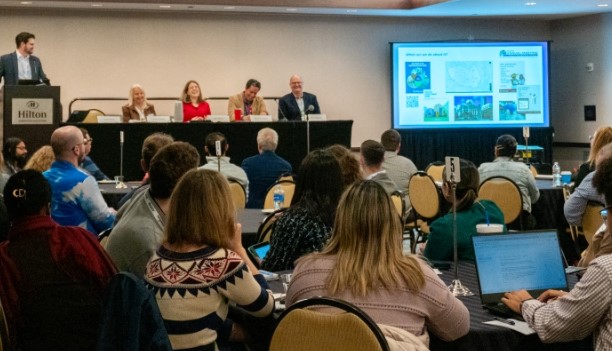
At the 106th Annual Meeting of the American Meteorological Society in January 2026, a Houston-focused panel discussion and workshop gathered leaders from government, academia, nonprofits, and media to bring attention to the growing risks posed by extreme urban heat. The panel discussion, moderated by Lance Wood, a meteorologist with the Harris County Flood Control District, emphasized the need for stronger coordination across sectors to protect those who are most vulnerable to the effects of high heat, such as outdoor workers and athletes. Participants explored both immediate safety measures and longer-term resilience strategies to deal with heat-safety challenges we are experiencing as a result of rapidly changing climate and urbanization in cities like Houston.
The theme of the discussion was connection, and the focus was on linking data, institutions, and community action to reduce heat risk. Jaime González, executive director of the UH Institute for Ecological Resilience (IER), highlighted the importance of bringing academic researchers and nonprofit partners together to address both heat and flood vulnerabilities. He underscored the role of nature-based solutions, particularly expanding tree cover, as a practical way to cool neighborhoods. González also noted that many urban areas have an overabundance of reflective, nonabsorbent surfaces and insufficient green infrastructure that add to heating dangers.
The panel discussion was followed by a workshop that aimed to jump-start new partnerships that the panelists emphasized. Participants tackled priority questions, including identifying practical “quick wins” to reduce heat risk, improving ways of reaching out to isolated high-risk individuals before emergencies occur, and preparing Houston to protect international visitors expected tend the upcoming FIFA World Cup who may be unaccustomed to the region’s extreme heat. Everyone agreed that managing rising urban heat risk will require both immediate interventions and sustained, community-centered planning.
The event was an opportunity for participants from a very wide network to forge connections that will hopefully build effective cross-disciplinary collaboration to mitigate heat risks.
Read more about the panel discussion and the work shop here.