International collaboration is helping prepare the next generation of physicians at the Tilman J. Fertitta Family College of Medicine. Through a partnership with Swansea University in Wales, medical students have the opportunity to participate in a research exchange that combines scientific discovery, innovative medical education and cross-cultural learning. While conducting research alongside Swansea faculty and students, participants strengthen their communication and critical thinking skills, gain exposure to new educational approaches and return to Houston with experiences that enhance both their medical training and professional development.
Kevin Rowland, Ph.D., professor and chair of the Department of Biomedical Sciences and one of the leaders of the Swansea exchange program, said the partnership encourages students to grow as researchers while building skills that will benefit them throughout their careers.
"The Swansea exchange program gives our students a chance to step outside of their usual environment and really focus on research in a different setting," Rowland said. "It pushes them to think a bit differently and more critically about scientific questions and, more broadly, about how they approach medicine. It also helps them build confidence in how they communicate, especially when they are working with new teams and presenting their work."
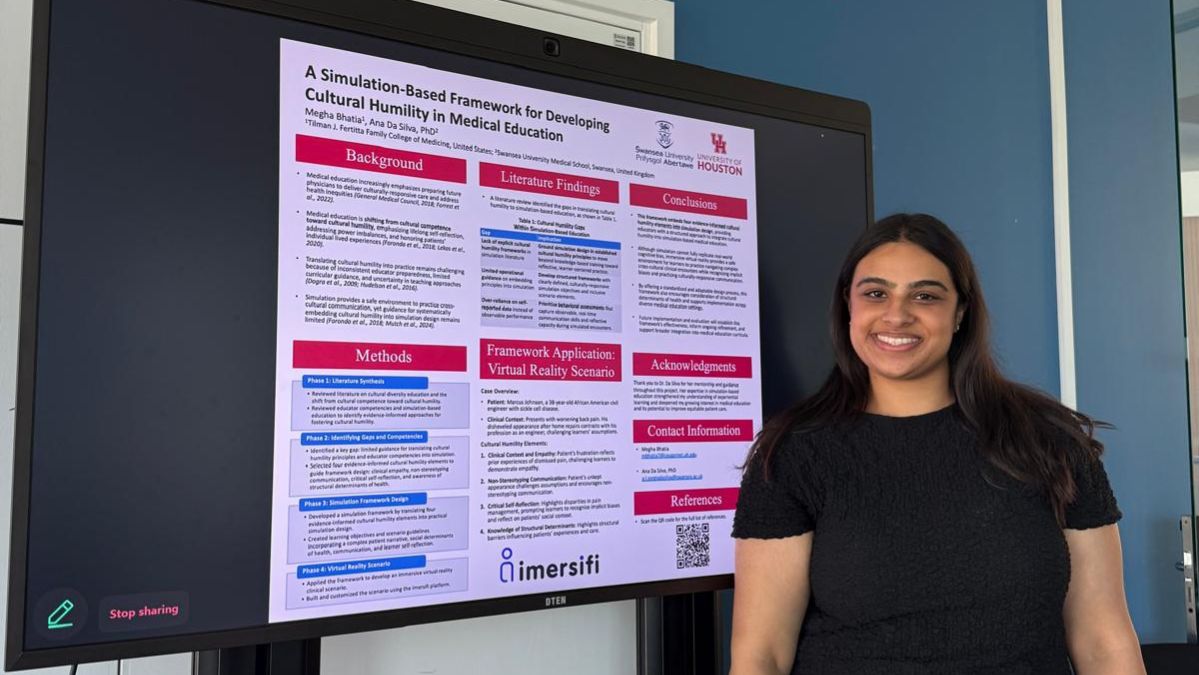 For medical student Megha Bhatia, the exchange offered an opportunity to combine her
interests in research and medical education while experiencing life in another country.
For medical student Megha Bhatia, the exchange offered an opportunity to combine her
interests in research and medical education while experiencing life in another country.
"I was excited by the opportunity to experience medical education within a different healthcare system while immersing myself in a new culture," Bhatia said. "This exchange program provided a unique chance to work alongside faculty involved in medical research and see firsthand how educational innovations can be applied to healthcare training, an area of medicine I hope to remain involved in."
The research exchange also gives students access to educational resources and learning environments that complement the curriculum at the College of Medicine. During her time at Swansea, Bhatia explored the university's simulation center, which features immersive technologies that allow learners to practice clinical reasoning in realistic scenarios.
"I have enjoyed spending time in Swansea's simulation center," she said. "It is home to one of the largest immersive wall technologies in the world, and I have had so much fun exploring hyper-realistic environments, testing virtual reality, and pushing myself to think more like a clinician. This experience has given me a deeper appreciation of how beneficial simulation can be for medical education and healthcare training."
While technology plays an important role, Rowland said the greatest value often comes from seeing how different people approach the same problem.
"When you give people the same problem, many will arrive at the same answer, but the way they get there can be very different," Rowland said. "A big part of your own education is understanding that process. How did they think through it? What kind of logic did they use? What assumptions did they make along the way?"
Students also spend the majority of their time contributing to research initiatives, allowing them to see how scientific questions evolve into new discoveries and, ultimately, improvements in patient care.

"Students spend their time working on projects and, through that, they start to better understand how data are generated, how new therapies come about, and how protocols evolve," Rowland said. "In some cases, they also get to work with large datasets from the UK, which gives them a chance to look at real patient outcomes data and analyze how care plays out at a system level. What they bring back is a stronger, more thoughtful approach to how medicine advances."
For Bhatia, the exchange also reinforced the value of learning from people with different backgrounds and perspectives.
"My time in Swansea has exposed me to different approaches to medical education and patient care," she said. "Learning alongside faculty and students with diverse perspectives has encouraged me to think more critically about how healthcare systems operate and how cultural and institutional differences shape clinical practice. It has reinforced the importance of remaining flexible and open to learning from a variety of perspectives."
She also found that the collaborative culture made adapting to a new environment easier than she expected.
"Living and learning in Wales, I have found my everyday experience to feel naturally team based," Bhatia said. "From the way team meetings are conducted to daily interactions, there is a strong emphasis on collaboration embedded in the culture here. It has been refreshing to experience such a supportive and welcoming environment, which has made adapting to a new place very enjoyable."
As she continues her medical education, Bhatia said the lessons she learned abroad will continue to shape her approach to medicine.
"I hope to carry forward a continued sense of confidence in unfamiliar environments and willingness to step outside my comfort zone," she said. "This experience has exposed me to new clinical and educational settings, deepening my curiosity for medicine and medical education. I know the cross-cultural experiences and perspectives I have gained will help me become an adaptable physician and better connect with my peers, future patients and diverse approaches to care."
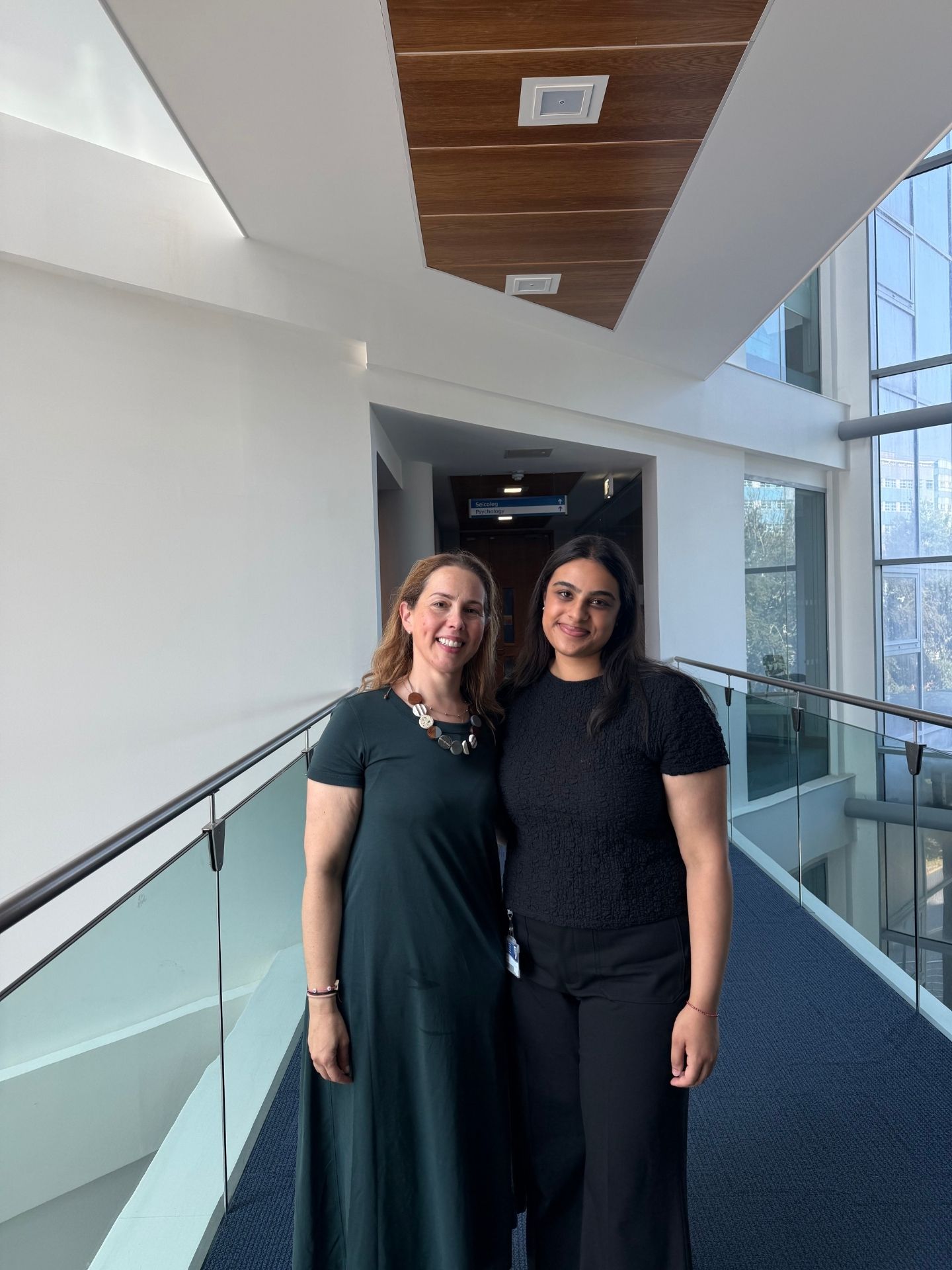
Looking beyond the exchange itself, Rowland said he hopes the experience has a lasting impact on how students approach research and medicine throughout their careers.
"When they come back, I hope they are more curious, more adaptable and more confident," Rowland said. "I also hope they come away with a better sense of how to generate a hypothesis around a clinical problem and feel more comfortable engaging in research in the future. For many of them, this may be the experience they look back on and say, 'When I was a medical student I worked on this topic.' In some cases, it may even shape a line of inquiry that they continue to follow over their lifetime."
The partnership between the Fertitta College of Medicine and Swansea University is built on a shared commitment to improving the health of underserved communities, creating an environment where students can learn from one another while preparing to care for patients from a wide range of backgrounds.
"Both institutions share a strong commitment to serving underserved communities, and that alignment really matters," Rowland said. "It is one of the reasons the partnership works so well."