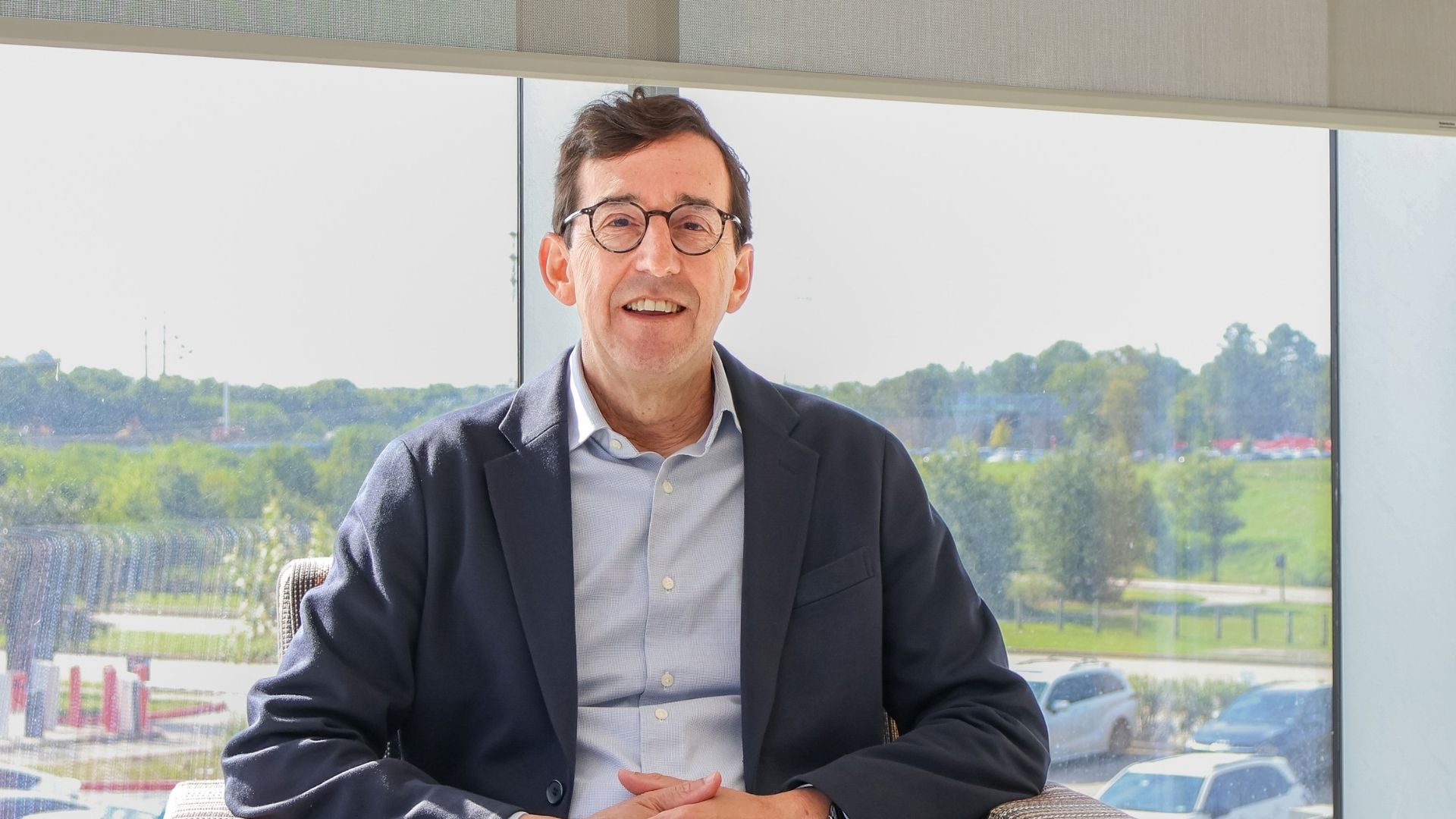
 For David S. Buck, M.D., M.P.H., Houston has been more than a place to practice medicine.
It has been a community to learn from, serve and help shape.
For David S. Buck, M.D., M.P.H., Houston has been more than a place to practice medicine.
It has been a community to learn from, serve and help shape.
For more than four decades, Buck has dedicated his career to improving healthcare for underserved communities. From developing medical and dental clinics and founding Healthcare for the Homeless Houston to advancing street medicine and building programs focused on community health, his work has consistently extended beyond the walls of a traditional clinic.
As he retires from his role as associate dean for community health at the Tilman J. Fertitta Family College of Medicine, Buck leaves behind a career defined by service, partnership and a commitment to changing the systems that influence health.
Buck’s approach to community health has evolved throughout his career. Early on, his focus was on bringing healthcare to people who lacked access. Over time, he came to see the importance of working alongside communities to understand their needs and build lasting solutions.
“Communities understand their own needs, strengths, barriers and priorities in ways that institutions often do not,” Buck said. “Some of the most important lessons I have learned have come from patients, community health workers, people with lived experience and community organizations.”
That philosophy has guided Buck through a career spanning clinical medicine, public health, street medicine and academia. In addition to founding Healthcare for the Homeless Houston in 1999, he founded Patient Care Intervention Center that recently merged with Health Connect Texas who will be a key partner with Dr Ben King’s new Institute (IH3) as one of the first integrated Health and Community Information Exchange and founded the Houston-Galveston Albert Schweitzer Fellowship Program. Since the College’s founding, several Fertitta College of Medicine students have been selected as fellows in the program, continuing Buck’s commitment to preparing future healthcare professionals to serve their communities. He also served in leadership roles with the International Street Medicine Institute and continues to practice medicine, including medical street outreach.
His work with people experiencing homelessness has been particularly influential. Buck’s decades of work in this area have helped inform a broader approach to addressing the social and systemic factors that influence health.
At UH, that legacy continues through the Institute for Housing, Homelessness and Health, which Dean Jonathan A. McCullers, M.D., said will help reshape the University’s approach to homelessness in the coming years.
“As our associate dean of community health and even before, Dr. Buck has spent several decades building trust and community partnerships,” McCullers said. “For a university like UH situated in an urban environment, these bridges and the perspective that the community knows what it needs from us more than we do, this has been critical in establishing our community engagement as a College of Medicine.”
Buck brought that same perspective to the Fertitta College of Medicine as one of its founding faculty members. His knowledge of Houston’s communities and longstanding relationships have helped shape the College’s curriculum and educational experiences.
“His contributions to our curricular design have been tremendous,” McCullers said.
For Buck, community engagement is ultimately about partnership and learning. Linda Civallero, executive director of community engagement, has worked closely with Buck for five years and said his curiosity and willingness to embrace new ideas have influenced her own work.
“Something I’ll carry with me is to always be curious and to keep learning,” Civallero said.
She also described a side of Buck that is less visible in his professional accomplishments. He remembers colleagues’ families and important events, makes time for people and maintains relationships long after their work together ends.
“Dave is a nice guy, and he values relationships with people,” Civallero said. “Once you have worked with Dave, and made your way into his cell phone, you’re a friend for life.”
As Buck reflects on his career, he is less concerned with having his name attached to a program than with whether the work continues without him.
“I think one measure of success is whether the work can thrive without you,” Buck said.
That philosophy reflects the legacy he leaves at UH: a commitment to building relationships, strengthening communities and preparing physicians to understand the people behind the diagnoses they treat.
“One of the things that attracts students here is our community-facing mission and educational experiences,” McCullers said. “We need to keep this central to everything we do. I like to say that community is part of our DNA.”
For Buck, that may be the most meaningful legacy of all.
“If a student leaves here understanding that valuing the human being in front of them, seeing that person as someone’s child, parent, sibling, partner or friend; being kind, compassionate, curious and humble, not merely an being an effective test taker, my aspirations and hopes will have been exceeded,” he said.