The Summer Health Education Research Program (SHERP), hosted by the Humana Integrated Health System Sciences Institute, is preparing the next generation of healthcare leaders by giving students hands-on experience tackling real-world population health challenges through research, collaboration and innovation.
 Now in its sixth year, SHERP has grown from a summer research opportunity into a signature
interdisciplinary program that brings together students from across the University
of Houston. Designed to advance health systems science and population health, the
program equips students with the skills to translate research into practical solutions
that improve health outcomes in communities.
Now in its sixth year, SHERP has grown from a summer research opportunity into a signature
interdisciplinary program that brings together students from across the University
of Houston. Designed to advance health systems science and population health, the
program equips students with the skills to translate research into practical solutions
that improve health outcomes in communities.
This year's cohort included teams representing nine University of Houston colleges:
the Tilman J. Fertitta Family College of Medicine, the College of Natural Sciences
and Mathematics, the College of Liberal Arts and Social Sciences, the Cullen College
of Engineering, the C.T. Bauer College of Business, the Andy & Barbara Gessner College
of Nursing, the College of Pharmacy, the Graduate College of Social Work and the College
of Education. Working in intentionally interdisciplinary teams, students combined
their diverse perspectives to address complex public health issues.
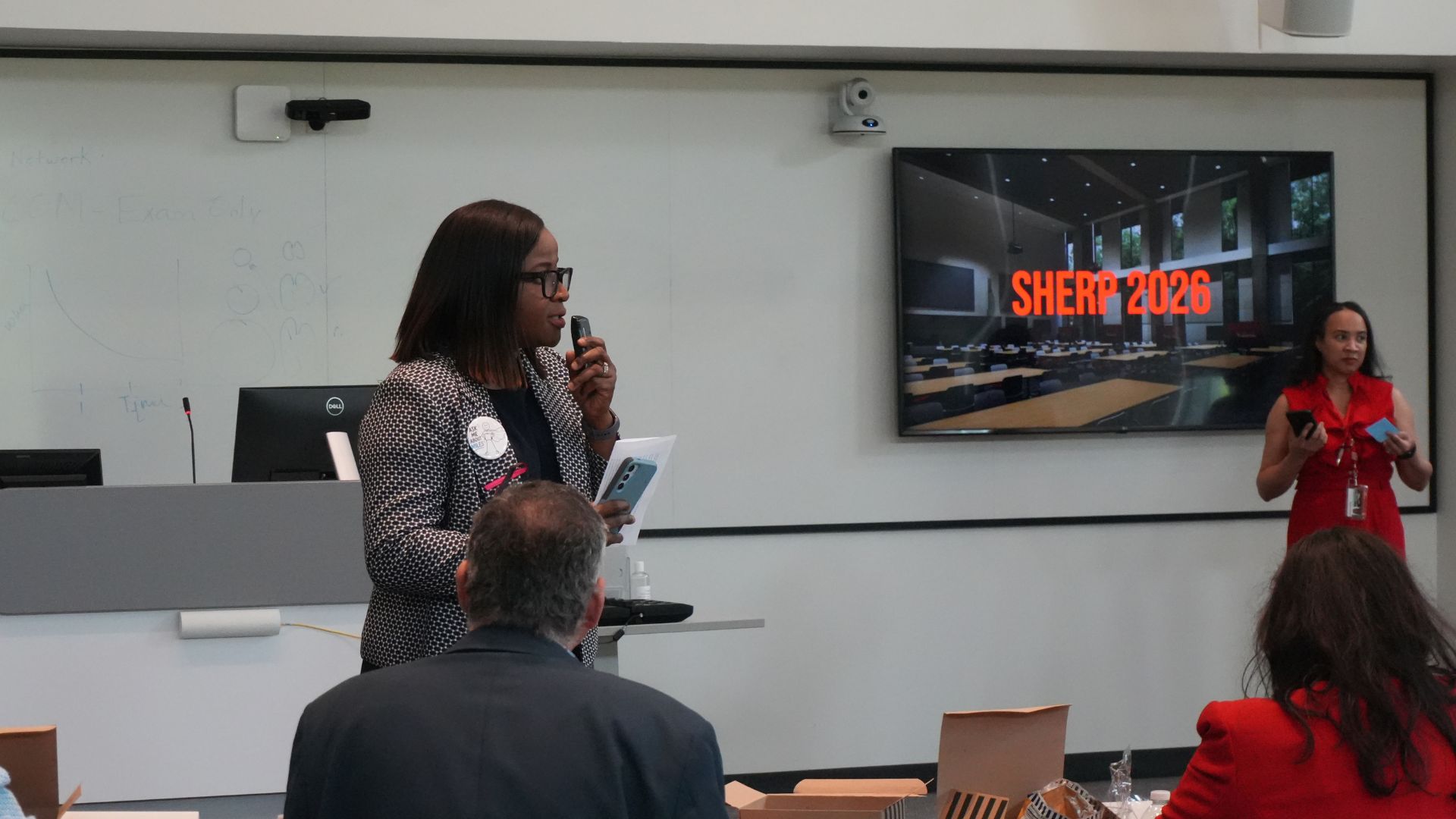 For Omolola E. Adepoju, Ph.D., M.P.H., director of the Humana Integrated Health System
Sciences Institute, team science is what continues to set SHERP apart.
For Omolola E. Adepoju, Ph.D., M.P.H., director of the Humana Integrated Health System
Sciences Institute, team science is what continues to set SHERP apart.
"We had students representing nine different colleges across the University of Houston,
and every team was intentionally interdisciplinary," Adepoju said. "Watching teams
tackle complex health challenges together showed just how much stronger solutions
become when diverse perspectives are at the table."
The projects were grounded in authentic community needs. Three of this year's seven
research topics were provided by the Houston Health Department, giving students the
opportunity to address current population health challenges rather than theoretical
exercises.
"These weren't hypothetical case studies," Adepoju said. "They were real population
health challenges that our community partners are actively trying to solve. That gave
students the opportunity to see how research can directly inform policy and practice."
Throughout the monthlong program, students participated in didactic sessions, a data-thon,
faculty and community mentorship, and a Shark Tank-style competition where teams pitched
implementation-ready solutions.
The curriculum featured sessions led by distinguished leaders from academia, healthcare,
industry, entrepreneurship and government. Featured speakers included Claudia Neuhauser,
Ph.D., vice president/vice chancellor for research at the University of Houston, Todd
Prewitt, M.D., chief medical officer of Value-Based Health Strategies at Humana, Melanie
Bujanda-Romero, M.P.H., market president of CenterWell Senior Primary Care, and Kelly
McCormick, J.D., of the University of Houston Wolff Center for Entrepreneurship. Students
also learned from University of Houston faculty, healthcare leaders and community
partners.
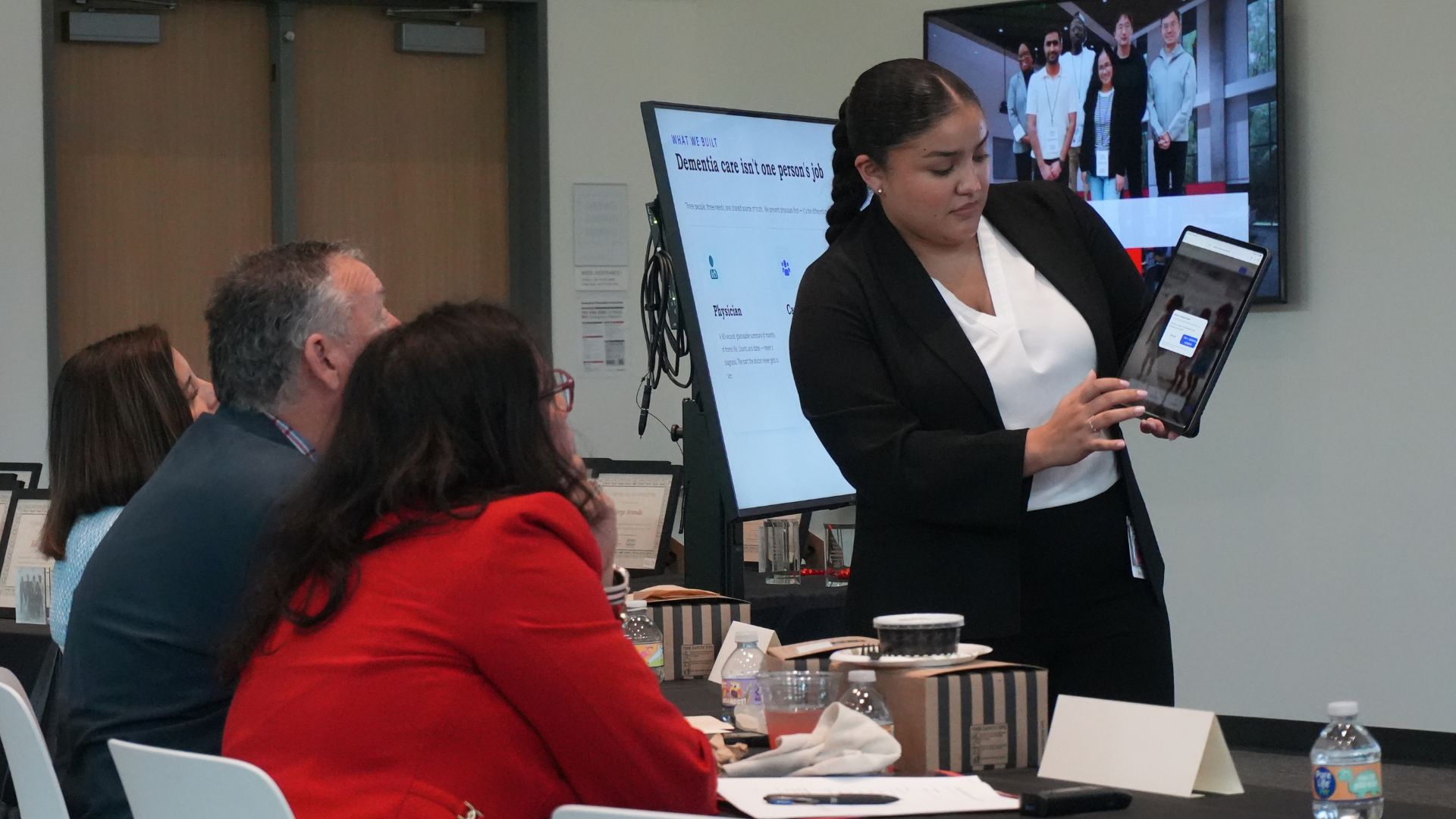 This year's keynote speaker, U.S. Rep. Christian Menefee, reinforced the importance
of collaboration across sectors to improve community health. Previous keynote speakers
have included a Texas state senator and Anthony Fauci, M.D.
This year's keynote speaker, U.S. Rep. Christian Menefee, reinforced the importance
of collaboration across sectors to improve community health. Previous keynote speakers
have included a Texas state senator and Anthony Fauci, M.D.
"Improving health requires partnerships across academia, healthcare systems, industry,
entrepreneurs, communities and policymakers," Adepoju said. "That breadth of exposure
is what makes SHERP unique. It prepares students not just to conduct research, but
to become leaders who can move ideas into action."
Adepoju said SHERP is intentionally designed to mirror today's healthcare environment,
where solving complex health challenges requires collaboration across disciplines
and meaningful community engagement.
"We challenge students to think beyond publishing a paper and ask, 'Who will use this
information? How will it improve people's lives?'" she said.
For Christy Pestilos, a SHERP participant from the College of Liberal Arts and Social Sciences whose research
focuses on adversity and well-being, the program provided an opportunity to apply
her academic interests in a collaborative, community-focused setting.
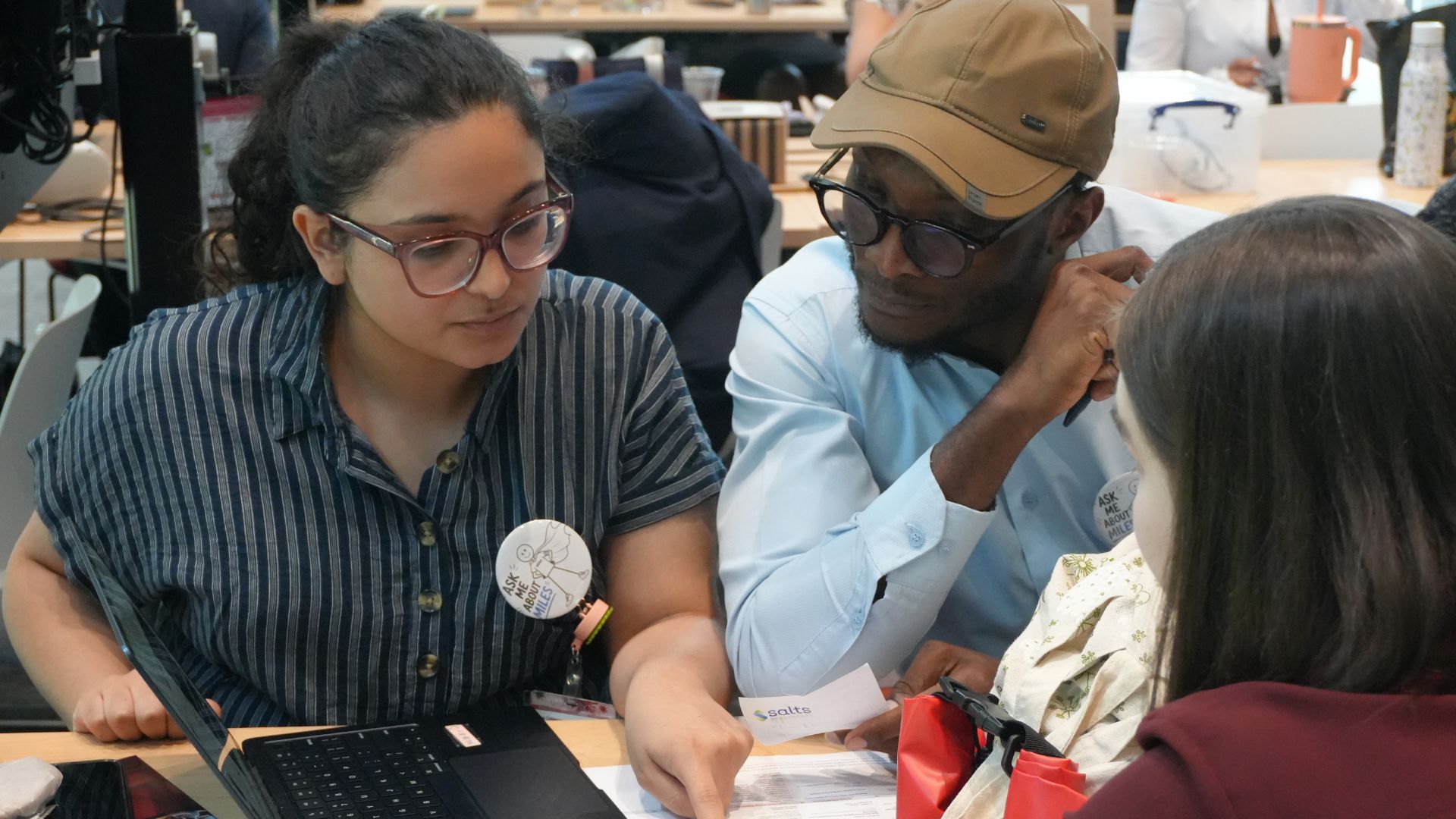 "SHERP brings together students and faculty from so many different disciplines to
work on real problems in community health, and that's exactly the kind of work I wanted
to be part of," Pestilos said.
"SHERP brings together students and faculty from so many different disciplines to
work on real problems in community health, and that's exactly the kind of work I wanted
to be part of," Pestilos said.
Working alongside students and faculty from a variety of disciplines broadened her
perspective on health and strengthened her appreciation for collaborative problem-solving.
"I came in as a personality and well-being researcher and left with a much richer
sense of how health, environment and equity intersect in people's lives," she said.
One of Pestilos' team's projects centered on developing an app concept that integrates
real-time climate and weather risk data with an individual's health profile to provide
personalized health guidance. Presenting the concept during the program's Shark Tank-style
competition became one of the defining moments of her experience.
"It was a great example of what's possible when people from different fields really
listen to each other," she said.
The experience also helped solidify her future goals.
"SHERP affirmed something I'd been thinking about for a while: I want to keep working
at the intersection of well-being, resilience and health, particularly for communities
most affected by adversity," Pestilos said.
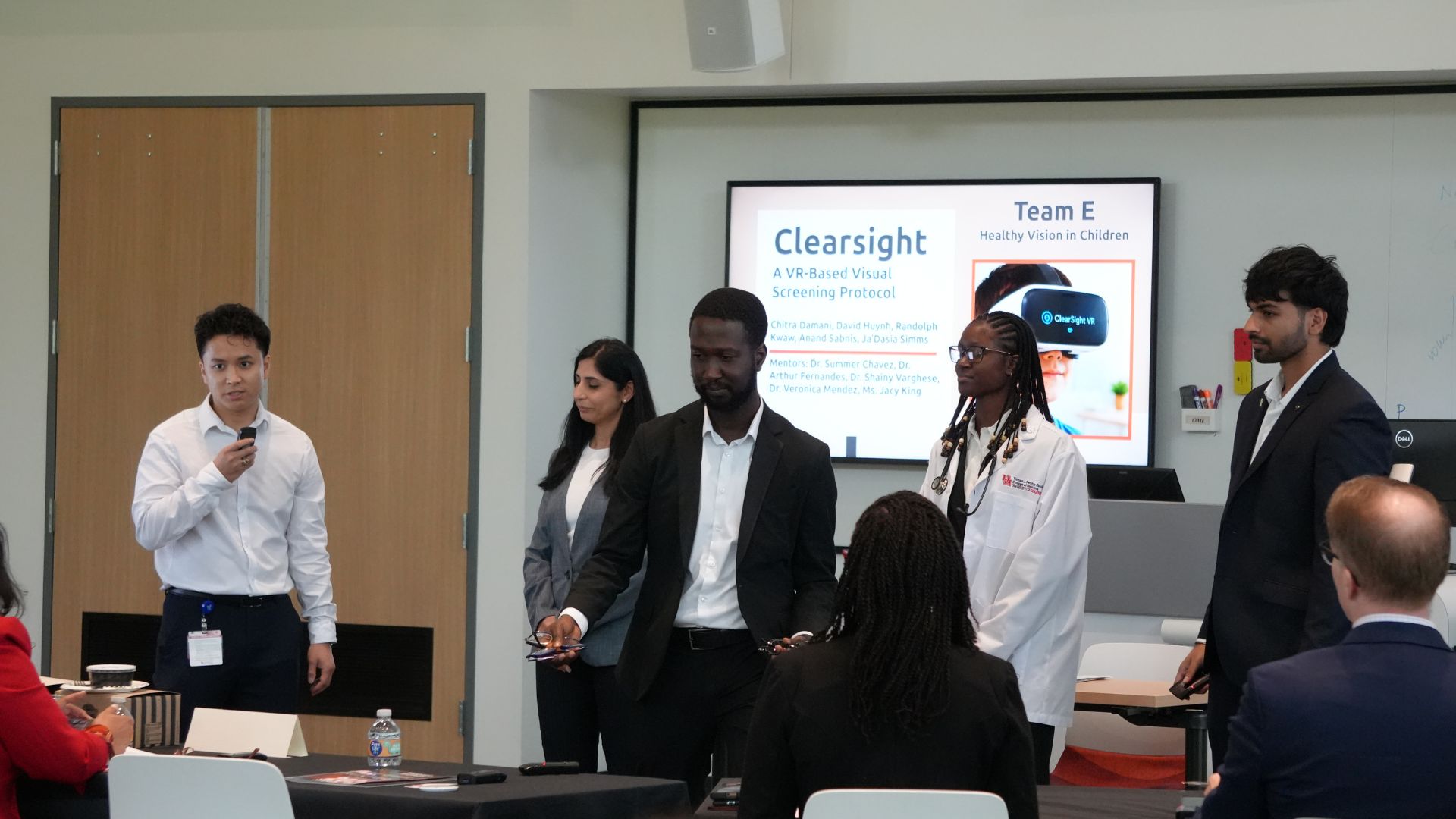
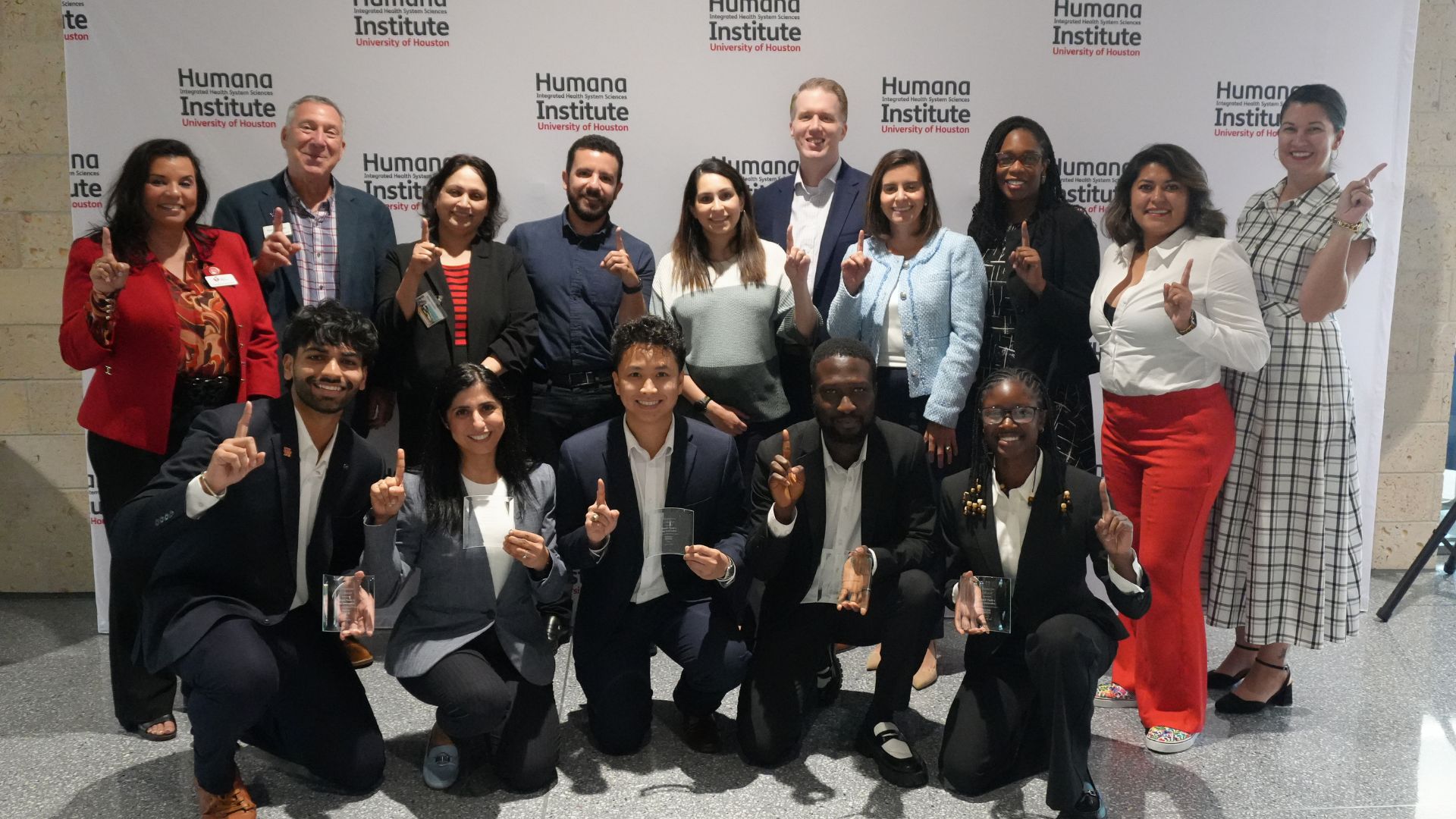 The winning team developed an innovative screening game designed to improve vision
screening among elementary school children using virtual reality headset technology.
Team members included Zhuoying Chen, Chitra Navneet Damani, Anand Sabnis, David Huynh,
Randolph Kwaw and Ja’Dasia Sims, representing the Cullen College of Engineering, the
College of Liberal Arts and Social Sciences, the College of Natural Sciences and Mathematics,
the Tilman J. Fertitta Family College of Medicine and the College of Optometry. Their
interdisciplinary project was mentored by Summer Chavez, D.O., M.P.H., M.P.M., from
the Tilman J. Fertitta Family College of Medicine, Arthur Fernandes, Ph.D., M.P.H.,
from the College of Optometry and the Tilman J. Fertitta Family College of Medicine,
and Shainy Varghese, Ph.D., APRN, CPNP-PC, CGNC, from the Andy & Barbara Gessner College
of Nursing, with guidance from consultant coaches Veronica Mendez, O.D., and Jacy
King, M.B.A., of the Houston Health Department.
The winning team developed an innovative screening game designed to improve vision
screening among elementary school children using virtual reality headset technology.
Team members included Zhuoying Chen, Chitra Navneet Damani, Anand Sabnis, David Huynh,
Randolph Kwaw and Ja’Dasia Sims, representing the Cullen College of Engineering, the
College of Liberal Arts and Social Sciences, the College of Natural Sciences and Mathematics,
the Tilman J. Fertitta Family College of Medicine and the College of Optometry. Their
interdisciplinary project was mentored by Summer Chavez, D.O., M.P.H., M.P.M., from
the Tilman J. Fertitta Family College of Medicine, Arthur Fernandes, Ph.D., M.P.H.,
from the College of Optometry and the Tilman J. Fertitta Family College of Medicine,
and Shainy Varghese, Ph.D., APRN, CPNP-PC, CGNC, from the Andy & Barbara Gessner College
of Nursing, with guidance from consultant coaches Veronica Mendez, O.D., and Jacy
King, M.B.A., of the Houston Health Department.
Over the past six years, SHERP has mentored more than 185 students, contributed to
more than 30 peer-reviewed publications with faculty mentors and helped students earn
eight first-place awards at national conferences.
For Adepoju, the program's greatest measure of success is seeing alumni carry the
collaborative, solution-oriented mindset they developed during SHERP into residency
programs, graduate education, industry, public health agencies and academic careers.
"What started as a summer research experience has evolved into a signature interdisciplinary
program," Adepoju said. "If we want a healthier future, we have to give students opportunities
to work across disciplines, engage with communities and learn from both academic experts
and leaders working on the front lines of healthcare."