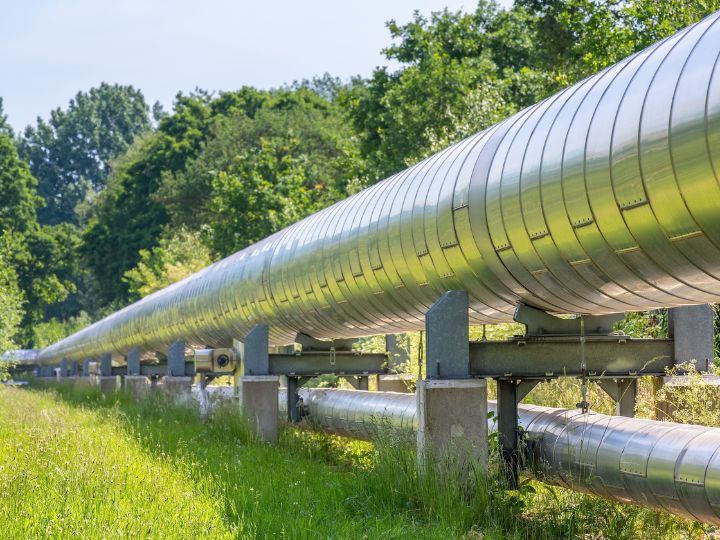
A University of Houston report finds that more than $1 trillion in new midstream energy infrastructure investment will be needed by 2052 to meet rising U.S. energy demand driven by data centers, AI and global market pressures. The researchers outline a strategy to secure the nation’s energy requirements, including significant expansion of midstream infrastructure.
The 2025 North American Midstream Infrastructure Report, released by the INGAA Foundation in collaboration with UH and Wood and ESMIA Consultants, highlights future energy needs and the pipelines and associated infrastructure required to support growing demand. UH Energy also developed an abridged version of the report to make findings more accessible.
“The University of Houston was pleased to lead the consortium that conducted this analysis,” said Paul Doucette, hydrogen program officer at UH and principal investigator of the report. “The consortium worked closely with a team of industry experts, as well as university faculty and staff, to evaluate the market forces shaping North America’s energy future.”
Securing the Energy Future
The report models outcomes under two scenarios: a reference case reflecting current federal, state and provincial policies as of April 1, 2025, and a low-carbon scenario that accounts for state and provincial GHG reduction targets across the U.S. and Canada, which influence projected energy demand, fuel selection, and infrastructure development.
In both cases, natural gas remains a foundational component of the region’s energy system. Rising electricity demand, particularly from data centers, along with continued growth in liquefied natural gas exports, is expected to drive the need for expanded infrastructure.
“Meeting energy demand is a critical challenge right now, and this report quantifies the necessary midstream infrastructure and corresponding development dollars needed to meet that demand,” said Hebe Shaw, executive director of the INGAA Foundation. “Meeting the energy needs of North America will require sustained investment and development, which must begin now to ensure a safe, reliable and affordable energy system.”
The report concludes that due to projected demand through 2052, sustained investment in pipelines and midstream infrastructure is essential to maintaining a reliable, affordable U.S. energy system. The report identifies several key midstream infrastructure requirements:
- More than $1 trillion in new midstream capital investment, averaging $40-$48 billion per year across natural gas, oil, natural gas liquids, hydrogen and CO2 infrastructure
- At least 37,000 miles of additional natural gas transmission pipelines, including approximately 33,800 miles within the United States
- Approximately 103,000 miles of new natural gas gathering pipelines
- Roughly 414,000-828,000 jobs annually, or up to 24 million cumulative jobs over 25 years
“The final report draws on decades of experience and equips industry leaders and policymakers with the clarity and confidence needed to plan, permit and build infrastructure required to power a growing economy through 2052,” Doucette said.
UH Continues to Lead the Way
The report’s findings also highlight the growing need for workforce development and innovation tied to expanding energy infrastructure, areas where UH has continued to expand its efforts.
Most recently, Mim Rahimi, professor at the Cullen College of Engineering, and his team of researchers developed a roadmap for the implementation of a new technology that uses the ocean to capture carbon dioxide, which could be a boon to coastal economies.
Prior to that, the Gulf Offshore Research Institute and its partners, including UH, were awarded $20 million through the Gulf Futures Challenge to advance an initiative that will transform inactive offshore platforms into productive hubs for advanced energy technologies, mineral recovery and aquaculture.
And in August, Ganesh Thakur, director of UH Energy Industrial Partnerships, and George Wong, graduate studies director at the Cullen College of Engineering, received a combined $1.1 million in grants from the Ocean Energy Safety Institute to advance deepwater production innovation.
UH also partnered with the Urban Enrichment Institute and the Houston Health Department on a $560,000 grant aimed at preparing the next generation of energy workers.
Additionally, the university received a $1 million gift from Peggy and Chris Seaver in January to establish the Peggy and Chris Seaver Endowed Aspire Professorship, designed to strengthen UH Energy and expand the university’s leadership in addressing global energy challenges.
“The University of Houston is leading the way in energy innovation and ensuring there will be a workforce to secure our future,” said Ramanan Krishnamoorti, vice president of energy and innovation. “We will continue to be a global leader in this industry until 2052 and beyond.”