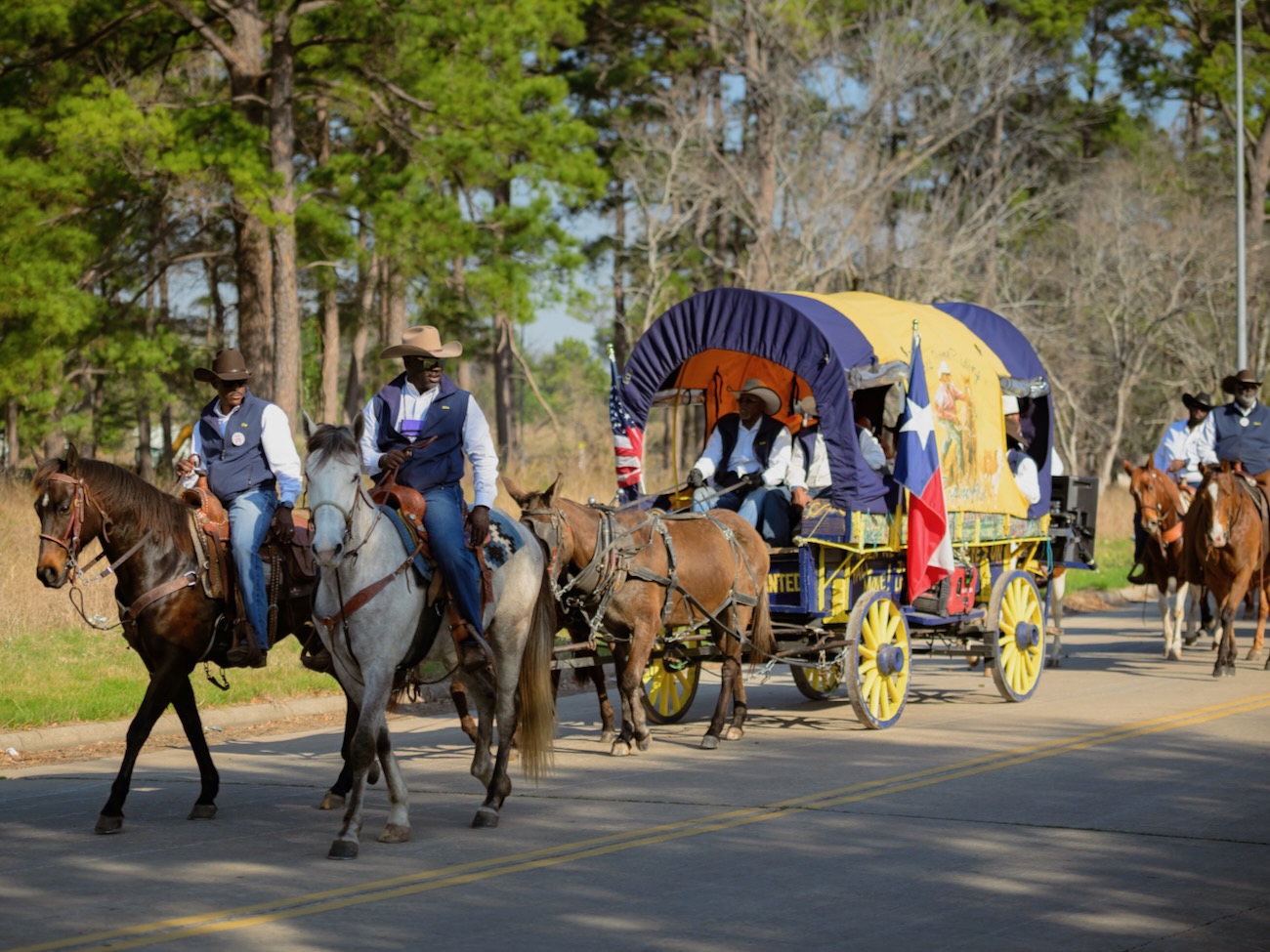
Riders on horseback affiliated with the Prairie View Trail Ride Association ride past Edward A. Vines Primary School in Aldine ISD on Go Texan Day on Friday, Feb. 27. The University of Houston’s Department of African American Studies is preserving the stories of Black cowboys in Texas through a new initiative.
Students at the University of Houston are helping document and preserve an important and often overlooked chapter of the Texas ranching and rodeo story through a new oral history initiative focused on Black cowboys and cowgirls across the state.
The Black Cowboy/girl Preservation Project aims to build a permanent oral history archive documenting the experiences of Black cowboys and cowgirls, which will be housed at the Houston Public Library’s African American History Research Center. The collection will be publicly accessible and will contribute to broader scholarship on Texas agriculture, ranching and rodeo culture.
The project represents a collaborative effort among UH faculty and affiliates, students and the city’s public library to preserve and elevate an important part of Texas history. The initiative provides students with practical training in oral history methodology, archival documentation and community-based research.
The term “cowboy” itself is expansive: It can refer to ranch workers, rodeo athletes, trail riders or even “urban cowboys,” said Demetrius Pearson, associate professor in the Department of Health and Human Performance. Yet despite their longstanding presence in these traditions across the American West, Black cowboys’ experiences are less frequently documented and often excluded from traditional Western films, art and textbooks.
“They were there in the Western diaspora, but you don’t see them in many Westerns,” Pearson said. “There are a number of Western movies over the years that had no Black involvement, yet they were there.”
By recording these stories, the team hopes to ensure broader recognition of Black cowboys’ contributions to American history and western culture.
Learning Through Oral History
In its first semester, students conducted 10 in-depth audio interviews with former rodeo participants, artifact collectors and museum curators. The research team plans to record at least 10 more this summer, said Marquel Sennet, a graduate assistant in the Department of African American Studies and a Ph.D. student in the Department of History.
The project is not part of an academic course, rather interested students may opt into the project, gaining hands-on experience in oral history research while contributing to a permanent archive.
“We want this beautiful history to be told for generations and generations to come,” Sennet said. “To see folks who, before there was the Hollywood attention, were pushing for these traditions to continue shows the resiliency.”
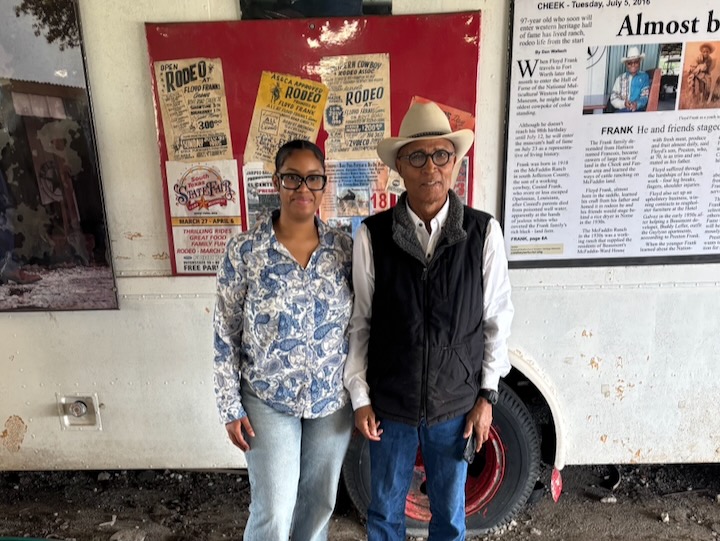
Sophomore economics major Mistasia Valencia interviewed Preston Frank, a Black cowboy from Beaumont whose father, Floyd Frank, organized one of the first Black rodeos in the 1930s.
“The most impactful aspect of his story was his commitment to preserving cowboy traditions and history within his community,” Valencia said. “It challenged common assumptions about who cowboys are and what their legacy represents.”
Valencia, who has her own family ties to cowboy traditions through her grandfather, said she joined the project to help amplify the cultural, historical and social contributions of Black cowboys.
Reclaiming the Backstory
For UH scholars, documenting this history is long overdue. Texas has a deep rodeo tradition that extends far beyond major cultural touchstones such as the Houston Livestock Show and Rodeo.
“In the sport of rodeo, oftentimes individuals neglect to talk about the Black cowboy and or the Black rodeo cowboy,” Pearson said. “They’ve been omitted from American West archives and the like, but one might say they were among the first cowboys.”
Pearson traces African Americans’ involvement in livestock management back to plantation systems in the 1800s. Enslaved Africans and their descendants played central roles in cattle herding and ranch labor, later shaping rodeo culture in Texas and beyond.
Driven by both academic research and personal passion, Pearson has assembled an extensive private collection of rodeo memorabilia, including vintage rodeo posters, handbills, photographs and recorded interviews with legendary riders. His longstanding relationships within rodeo and museum communities have helped connect students with interview subjects.
“In the sport of rodeo, oftentimes individuals neglect to talk about the Black cowboy and or the Black rodeo cowboy. They’ve been omitted from American West archives and the like, but one might say they were among the first cowboys.”
—Demetrius Pearson, associate professor in the Department of Health and Human Performance
Building a Public Archive
The interviews will be formally archived at the African American History Research Center and made accessible to the public. Sheena Wilson, the center’s manager, said the collection will fill a notable gap.
“I haven’t seen any sort of collection anywhere that’s documenting Black cowboy history, period,” Wilson said. “This is a start to get people thinking about how we’re documenting, not just the cowboys, but other similar groups and communities as well.”
Sennet said she believes the archive will benefit families and children of all ages and backgrounds, offering a fuller visual and historical understanding of Texas.
“You can see firsthand how resilient these folks were and how they made major contributions to this area and this community that should be recognized,” Sennet said.
Tara T. Green, professor and chair of the Department of African American Studies and the project’s lead, expects the work to continue well beyond the initial semesters. What began as a Houston-focused effort is already expanding across Texas through community connections.
“Because Texas is so large and there are so many possibilities, we know this is going to be an ongoing project,” Green said.
Students interested in participating or community members who wish to share their stories can contact Green to schedule an interview.