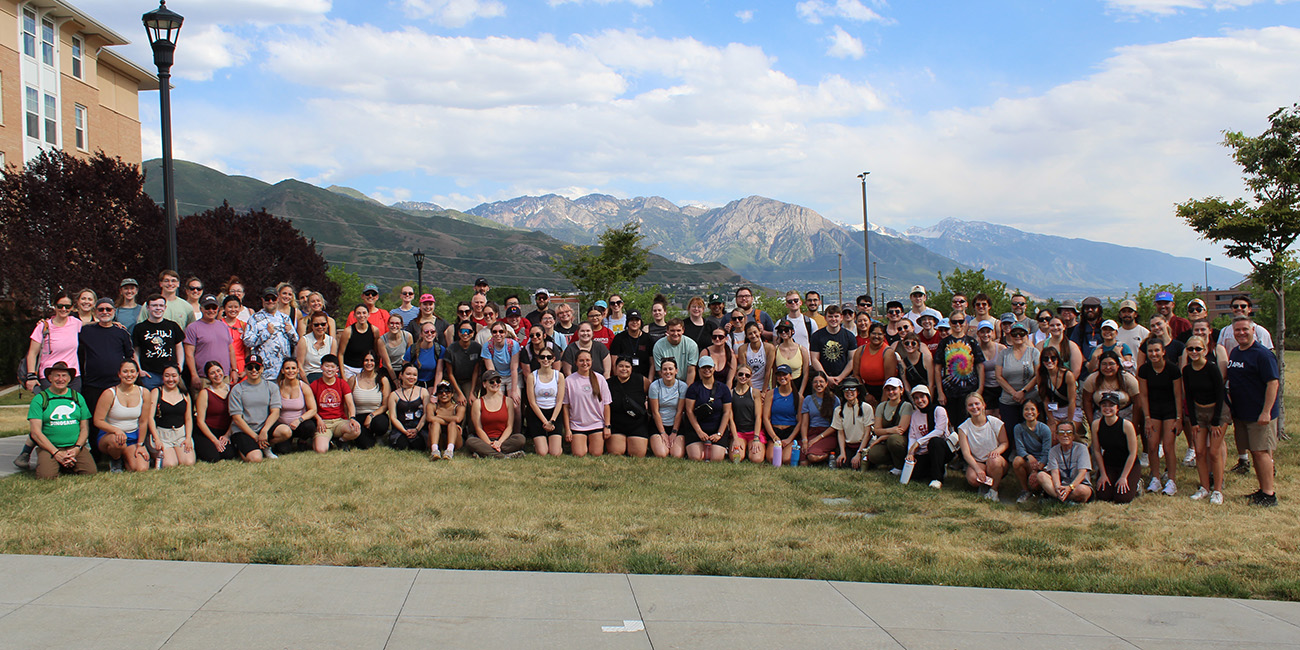
For more than two decades, University of Houston College of Pharmacy (UHCOP) Pharm.D. students have traveled to the annual American Pharmacists Association (APhA) Institute on Substance Use Disorders to confront one of healthcare’s most complex challenges through education, personal stories and conversations centered on addiction, recovery and compassionate care.
The institute brings together pharmacists, student pharmacists, pharmacy technicians, attorneys, recovery advocates and other professionals for educational sessions, small-group discussions and personal stories focused on substance use disorders and recovery.
Among the recent institute attendees was Emily Nguyen, who participated as an APhA leadership representative in her role as national president-elect of the American Pharmacists Association-Academy of Student Pharmacists.
“I had the unique opportunity of being a group leader throughout the meeting—liaising incredibly insightful conversations with students and pharmacists from across the nation—while also confronting my own revelations about personal and professional bias and stigma that comes with the transformative vulnerability of the meeting,” Nguyen said.
For UHCOP student pharmacists Jose Ayala and Kaitlin Ridgell, attending the institute offered more than an opportunity to expand their clinical knowledge. It provided an intimate look at the realities of addiction, recovery and the support systems available to patients and healthcare professionals.
Ridgell, who attended the institute with support from the Texas Pharmacy Foundation Professional Recovery Network (TPF-PRN) Scholarship, said one of the most meaningful discoveries for her was learning about the network of professionals dedicated to assisting healthcare workers experiencing a substance use crisis.
“As future pharmacists, it is important to understand that we will be surrounded by tempting medications, stressful environments and pending deadlines, which could unfortunately lead to a substance use disorder,” Ridgell said. “However, having programs that establish a supportive network to find help ensures that no one has to follow a potentially negative path.”
Ayala, who also received a TPF-PRN Scholarship, described the experience as one of the most meaningful of his first year in pharmacy school.
Ayala said he entered the institute hoping to learn how healthcare professionals can better support patients in recovery. Although he expected to gain clinical knowledge, he was particularly affected by healthcare professionals who openly discussed their personal experiences with substance use and recovery.
“Their honesty, resilience and dedication to helping others challenged many of my assumptions and reminded me that substance use disorders can affect anyone, regardless of profession, background or education,” Ayala said.
The speakers’ stories reinforced the importance of approaching substance use disorders with empathy rather than judgment.
“These stories helped me better understand the human side of addiction and recovery beyond what can be learned in a classroom or textbook,” Ayala said. “I left with a renewed commitment to advocate for individuals affected by substance use disorders and promote recovery-oriented care throughout my future pharmacy career.”
One of his most memorable experiences took place outside the classroom during a group hike in the Utah mountains. After Ayala temporarily lost the trail, other attendees helped guide him in the right direction. He saw the experience as a reflection of his journey as a first-generation Latino student pharmacist.
“There have been many moments when I have felt uncertain about the path ahead, but mentors, colleagues and supportive professionals have helped me navigate challenges and continue moving forward,” Ayala said.
He said the experience strengthened his sense of purpose and inspired him to provide similar guidance to future students from underserved communities.
Pharm.D. student Aya Al Obaidi attended the institute with support from UHCOP’s The Prescription Drug Misuse Education and Research (PREMIER) Center.
“The institute reminded me that being a good pharmacist is not only about knowing the medications, but also about understanding the person in front of you and knowing how to support them in a way that makes them feel heard and respected,” Al Obaidi said.
Douglas Thornton, Ph.D., Pharm.D., BCPS, associate professor and director of The PREMIER Center, said pharmacists will encounter patients affected by substance use disorders in every practice setting.
“The PREMIER Center supports students attending the APhA Institute because we want our student pharmacists to graduate prepared to provide evidence-based, compassionate care to patients with substance use disorders,” Thornton said.
Kimberly Nguyen, Pharm.D. (’02), R.Ph., clinical associate professor and assistant dean for student and professional affairs, has attended the institute multiple times, opening her eyes to the fact that substance use disorders can affect students and their families.
“The Institute challenged my thinking, expanded my knowledge and reinforced the importance of compassionate care and support for students and their families affected by substance use disorders," Nguyen said.
For all students, the institute demonstrated that pharmacists’ responsibilities extend beyond understanding medications and treatment guidelines. Pharmacists also have an opportunity to reduce stigma, recognize when patients or colleagues may need help and connect individuals with compassionate, recovery-focused support.