
Each February, In‑Plant Awareness Month shines a spotlight on the critical role in‑house printing and mailing operations play in supporting organizations nationwide. The University of Houston, Copy, Print, and Delivery Services (CPD) department exemplifies that impact through scale, technical precision, and a campus‑wide commitment to quality.
Established by the In‑Plant Printing and Mailing Association (IPMA), In‑Plant Awareness Month recognizes the professionals behind in‑house design, printing, mailing, and distribution while educating the public about the expertise and coordination required to operate these complex facilities.
2025 Highlights
In 2025, In‑Plant Impressions magazine ranked the UH facility—staffed by 23 employees—48th among the 60 largest in‑plant printing operations in North America, spanning higher education, government, healthcare, and corporate organizations. During the year, the CPD team completed 2,837 projects and earned a Platinum Production and Impressions Award from the Association of College and University Printers (ACUP+) for the Report on Philanthropy brochure, which highlighted the University’s philanthropic impact.
CPD Team in Action
A recent Admissions project illustrates the expertise, coordination, and attention to detail behind CPD’s work. The department requested 2,000 eight‑inch‑by‑eight‑inch, 12‑page Undergraduate Admissions brochures printed on 80‑pound gloss cover stock. The job required design support, offset printing, trimming, scoring, folding, and saddle stitching.
The process began with CPD’s graphic designers, who reviewed and refined the provided PDF files, checking color accuracy, layout, and formatting to ensure the project was fully press‑ready.
“We are here to help,” said Eric Dowding, manager of Graphics and Communications. “It’s best to contact us at the beginning of a project to ensure the design is in the correct format—press‑ready—and that the appropriate paper stock is selected.”
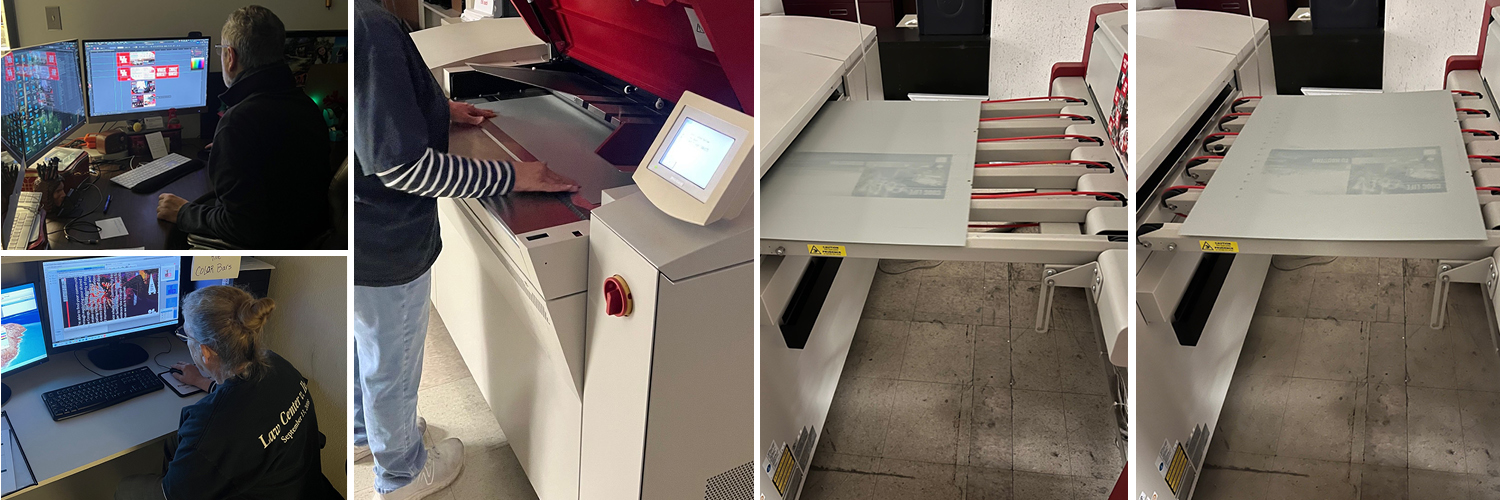
Once approvals were finalized, the project moved to the plating area, where layouts were reviewed again before images were laser‑burned onto printing plates.
“I review the colors and placement to make sure everything is set up correctly and that all required elements are in place,” said Sami Snelling, production manager. “Then I create a mock‑up to confirm the pages are in the proper order.”
For this brochure, four computer‑to‑plate plates were produced: one for the front and back covers, one for the inside covers, and two for the interior pages.
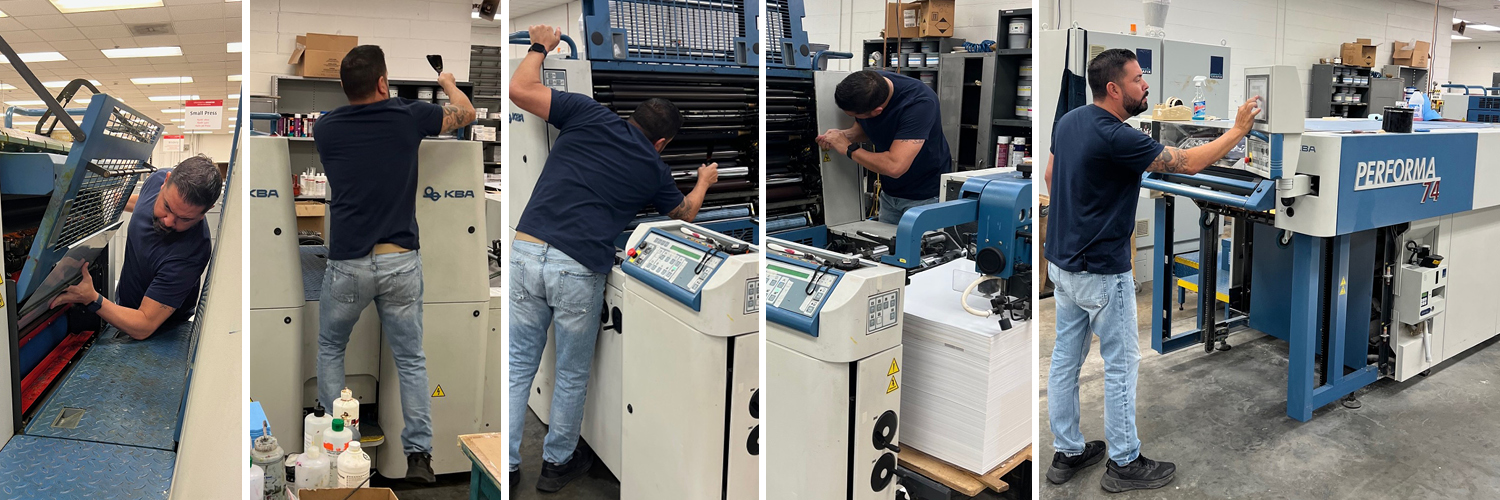
The plates were then sent to the offset press area, where they were mounted, calibrated, and tested through printed proofs.
“I make sure color and quality stay consistent, so we deliver a strong product for the customer,” said Juan Lozoya, offset press operator III. “Every job is different. Each makeready and run requires a fresh approach, which keeps the work engaging.”
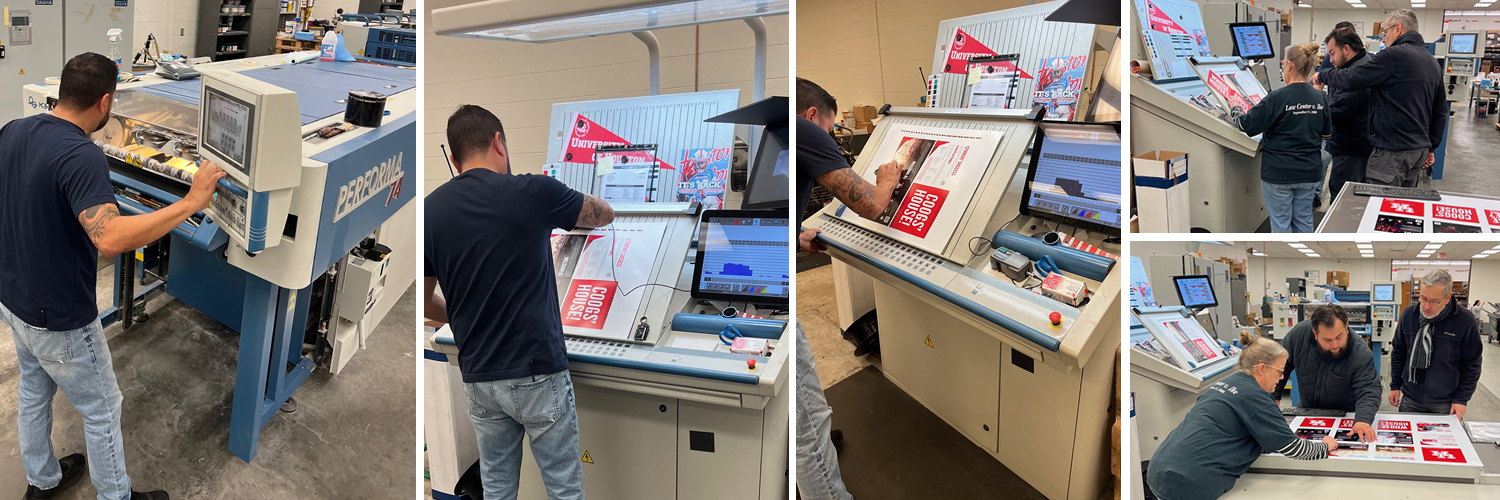 After final administrative approval, the press ran the interior pages, carefully monitored
through multiple passes to ensure consistent color and alignment on both sides of
the paper.
After final administrative approval, the press ran the interior pages, carefully monitored
through multiple passes to ensure consistent color and alignment on both sides of
the paper.
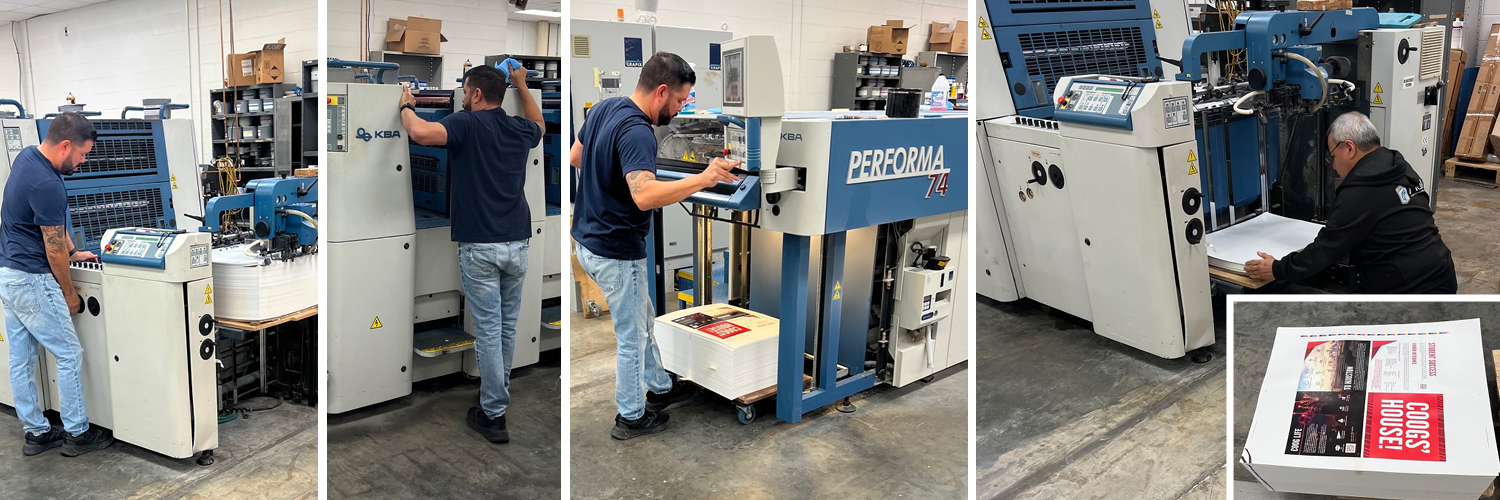 The printed sheets then moved to the bindery, where they were cut into sections, measured,
and checked for accuracy before folding. Covers and interior pages were assembled
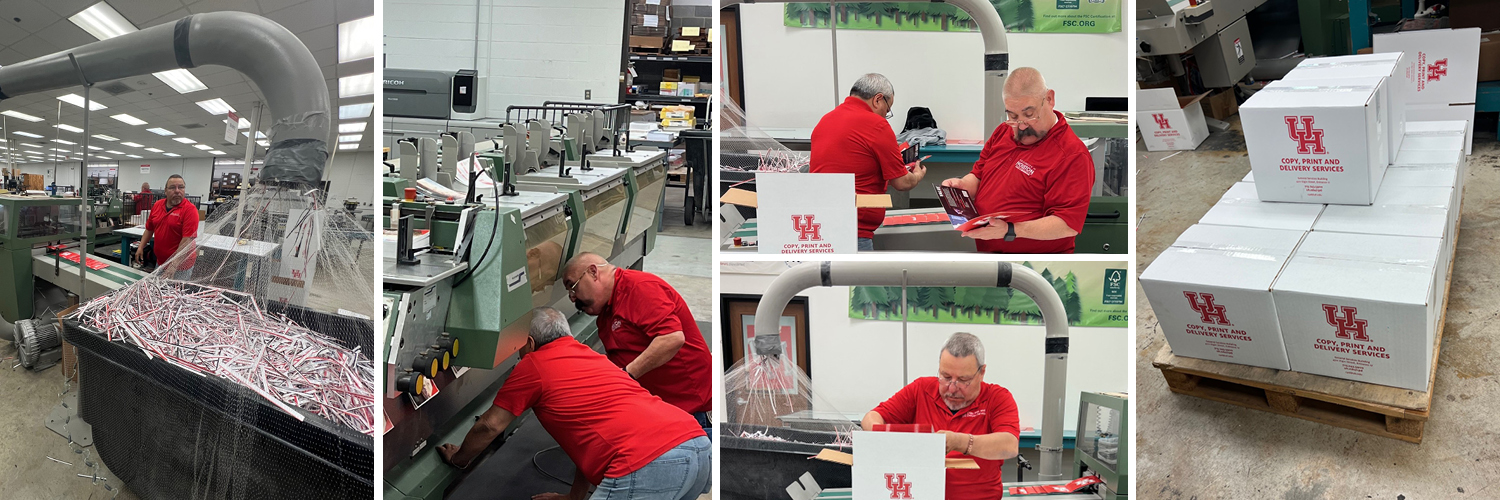
on the saddle‑stitch machine, stapled, trimmed, and inspected.
The printed sheets then moved to the bindery, where they were cut into sections, measured,
and checked for accuracy before folding. Covers and interior pages were assembled
on the saddle‑stitch machine, stapled, trimmed, and inspected.
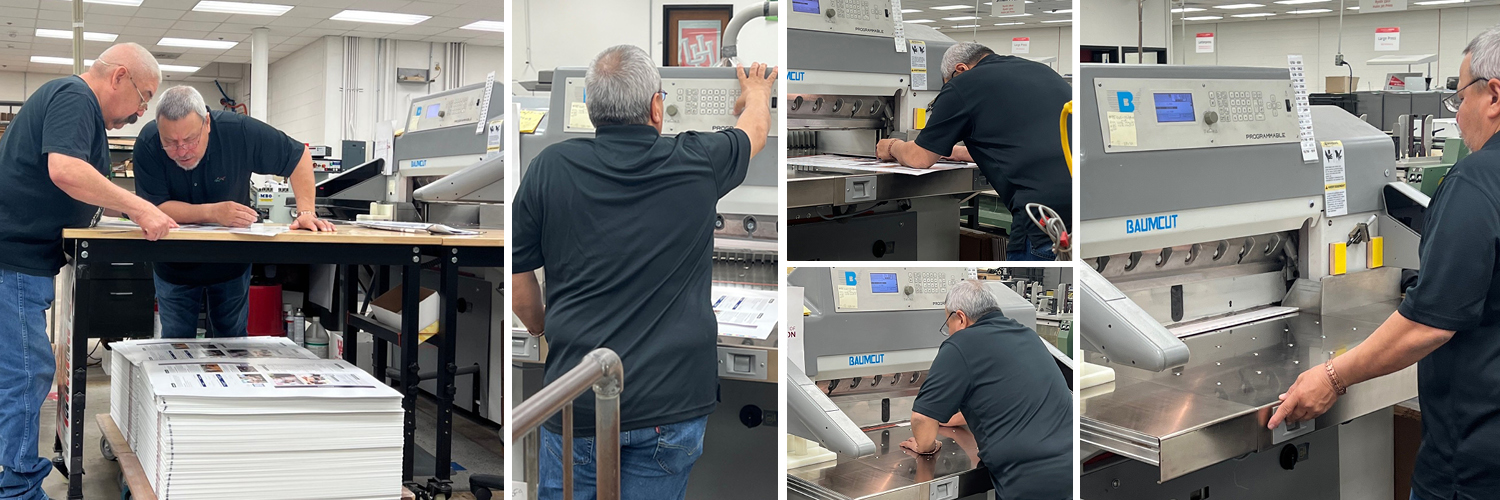
“You have to keep a constant eye on everything with this machine,” said Salvador Bautista, bindery operator. “And if something happens, you have to bird‑dog it.”
Before boxing, finished brochures were randomly inspected to confirm proper page alignment, clean folds, and consistent stapling.
“Our production staff brings more than 150 years of combined experience to every project,” Snelling said. “As the final team to review each job before it reaches the customer, we take pride in delivering work that reflects our standards and represents the University across campus.”
To learn more about UH’s in‑plant printing operations, visit Copy, Print, and Delivery Services online. The CPD team is available to support your next printing project or to schedule a tour of the facility.