Bachelor of Science in Geology
Overview
Geology is a hands-on science, and our curriculum is focused on interactive learning through laboratory-intensive courses and field activities. The coursework includes traditional geology, culminating with our capstone sequence of field geology courses where students spend 5 weeks of the summer in southern Montana practicing field measurements, making maps, and interpreting geology.
Are you considering a Geology degree, have questions about the coursework, or want to learn more about career opportunities? Please conact the faculty advisor: Dr. Daniel Hauptvogel.
Helpful Links
Why study geology?
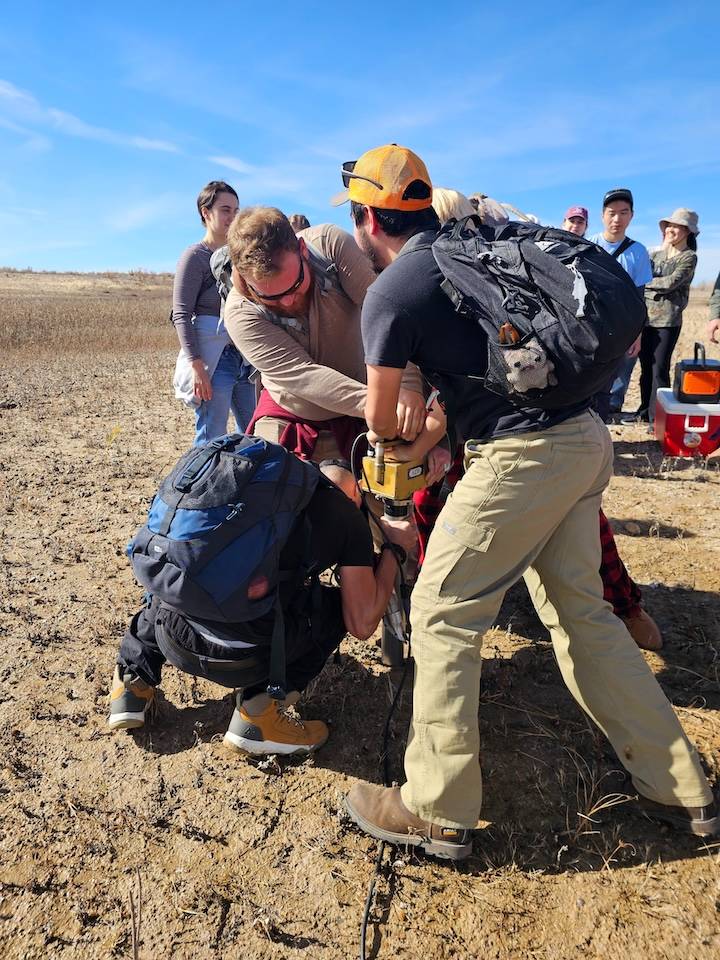
Simply put, geology is the study of the Earth. From rocks and minerals, to natural resources, to evolving landscapes, to natural disasters. Geologists work to understand natural processes of the past, present, and future and their impacts on society. It’s an interdisciplinary science that bridges the gap with biology, chemistry, math, physics, and computer science. A degree in geology will prepare you with a set of skills that are transferrable to any career path you follow.
There are many reasons why students are interested in geology. If you answer yes to any of these questions, a geology major might be right for you:
- Do you like hands-on learning that is more focused on understanding rather than rote memorization?
- Do you want to apply scientific concepts to real-world problems?
- Are you interested in natural history and want to understand the natural world around you?
- Are you interested in developing natural resources in ways that are sustainable and safeguard the environment?
- Do you want small class sizes where the professor knows your name?
- Do you like the outdoors, including hiking and exploring?
Hear from our current students on why they chose geology:
“I decided to pursue geology because I want to learn about how the universe formed and the processes that made the Earth what it is today.”
– Jayla Braddock, Geology major, class of 2026
“I chose Geology as it allowed me to continue my love of hiking and camping by incorporating it into my academic and professional life. I can do those activities while learning more about the rocks I stood on and how the landscape originally formed.”
– Abram Riggs, Geology and Geophysics double major, class of 2026
What kinds of jobs do geologists do?
A degree in geology opens the door to a limitless supply of job opportunities. Here are some of the most popular fields:
- Oil and gas exploration (graduate degree generally required)
- Environmental consulting
- Resource management
- Mining and mineral exploration
- Waste management and remediation
- Remote sensing and spatial analysis
- Land surveying and mapping
- Engineering geology and hazards
- Machine learning and data management
- Science communication and policy
- Teaching and education
- Museum curation and paleontology
- Federal, state, and local organizations (USGS, TCEQ, etc.)
According to the Bureau of Labor Statistics, the median salary for a geoscientist in 2024 was $99,240, about double the median salary of all American workers. The lowest 10% earned less than $58,790, and the highest 10% earned more than $178,880. Geoscience jobs are expected to grow by 24% in Texas over the next 10 years!