Bachelor of Science in Geophysics
Overview
Geophysics is a broad term that largely deals with the scientific properties of the Earth, like gravity, magnetism, and seismic waves. It is a combination of geology, physics, and mathematics. The coursework of our Geophsyics B.S. allows students to pursue a degree tailored to their interests, including courses focused on traditional geology, exploration, computation, environment, and more. The capstone of the geophysics program is a 2–3 week summer course where students practice acquiring geophysical data, which is followed by a fall semester course on the analysis of geophysical data.
According to the Bureau of Labor Statistics, the median salary for a geoscientist in 2024 was $99,240, about double the median salary of all American workers. The lowest 10% earned less than $58,790, and the highest 10% earned more than $178,880. Geoscience jobs are expected to grow by 24% in Texas over the next 10 years!
Are you considering a Geophysics degree, have questions about the coursework, or want to learn more about career opportunities? Please conact the faculty advisor: Dr. Daniel Hauptvogel.
Helpful Links
Why Study Geophysics?
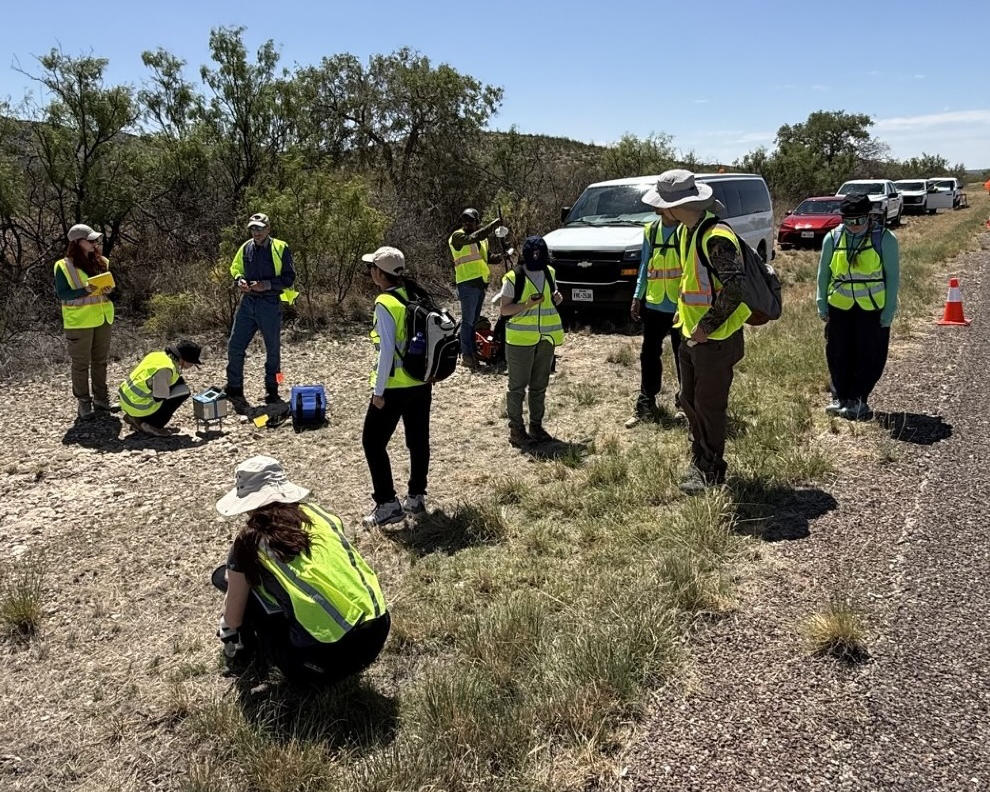
A geophysics degree is ideal for students who are looking to solve real-world problems, including those related to energy and water. Many students pursue geophysics with the goal of working in the oil and gas industry, but there’s so much more you can do with a geophysics degree. Geophysics is useful in addressing geologic, environmental, and natural resource-related questions; including imaging the subsurface, locating sites for water wells, finding and extracting natural resources including critical minerals, carbon capture and storage, evaluating seismic hazards, and more.
Hear from our current students on why they chose geophysics:
“I chose geophysics because of how diverse it is and how it combines physics, geology, and mathematics. From planetary science and remote sensing to earthquakes, subsurface imaging, energy, and environmental work, there is always something new to discover.”
– Rebekah Wells-Mourre, Geophysics and Geology double major, class of 2027
What kinds of jobs do geophysicists do?
Due to the cross-disciplinary nature of geophysics, there are many career paths you can follow. Here are some of the most popular fields:
- Oil and gas exploration (graduate degree generally required)
- Geophysical data acquisition and processing (commonly subsurface, marine, airborne)
- Data science
- Hazards and seismic monitoring
- Petrophysics
- Project management
- Environmental consulting
- Resource management
- Mining and mineral exploration
- Remote sensing and spatial analysis
- Land and marine mapping
- Engineering geology
- Federal, state, and local organizations (USGS, ACE, etc.)