The Association of Collegiate Schools of Architecture recognized three University of Houston Gerald D. Hines College of Architecture and Design faculty-led projects with national honors this year, highlighting the College’s impact across design-build education, cultural preservation, and climate-responsive research. From a community-centered wetlands bird blind rooted in hands-on learning, to the revival of an iconic modernist kiosk as a platform for urban imagination, to a bold housing prototype addressing climate risk along the Gulf Coast, these award-winning projects reflect the breadth of inquiry, innovation, and public engagement shaping design education at the Hines College today.
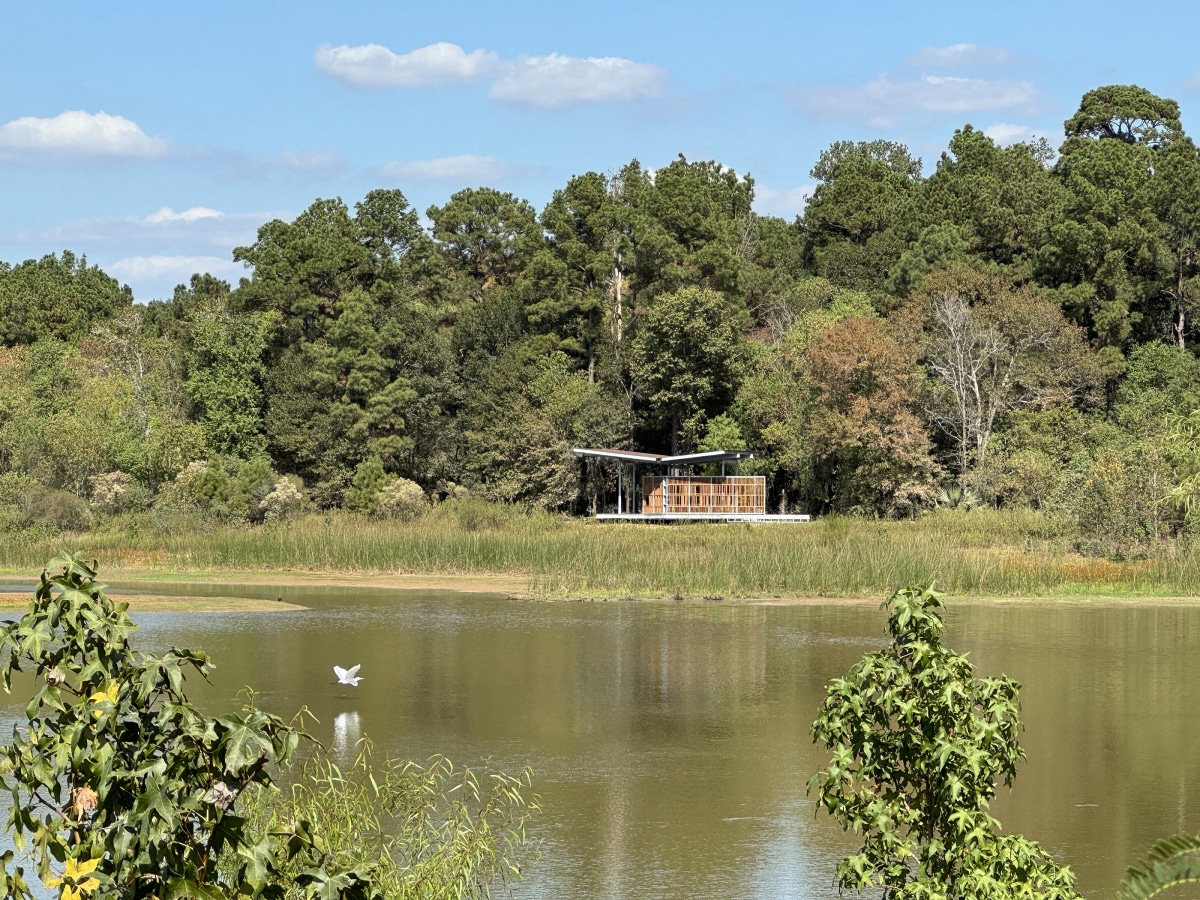
Patrick Peters, Jason Logan + Joseph Colaco
Design Build Winner
Bird Blind Wetlands
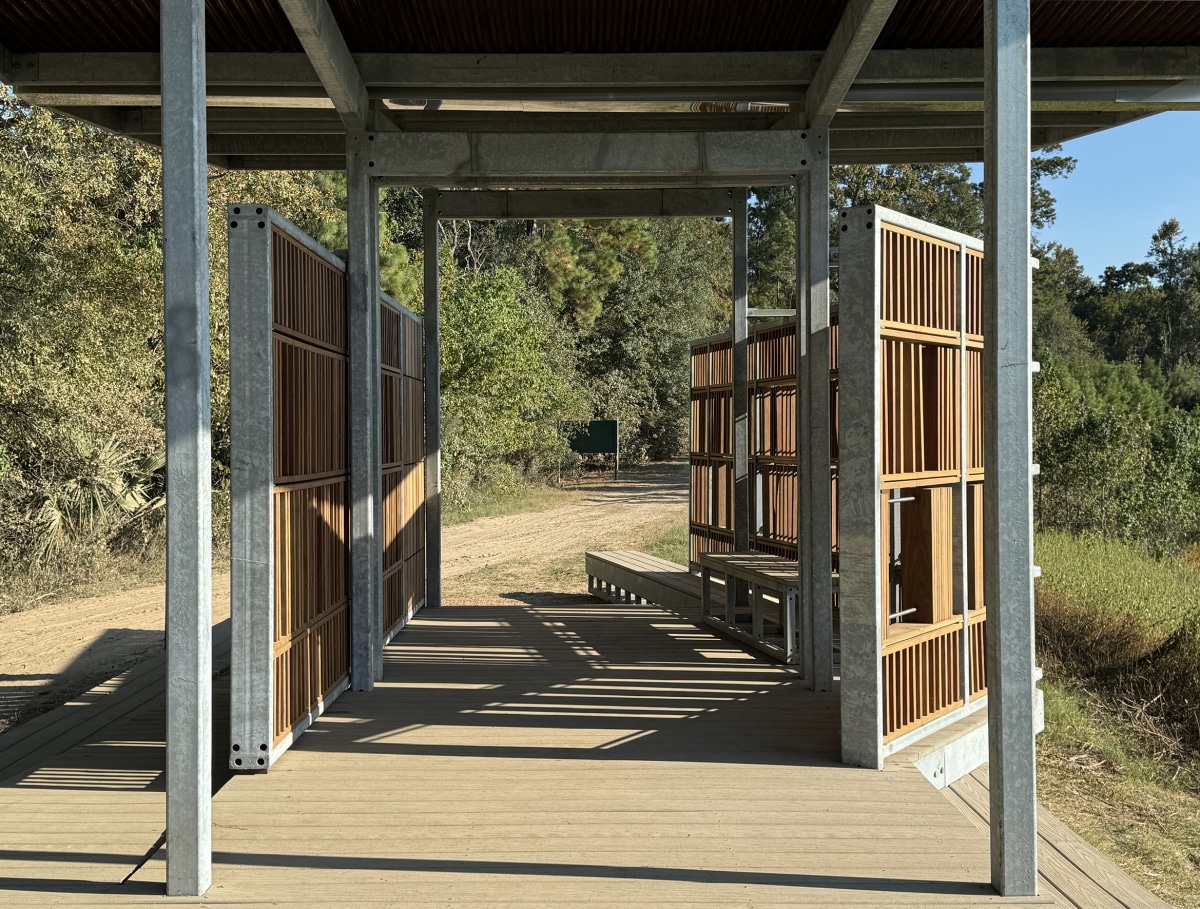
2024 marked 35 years of hands-on learning provided at the University of Houston through its Graduate Design/Build Studio, a teaching initiative that faculty refined to rapidly build professional architectural skills and foster student confidence while also creating lasting community improvements. Grounding site-specific design decisions and construction practices in an understanding of human needs is the basis for this community-building activism. As the teachers and leaders, the faculty demonstrate for the students the value of design practices conceptually shaped by limits that provide for the common good. Among these constraints are those imposed by the construction activity itself, which does not fit neatly within academic coursework. Limits are also imposed by an emphasis on design decisions informed by specifics such as site and place.
Educating young designers in these implications yields valuable maturity to serve them well and quickly in their careers. They confront advantages of prefabrication to reduce labor but weigh them against a desire to root a project to its specific location. Occurring in the first year of the three-year curriculum, the studio is late enough that the students have acquired skills in basic design and methods but early enough that the experience can benefit them greatly in their remaining two years of graduate education at the university.
Bringing students without familiarity into contact with hand tools, construction practices, and physical labor is a structured encounter for lasting and profound learning. Given that the work is born of its constraints, defining those constraints is a particularly critical act. As faculty, we verify the project efficacy, but it is the students who collaboratively establish design intent via creatively listening to stakeholder input. And the faculty and the community hold expectations that the students’ work will be not only useful and durable but inspiring and compelling as well.
Contributing Participants:
Project Lead: Patrick Peters, University of Houston; Jason Logan, Associate Professor
(taught the visual studies course aligned with the studio), Joseph Colaco, PhD, PE,
Professor (was the pro-bono structural engineer through his business, Colaco Engineers);
Joshua Hanson, Chief Operating Officer, MSD Building Corp. (pro-bono steel fabrication,
on-site steel erection, donated steel, steel transportation), Nathan Blacketer, Senior
General Manager, Valmont Coatings-United Galvanizing (pro-bono hot dip galvanizing),
Zeki Tolunay, PE, President, Tolunay Engineering Group (pro-bono geotechnical engineering),
Brian Johnson, Soiltech (pro-bono geotechnical test boring); Master of Architecture students: Matthew Avelar, Chris Banda, Grenique Brown, Sasha
Cea-Loveless, Hozeh Chae, James Devaney, Jonathan Dominguez, Eric Goldner, Monica
Liu, Dana Shnoudi, Elena Wolf
Dijana Handanovic
Faculty Design Award Winner
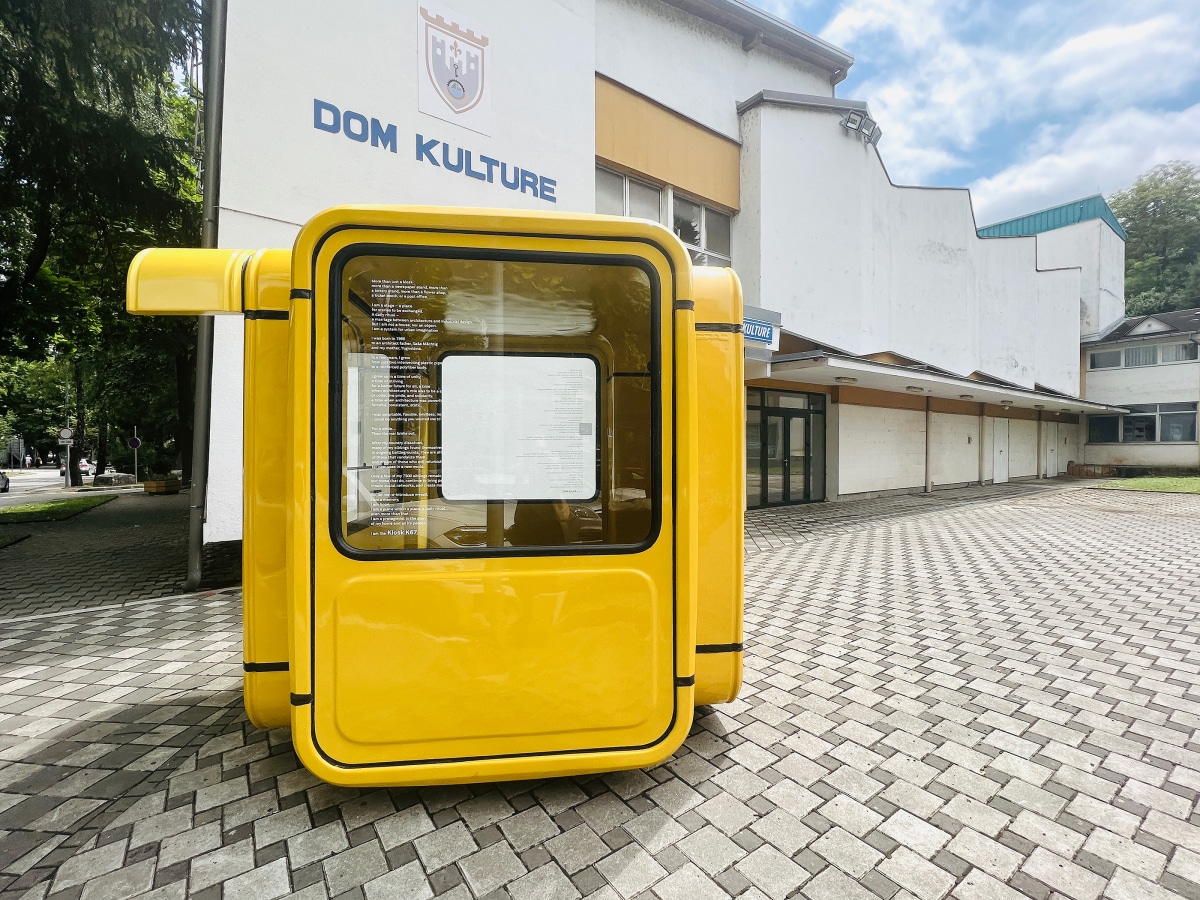
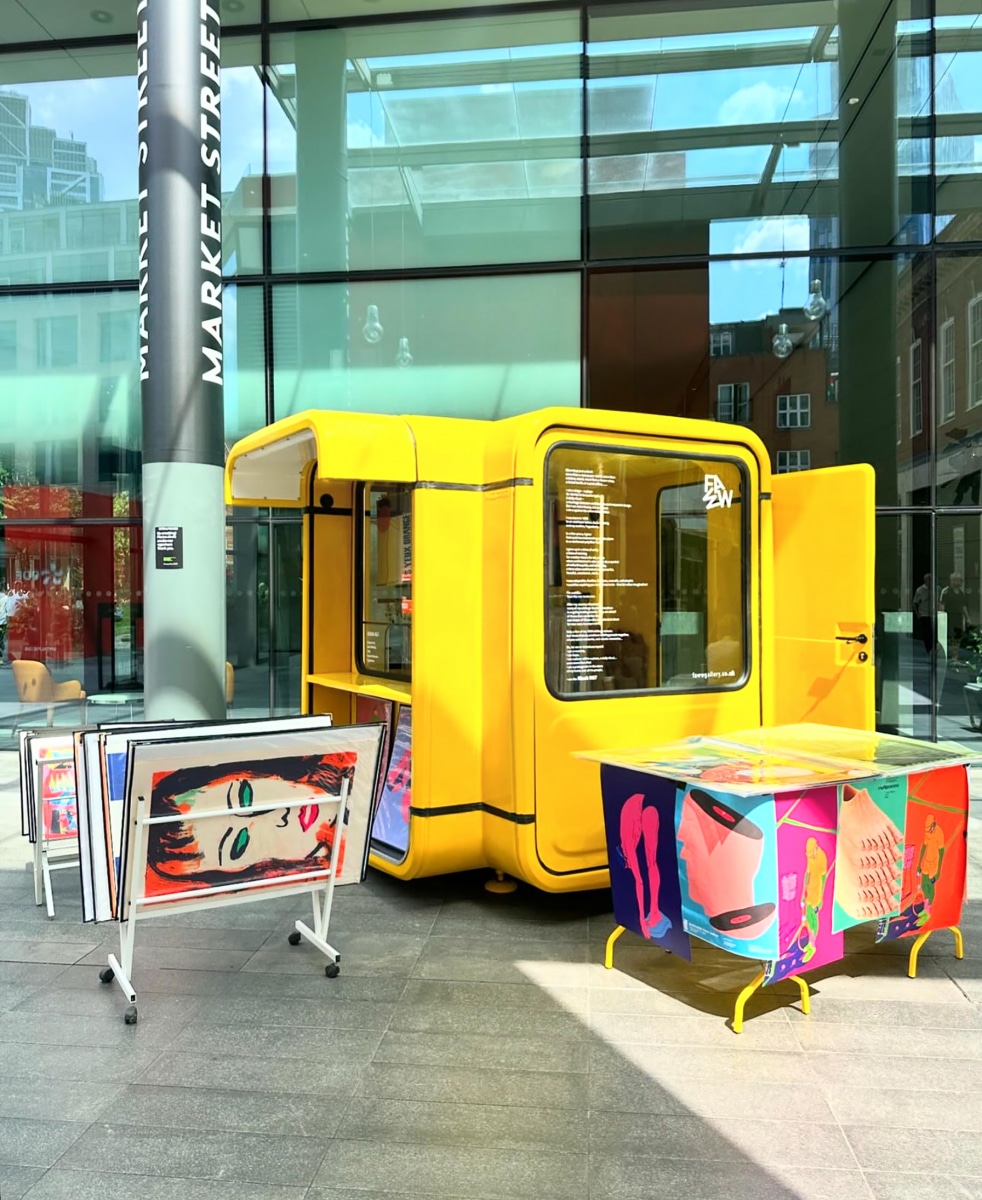
Kiosk K67: System for Urban Imagination
The Kiosk K67: System for Urban Imagination project is an ongoing cultural and urban revitalization initiative dedicated to restoring and reintroducing Kiosk K67 modules into public spaces across the region of the former Yugoslavia and beyond. Originally designed in 1966 by Slovenian architect Saša Mchtig, the Kiosk K67 was conceived as a modular structure that could activate public spaces and support micro-businesses, including flower shops, ticket booths, and food stands. Manufactured by Imgrad, more than 7,500 units were distributed and installed across Yugoslavia and beyond, serving as everyday gathering points that fostered dialogue, public interaction, and social connection.
Following the dissolution of Yugoslavia in the 1990s, production of the kiosks ended, leaving most units in disrepair or discarded. Today, only a limited number remain, many of which are in critical condition. The Kiosk K67: System for Urban Imagination project seeks to rescue and preserve these remaining units through a restoration process that emphasizes historical accuracy and material conservation.
Through the project, four Kiosk K67 units have been restored and installed across Houston (USA), Ključ (Bosnia and Herzegovina), and London (UK). The Kiosk K67: System for Urban Imagination project reclaims a shared cultural heritage while demonstrating architecture’s capacity to transcend disciplinary boundaries and facilitate social interaction. In a region historically marked by political and ethnic division, the Kiosk K67 endures as a symbol of collective identity and civic heritage.
Contributing Participants:
Project Lead: Dijana Handanovic (University of Houston); Restoration Team: Dijana Handanovic (University of Houston), Esad Handanovic, MiSan;
Exhibition 1- Houston collaborators: Blaffer Art Museum, More Magnets, Rodrigo Gellardo,
Allan Perez, Kim Saotonglang, Sheryl Tuker de Vazquez (University of Houston), Patrick
Peters (University of Houston). The exhibition was made possible with support from:
University of Houston Gerlad D. Hines College of Architecture and Design, Dean Patricia
Oliver, and The Cynthia Woods Mitchell Center for the Arts. Kiosk K67/Zanat exhibition collaborators: ZANAT, Adam Cook (Shop); Exhibition 2 – Ključ, Bosnia and Herzegovina, collaborators: Municipality of Ključ,
Azra Kujundzic; Cultural Center Ključ; Exhibition 3 – London, UK, collaborators: FAWW Gallery
Rafael Beneytez-Duran & Ophélia Mantz
Faculty Design Award Honorable Mention
Hell & High Water
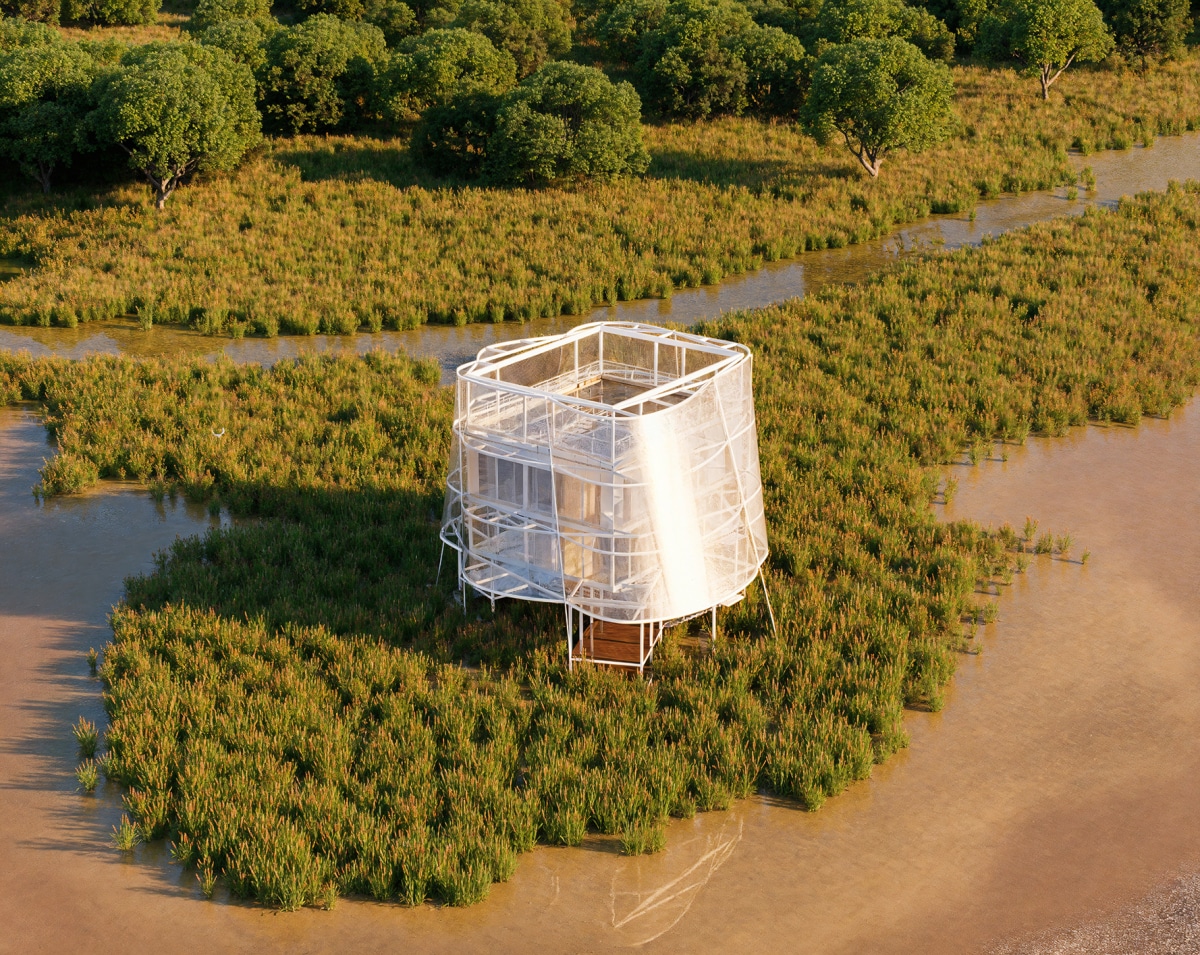
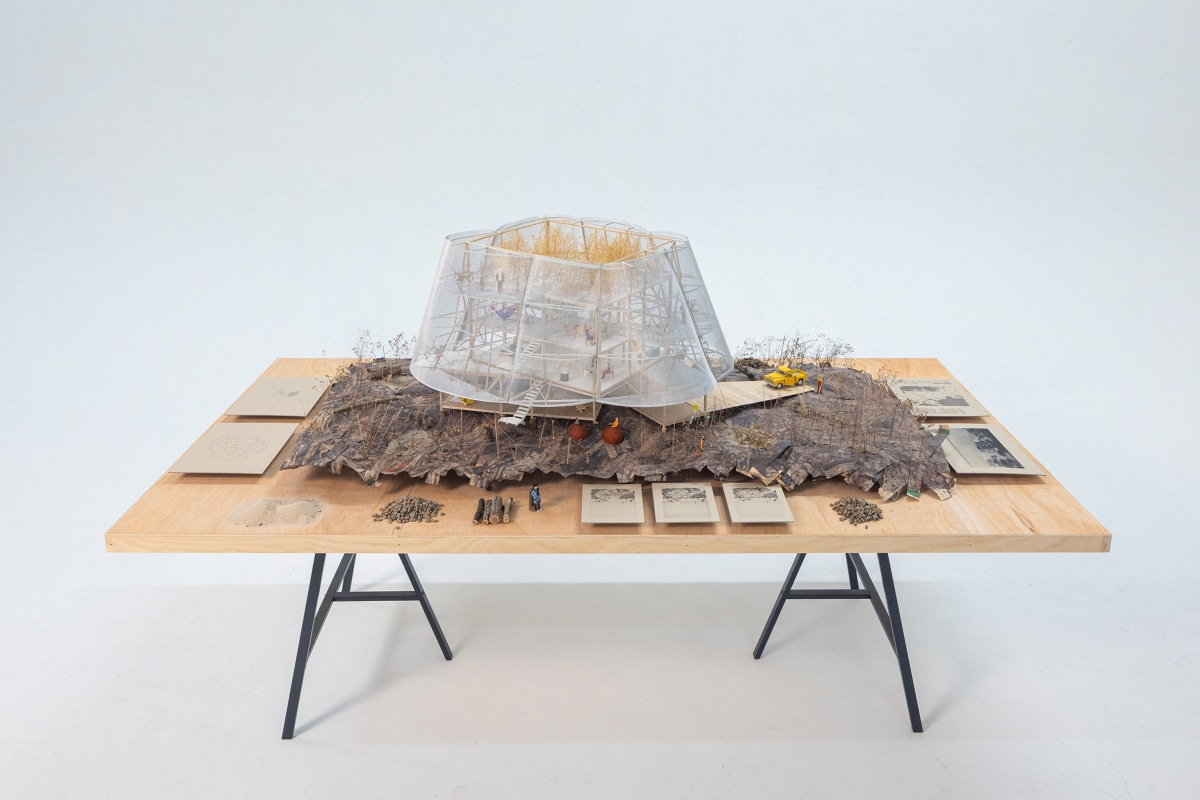
When collective housing tackles social, economic, environmental, and political issues on low-lying coastal land nearing abandonment by insurance companies, it becomes more than shelter—it becomes a form of climate resilience. In the Anthropocene, rising temperatures, intensified storms, and disease outbreaks intersect with inequality, forcing a rethinking of where and how we live.
Consider Baytown, near Houston, where the future has arrived earlier than in ther lands. Imagine a Category 1 hurricane like Beryl striking on July 8, 2024, causing a weeks-long blackout amid 42 wet bulb temperatures. With sea levels rising and flood zones expanding, some areas face functional abandonment. Yet in this harsh setting, new models emerge.
Enter the Hell ‘and’ High-Water House (H&HWH)—a collective social housing prototype designed not to defy nature, but to live with it. As insurance premiums rise (up to 27% in Texas between 2022 and 2023) and coverage becomes limited or denied, especially in flood-prone zones like Baytown (elevation max: 34 feet), homeowners are left with few options. Banks follow suit, withholding loans, deepening vulnerability.
H&HWH provides an alternative. Modular truck-length steel-clad units, curved for strength, form resilient structures. A mirrored surface maximizes daylight while deflecting heat and resisting storm debris. Its breathable, plant-covered skin uses wind and thermal gradients to cool the interior, dropping temperatures by 10176; C at ground level and ventilating upward to a rooftop garden rich with vegetables and mosquito-repellent herbs.
Below, floodable “wet-bulb zones” with clay cisterns exploit convection and the Venturi effect for natural cooling. This is not just architecture—it is climate infrastructure.
By integrating ecological intelligence with social need, the H&HWH acts as a ‘Gaia Device’—a new form of housing that allows communities to survive, even thrive, amid the shifting realities of climate, economy, and policy.
Contributing Participants:
Project Leads: Rafael Beneytez-Duran & Ophélia Mantz, University of Houston. Graphic
Assistant – B.Arch Student, Diego Contreras Graphic Assistant – B.Arch Student, Simon
Chiquito Thermal Analysis – Assistant Professor, Mili Kyropoulou Render Image 6- Chroma
Estudio Mx